1,300 pages of expert knowledge about Villa Voerendaal
Author: Harry Lindelauf
Photography: Mikko Kriek
Even at the European level, it has been eagerly awaited: the report that brings together all scientific knowledge about the Roman villa rustica in Voerendaal. On 31 March 2023, after three years of research, the moment arrived during a symposium at the Limburgs Museum in Venlo.
The English-language document of no fewer than 1,300 pages is, according to moderator Leonard de Wit of the Cultural Heritage Agency of the Netherlands (RCE), “a celebration for the international archaeological community”. Thanks to the research and the publication, the remains beneath the fields along the Steinweg are now regarded as one of the most thoroughly investigated villas in the Netherlands.
The new work offers several new insights: more wooden buildings stood on the site than had been thought, dating from the Stone Age to the early Middle Ages. The dating of Roman remains could also be determined more precisely.
Storage for 100,000 kilos of grain
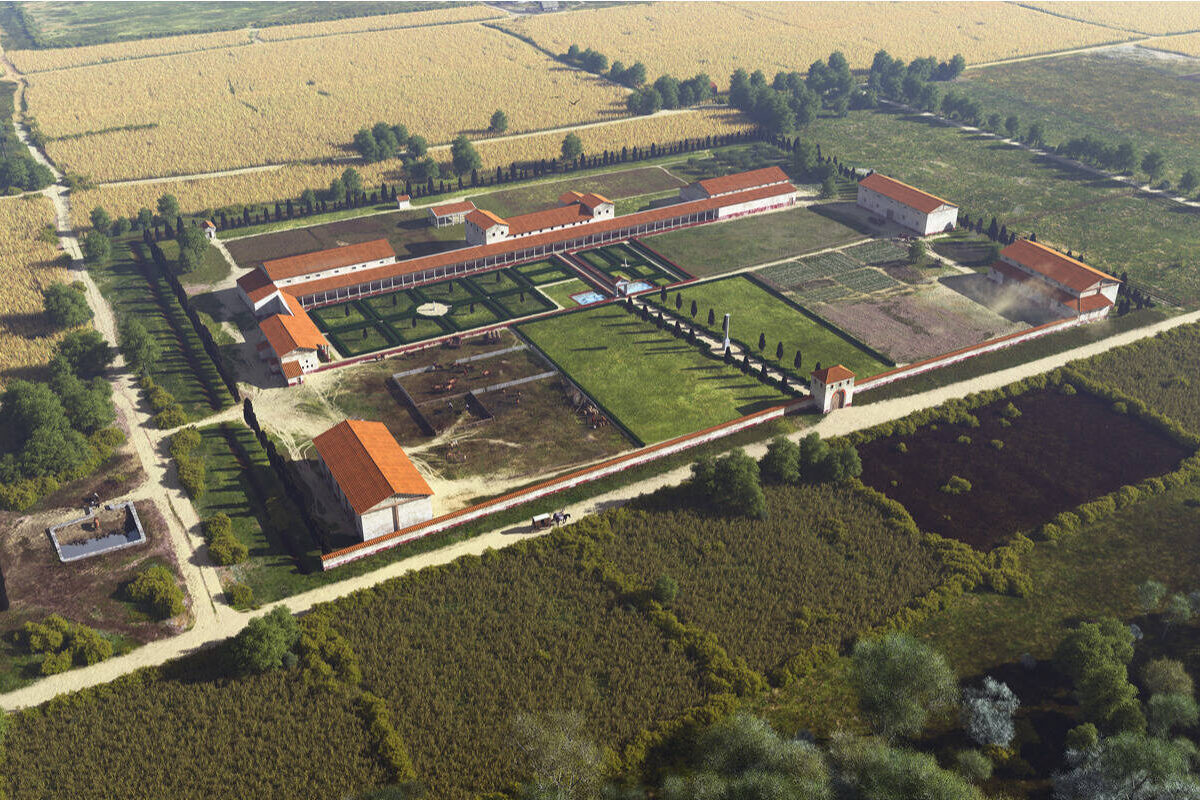
Looking at the facts, one sees the largest Roman agricultural estate of the more than 65 found in the Netherlands. In Voerendaal, on 13 hectares of fertile loess soil, mainly spelt was grown for the soldiers in the forts along the Rhine.
The villa itself consisted of numerous buildings that were constructed successively from Kunrader stone. The first villa dates from the period 70 to 100 AD, the second, large villa from around the year 125. The colonnade of this villa was an impressive 150 metres long, there was a bathhouse with a toilet, and the granary could store around 100,000 kilos of grain. There are indications that a second grain store was even built.
Back in time
Dating of burnt grains in recent research indicates that between 250 and 270 AD the large granary was destroyed by fire. Most likely cause: plundering Germanic tribes. Around the year 320 the Romans leave. On the villa site, farmers of the early Middle Ages turn back in time among the ruins of the villa: they build their wooden houses-cum-barns and continue farming on the terrain where, already in the Iron Age, people lived in semi-subterranean wooden houses.
The report is available in six parts on the RCE website (in English).
The report is written by and for archaeologists. There is a more accessible way to read the results of three years of research: the book Villa Voerendaal, van vondst naar verrassend verhaal. The book was published by the Limburgs Museum in Venlo and is for sale in the museum shop of the Limburgs Museum.