Restoration of the Simpelveld sarcophagus completed after 16 months
Author: Harry Lindelauf
Photography: RMO Leiden
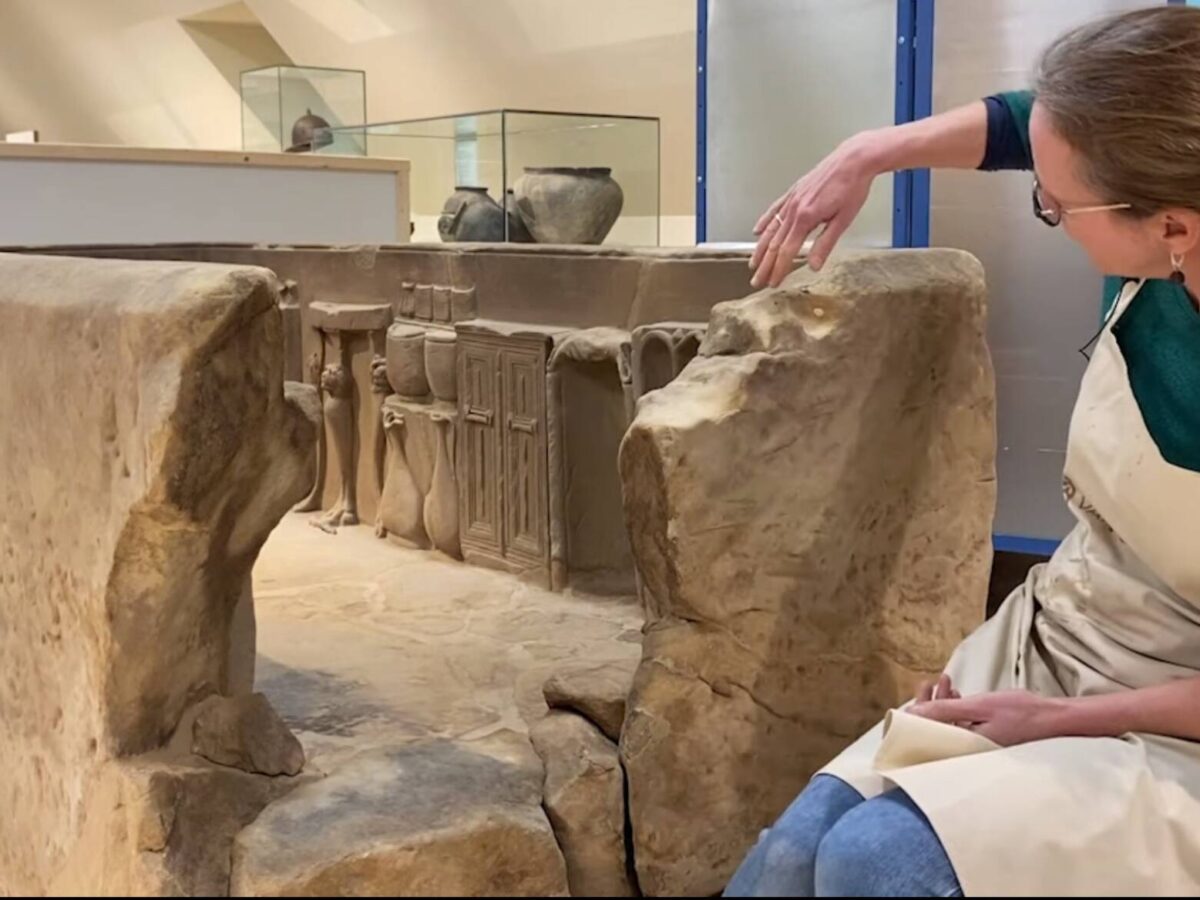
The restorers of the National Museum of Antiquities have completed the restoration of the Simpelveld sarcophagus after sixteen months. The final step is closing the large “robber’s hole” at one of the short ends of the coffin. As soon as museums are allowed to reopen, the result of this immense task will also be on view to the public.
The sandstone sarcophagus found in 1930 by miner Albert Wierts during excavation work near his house in Simpelveld is almost 2.50 metres long and weighs 1,500 kilos. The coffin contained the cremated remains of a woman who was between 35 and 50 years old when she died. Despite the grave robbers, beautiful objects that had been placed in the grave with her were still found. The sarcophagus is unique because of the detailed carvings on the inside, showing the interior of the villa.
Construction kit
After its purchase, the sarcophagus arrived at the museum in Leiden like a kind of construction kit. It was placed on a wooden frame and assembled with repairs. In the 1960s and 1970s, further restorations followed to fill holes and cracks.
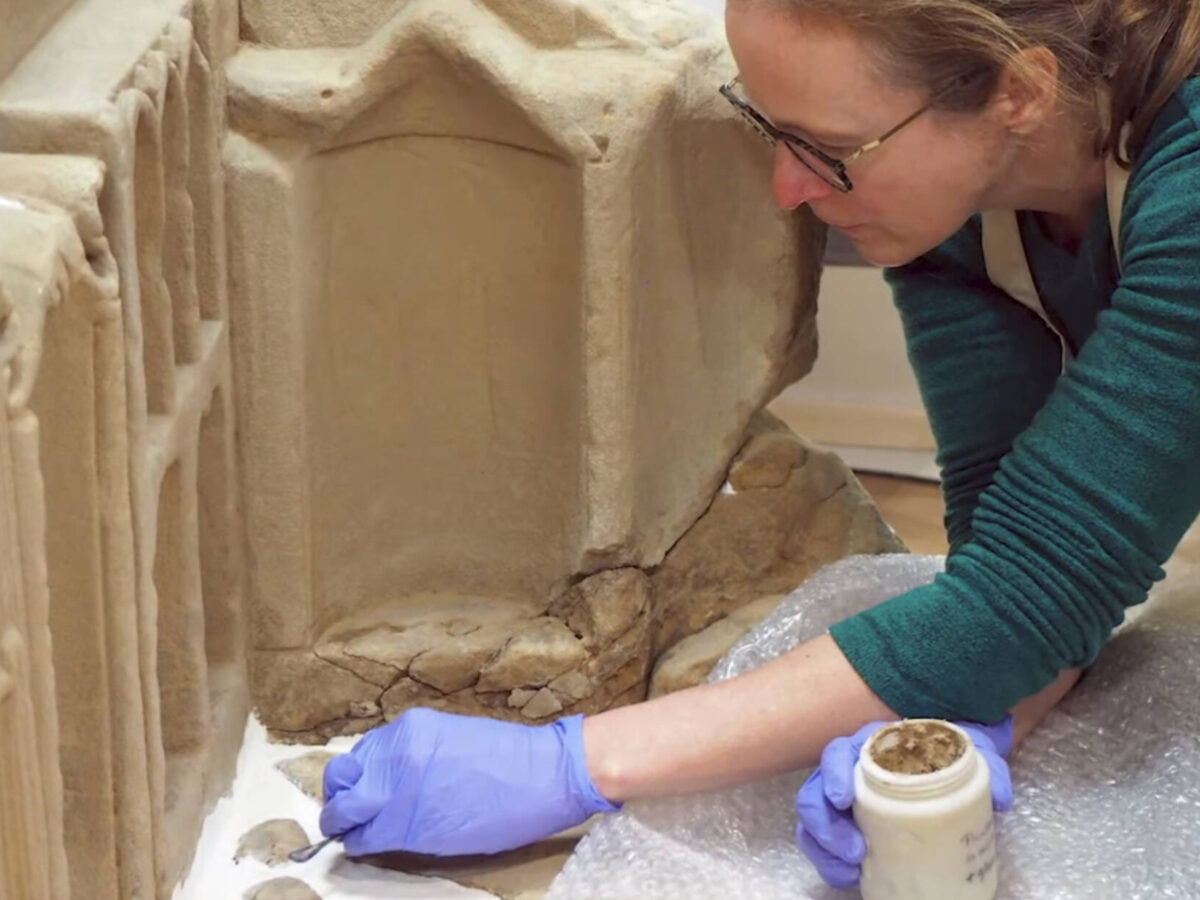
During the recent restoration, the wooden frame was replaced with a metal support. To do this, the sarcophagus had to be completely dismantled again. The restorers removed all earlier repairs made with materials such as cement and glue. For the new repairs, plaster was used because it can easily be removed again. The plaster additions were given a slightly lighter colour than the sandstone so that the repairs remain visible.