The sleeping Amor still enchants today
Author: Harry Lindelauf
Photography: National Museum of Antiquities
These are the favourite Via Belgica finds of the experts. Discover what archaeologists answer to our question: what is your favourite Roman find along the Via Belgica in South Limburg? The answers are varied and surprising. From a bronze Diana leg to spectacular sandstone ash chests. In ten episodes we present the choices of experts. In the sixth episode:
Jasper de Bruin— Curator of Roman antiquities at the National Museum of Antiquities in Leiden
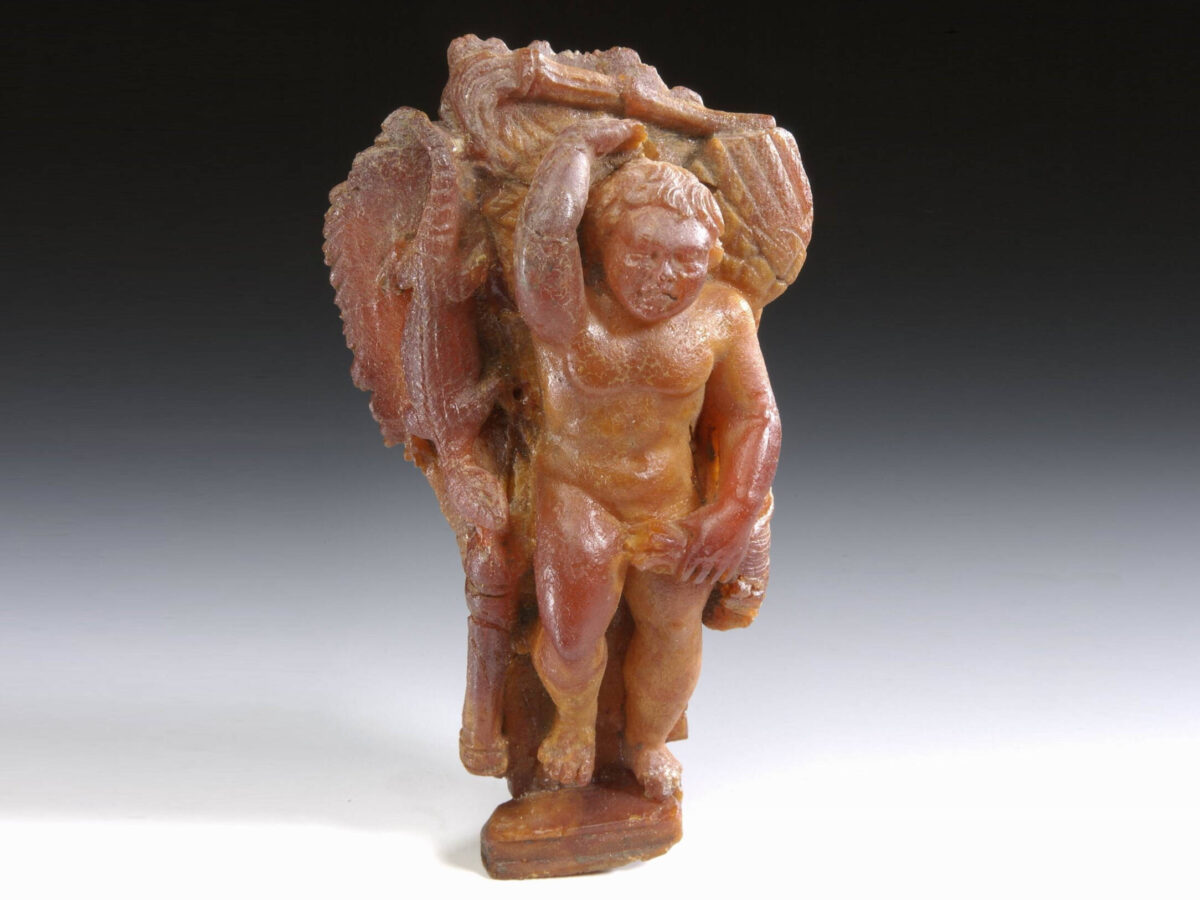
Jasper de Bruin, curator of Roman antiquities at the National Museum of Antiquities in Leiden: “Along the Via Belgica many very beautiful finds have been made. But my favourite is the amber figurine of the sleeping Amor, from a grave in Heerlen.” In 1920 contractors in Heerlen found four large sandstone ash chests from the second century. At that moment they were working in the former garden of the former St. Jozef-Heilbron sanatorium, now the location of Huize De Berg. Underground also lie the remains of the Via Belgica in the direction of Rimburg.
Ancient beauty in amber: a figurine of a sleeping Amor.
Bull’s-eye
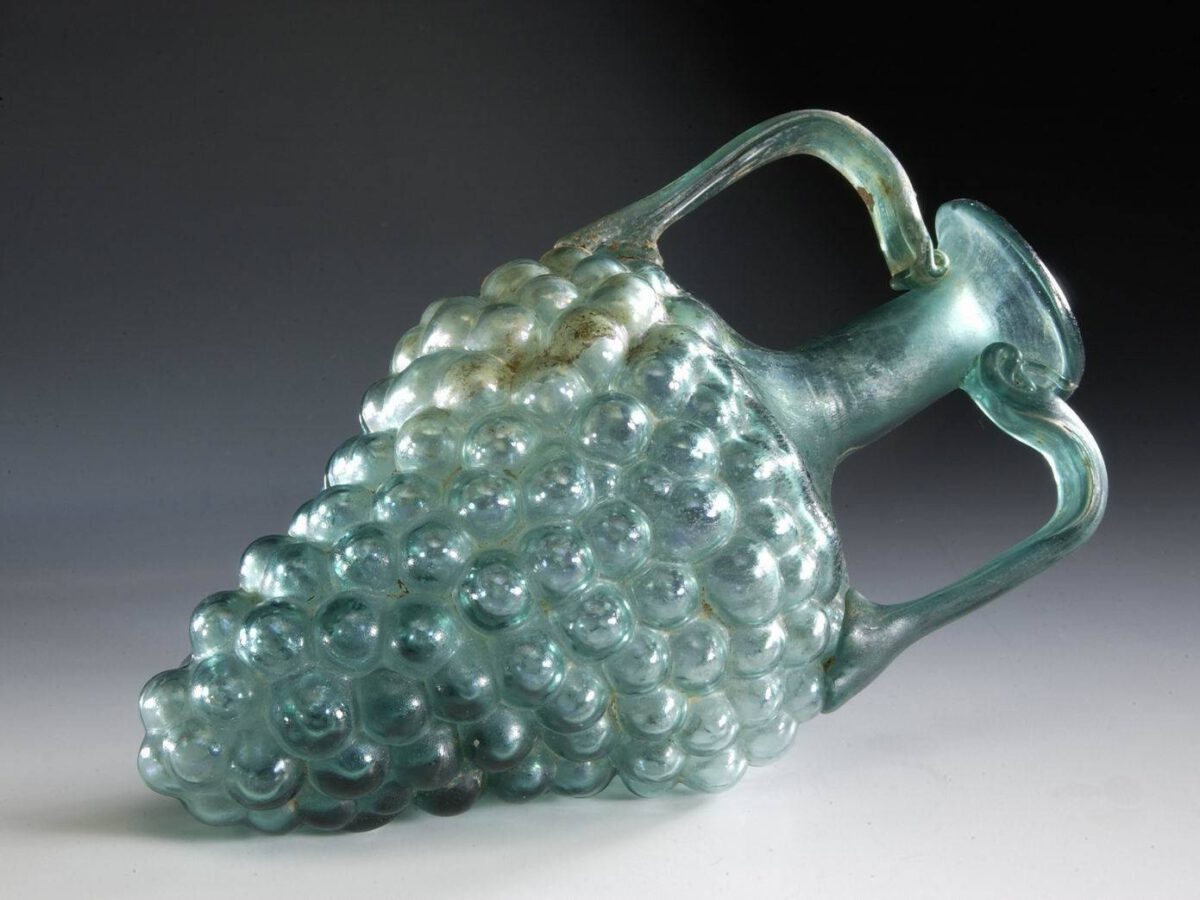
The find turns out to be a bull’s-eye of international allure because two of the four chests stand out due to their rich grave goods. In the first chest it concerns very refined glassware, a small golden bottle and remains of a wooden box covered with bronze plating.
The grave goods in the second chest are even more exclusive, with golden jewellery and numerous beautiful amber objects. One of them is the favourite of Jasper de Bruin: a figurine of a sleeping Amor, wrapped in a lion skin. The sleeping Amor symbolises the sleep of death of a deceased person. Striking in the second chest is also a small pine-wood box, plated with tortoise shell and with a small bronze sliding lock. The grave goods make clear that the second ash chest was made for a wealthy inhabitant of Coriovallum.
Read also why Karen Jeneson chooses this find.
In the ash chests, a well-preserved glass bottle was also found. Probably made in Roman Cologne.