Ash Urns and Portrait of a Ubian Couple
Author: Harry Lindelauf
Photography: National Museum of Antiquities
These are the favourite Via Belgica finds chosen by experts. Discover what archaeologists answer when we ask: What is your favourite Roman find along the Via Belgica in South Limburg? The answers are varied and surprising. From a bronze Diana leg to spectacular sandstone ash urns. In ten episodes we present the experts’ choices. In the third episode:
Karen Jeneson— curator of the Thermenmuseum in Heerlen
“Incredibly beautiful stuff.”
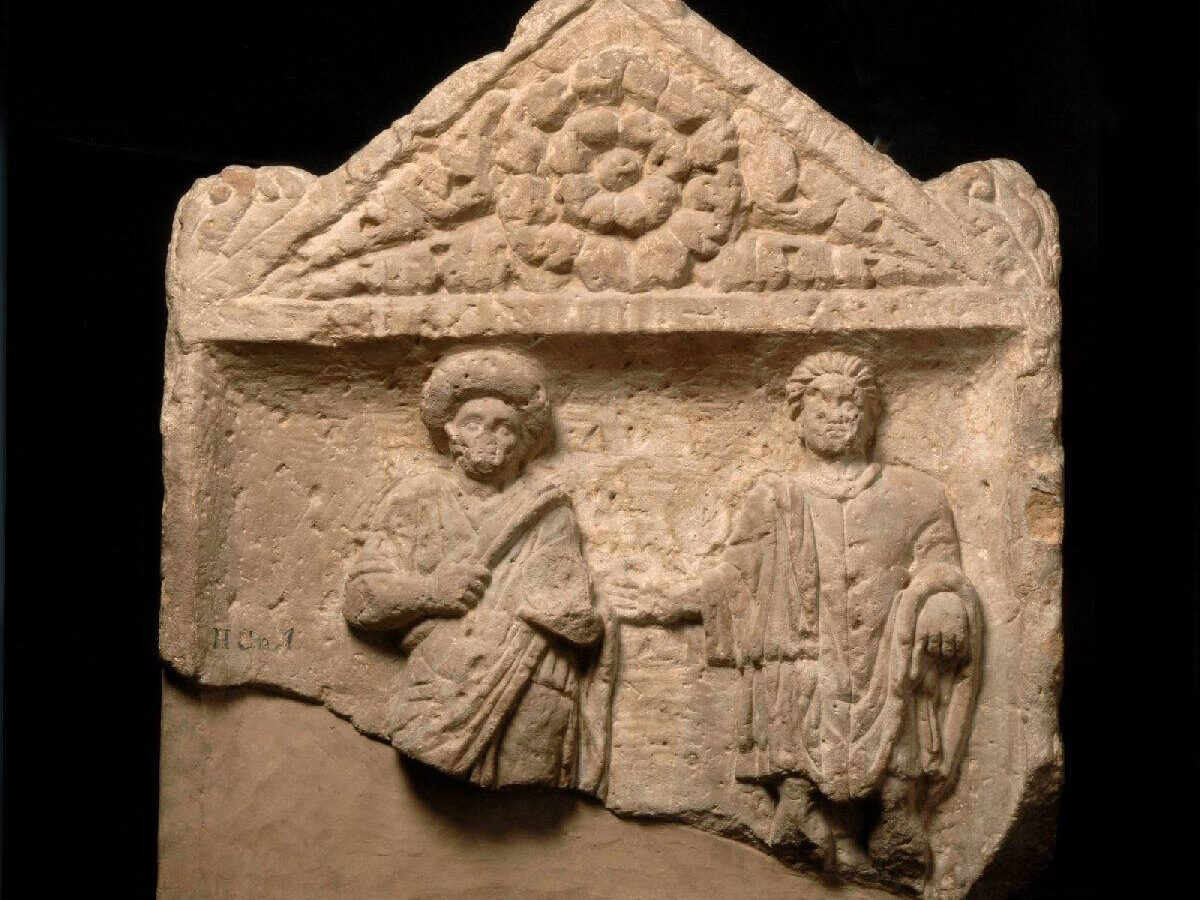
Karen Jeneson, curator of the Thermenmuseum in Heerlen, needs no more than three words to describe her favourite find. She refers to two ash urns of a married couple with luxurious grave goods, the grave monument that probably belongs to two of the urns, and a sandstone portrait statue of the couple.
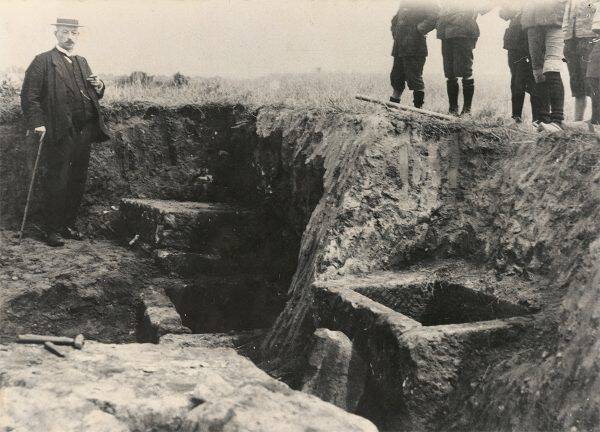
The ash urns were discovered by coincidence in 1920 by the then city archaeologist Piet Peters, who also wrote about them. The Romans had the habit of placing their graves and grave monuments along the main roads leading out of their settlements. In this case, along the Via Belgica to the east of Heerlen. The deceased were cremated at these locations, which is why it happened outside the inhabited area. In special cases, the graves were marked with stone pillars bearing inscriptions or even images.
“The Romans created these funerary monuments with portraits so that all travellers would see the deceased. The Romans believed that in this way the dead remained alive.”
The image of the Ubian couple was part of a grave monument.
The typical Matrone-style hairstyle and the clothing of the depicted woman indicate, according to Karen Jeneson, that they belonged to a Germanic tribe, possibly the Baetasii or the Ubii. After Caesar exterminated the local Eburones because of their resistance to Roman rule, Emperor Augustus relocated several Germanic tribes who were loyal to Rome from the eastern side of the Rhine to the area between the Meuse and the Rhine.
For the Ubian couple, the relocation turned out to be a success: “Here you see newcomers who remain connected to their Germanic origins while integrating into a Roman-governed environment. This couple became incredibly wealthy when you see how they were buried.”
Also read why Jasper de Bruijn chose this find.
City archaeologist Piet Peters (left) supervised the excavation of the ash urns in 1920.