The baths as the largest showpiece of all
Author: Harry Lindelauf
Photography: Thermenmuseum Heerlen
These are the favourite Via Belgica finds chosen by experts. Discover what archaeologists answer when we ask: What is your favourite Roman find along the Via Belgica in South Limburg? The answers are varied and surprising. From a bronze Diana leg to spectacular sandstone ash chests. In ten episodes, we present the choices of experts. In the second episode:
Benoît Mater— Initiator of the Roman Museum in Heerlen
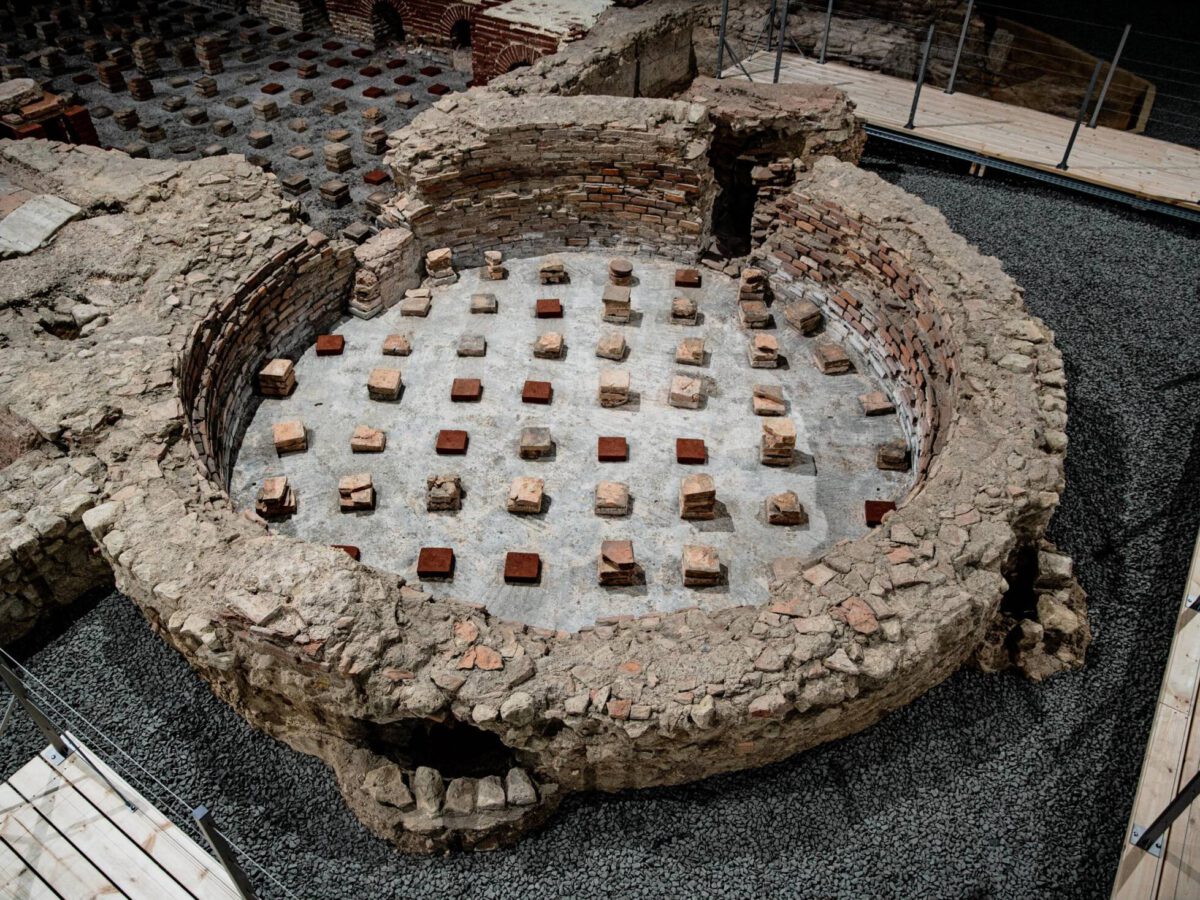
“Limburg has many beautiful finds, and often it is a small object that at first sight seems insignificant, but carries the most beautiful story. For me, as the initiator of the new Roman Museum in Heerlen, the Roman bathhouse – a national monument – is literally the largest showpiece of all. Her answer to the inevitable ‘why-question’ follows with full conviction: ‘Here you can quite literally walk in the footsteps of the Romans, leave behind the hectic everyday life and immerse yourself in the romance of archaeology and Roman culture. At this location, you literally encounter our part of Roman history.’”
Built between 65 and 73
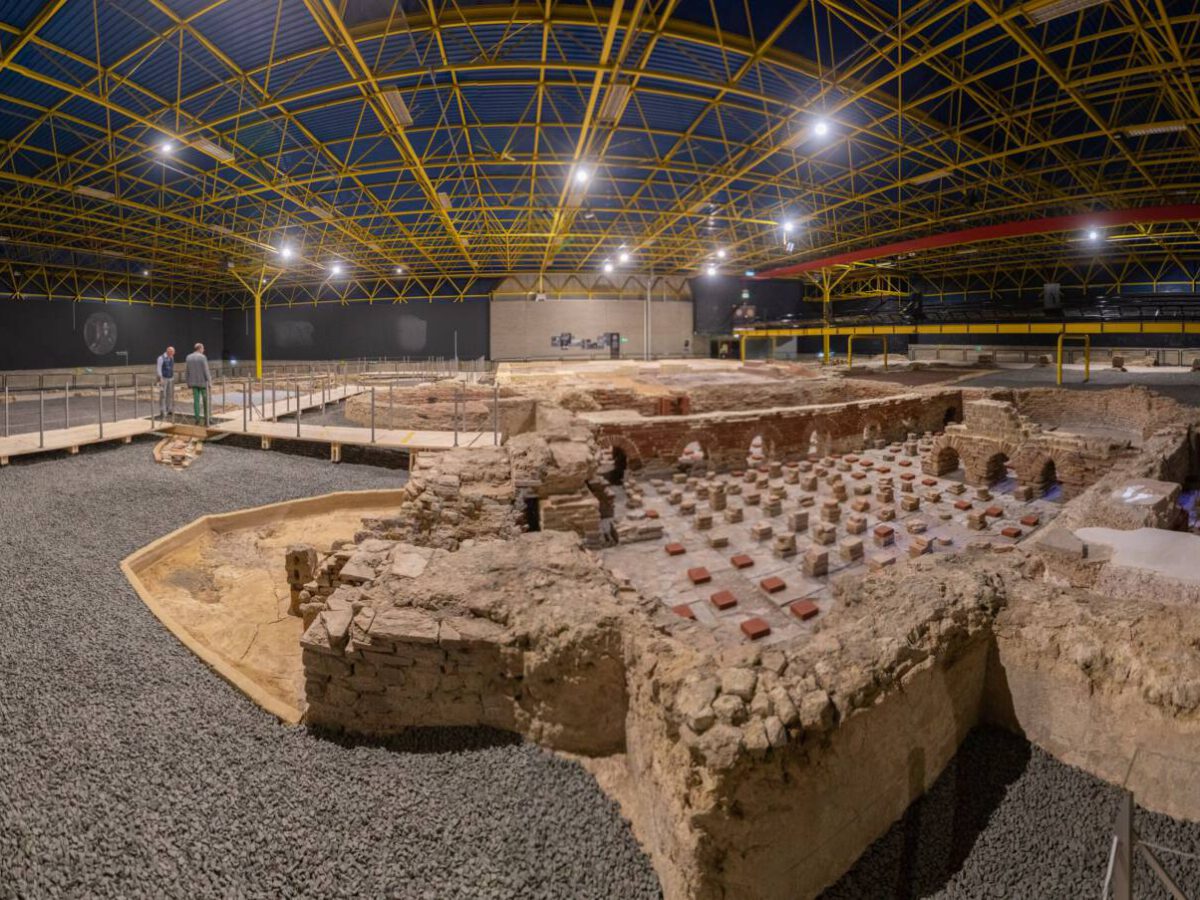
The new museum will from 2025 onwards protect and showcase the remains of the baths even better, so the promise goes. The current museum building is already 45 years old. That is considerably less than the lifespan of the baths, which remained in use for nearly 500 years.
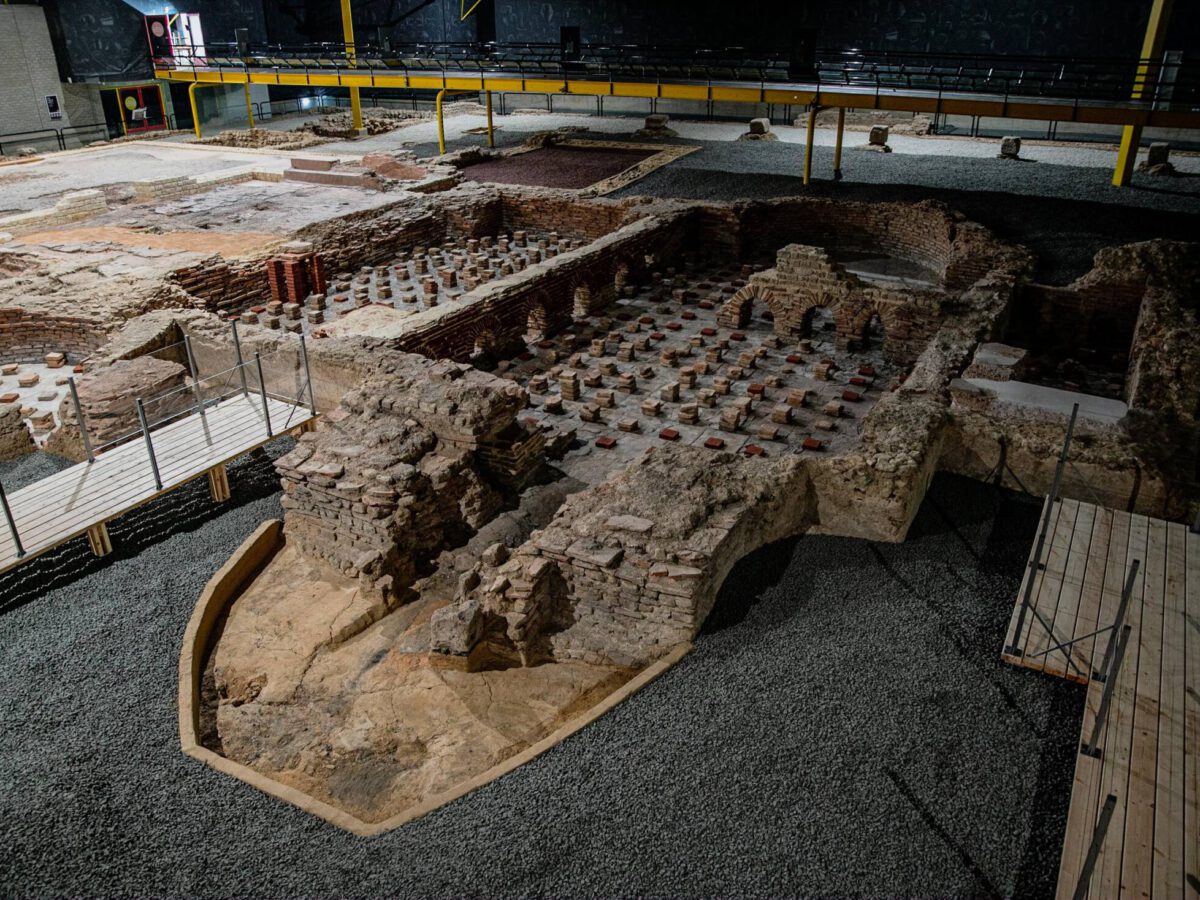
The first version of the baths was built between 65 and 73 with four bathing rooms, a changing/sports room, a stoking room and two small outdoor spaces. That building measured approximately 40 by 14 metres. The construction site was located at today’s Kruisstraat–Coriovallumstraat, close to where the Via Belgica and the Trier–Aachen–Xanten road crossed at the time. Later, the bathhouse was expanded, becoming four times larger than the first version. The remains of the Heerlen baths were discovered in 1935 by city archaeologist Piet Peters.
Walkways alongside the remains provide a better view of the Roman baths.
Caumerbeek
The baths consumed large quantities of water: the two indoor cold-water baths were each filled with 5,000 litres, and the larger and deeper outdoor bath with 57,000 litres. Moreover, the water was continuously refreshed. The Romans transported the water over several kilometres through an aqueduct from the source of the Caumerbeek.
Video: Click here for the video
In 2025, Heerlen expects to open a new Roman museum in which the baths will be incorporated.