The Eburones Treasure of Amby
Author: Harry Lindelauf
Photography: VU Amsterdam
These are the favourite Via Belgica finds of the experts.
Discover what archaeologists answer to our question: What is your favourite Roman find along the Via Belgica in South Limburg? The answers are varied and surprising. From a bronze Diana leg to spectacular sandstone ash chests. In ten episodes we present the experts’ choices. In the first episode:
Nico Roymans— Professor of Northwest European Archaeology at the Vrije Universiteit Amsterdam
“My most important find from the South Limburg region dates from the time of the conquest by Caesar. It is the gold treasure of Amby near Maastricht. It is a unique document that directly relates to the Roman conquest. To me it is clearly a find of international significance.” Nico Roymans is Professor of Northwest European Archaeology at the Vrije Universiteit Amsterdam and researches the relationship between Celtic-Germanic and Roman societies.
Rainbow bowls
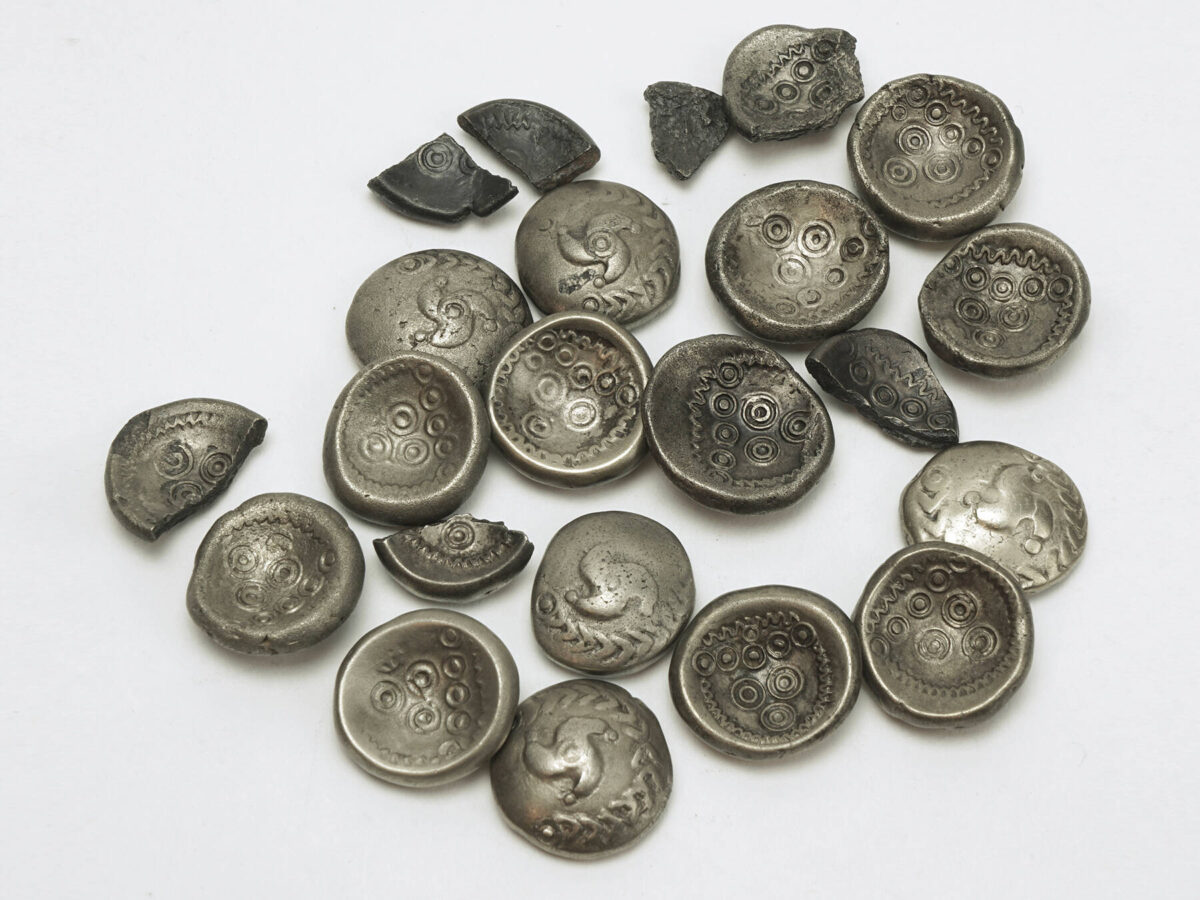
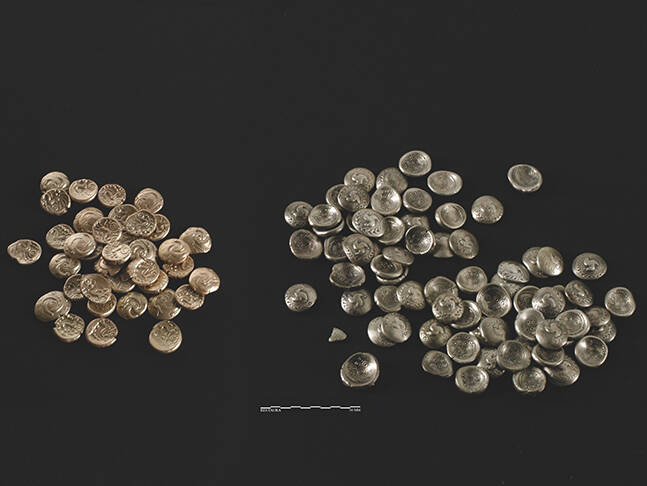
The treasure that he values so highly consists of 39 gold coins attributed to the Eburones and 70 silver coins (“rainbow bowls”), presumably also struck by the Eburones. The coins may have been produced in Berg, near Tongeren, or in Maastricht. The coins were buried during the period when Julius Caesar, from Gaul, was undertaking a bloody conquest of the Low Countries. Similar treasures have been found in several places along the Sambre (France and Belgium) and in Belgian Limburg.
A total of 107 coins were found in Amby.
Metal detector
The treasure in Amby was buried between 60 and 50 BC, almost certainly to hide the valuables from the Romans. Under the leadership of Julius Caesar, they were in the process of conquering Gaul and the Low Countries. The Eburones in this region, together with other tribes, resisted the Roman invasion but lost the struggle. Caesar himself boasted that he exterminated the Eburones as revenge for their resistance.
The coin treasure was discovered in 2008 by a resident of Amby who searched a maize field at the corner of Bodemsweg and Molenweg with a metal detector. The coins were once buried in a leather or cloth bag at a depth of about 65 centimetres.
Photos: VU Amsterdam
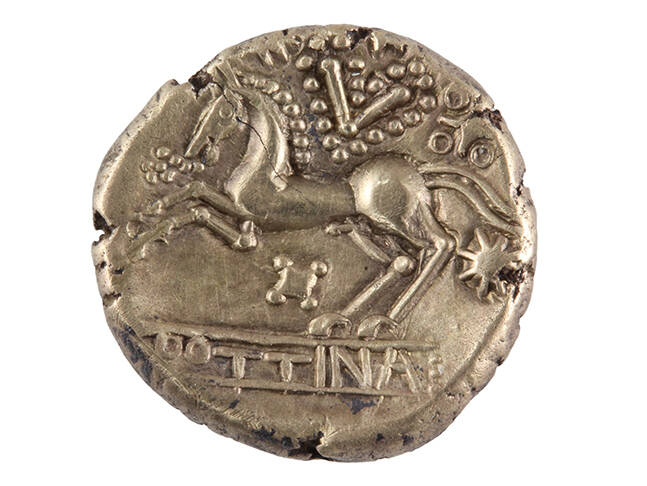
The name of the Pottina coin wrongly suggests Roman origin.