Restoration of Simpelveld burial chest becomes starting point for international research
Author: Harry Lindelauf
Photography: Museum of Antiquities

The restoration of the famous Roman burial chest from Simpelveld will become the starting point of a major research project by the Museum of Antiquities in Leiden. The researchers want to study the Roman farm complexes (villae rusticae) and burial chests in South Limburg in an international context. This is announced by Jasper de Bruin in an interview on the website of the Rembrandt Association, one of the sponsors of the restoration. De Bruin is curator of “The Netherlands in Roman Times” at the museum.
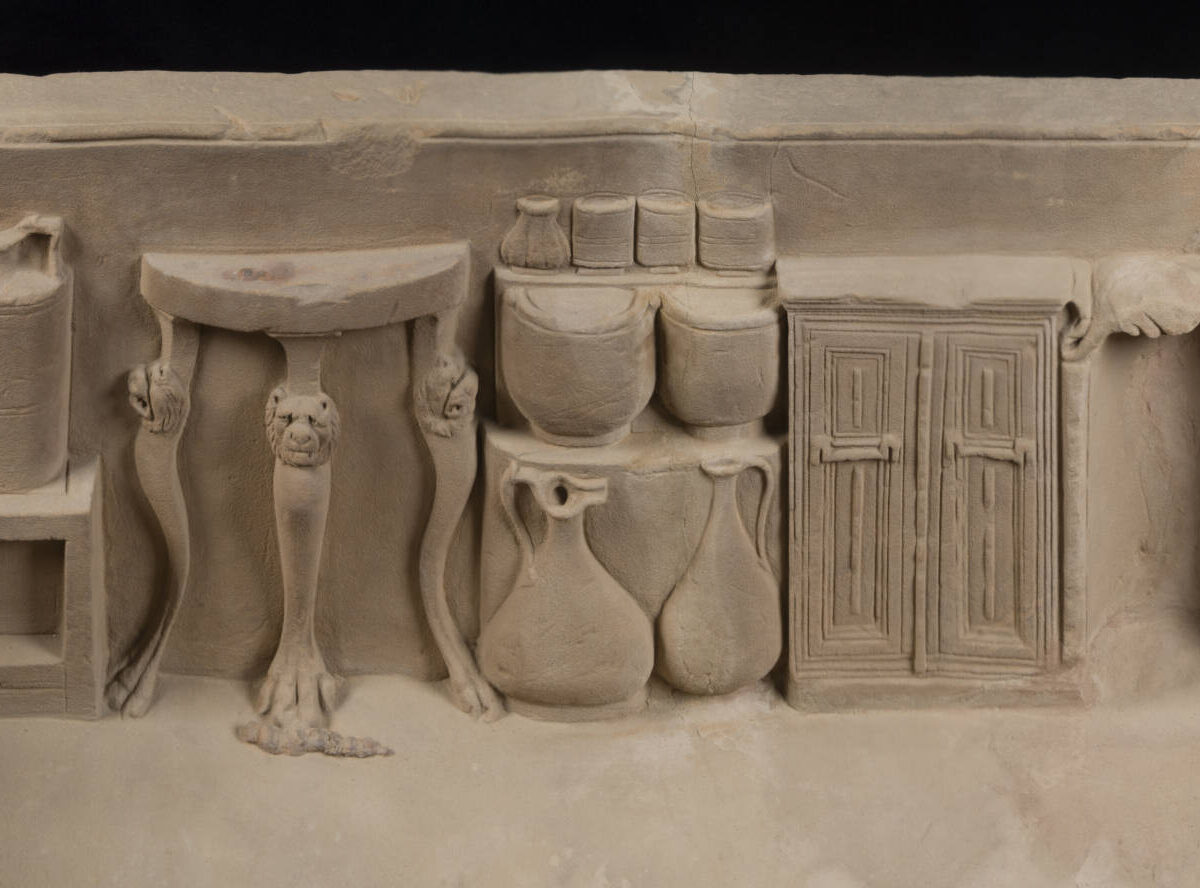
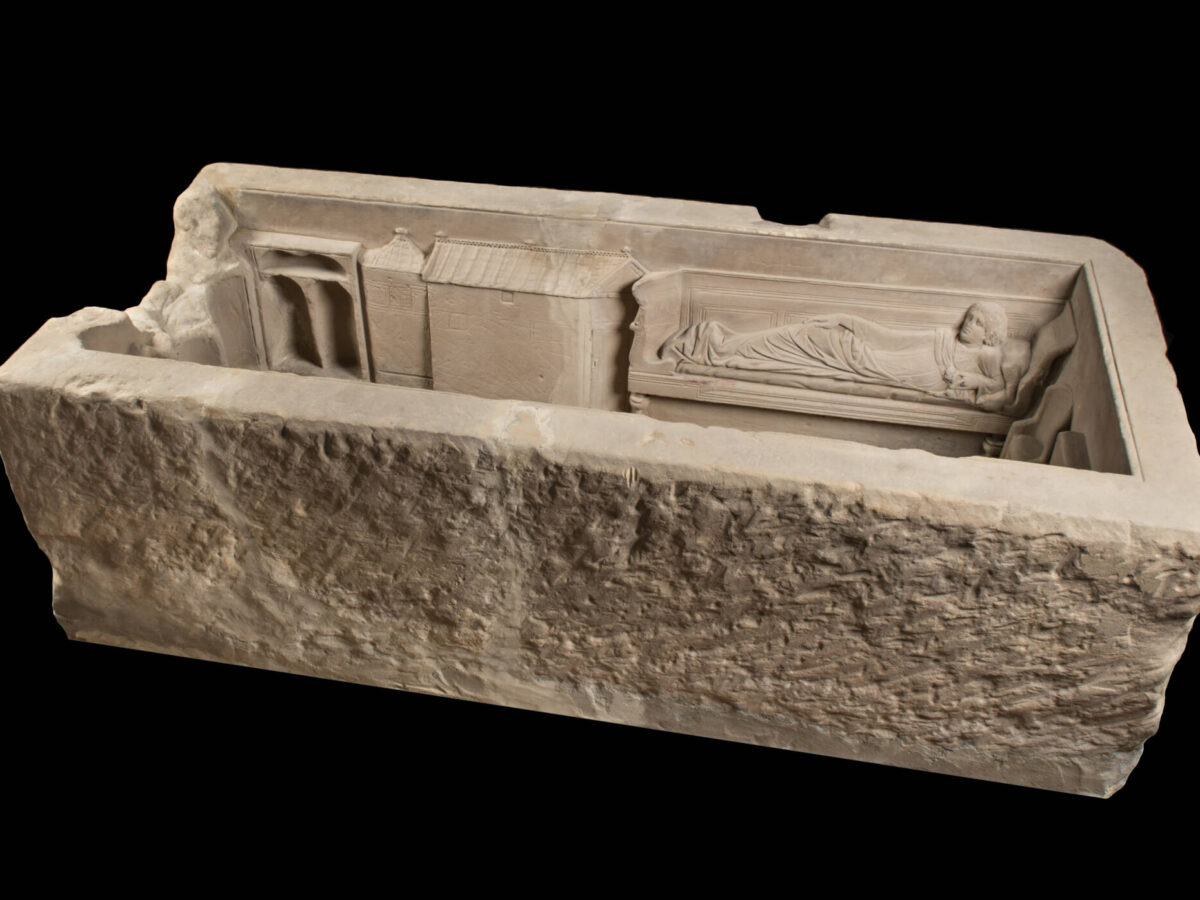
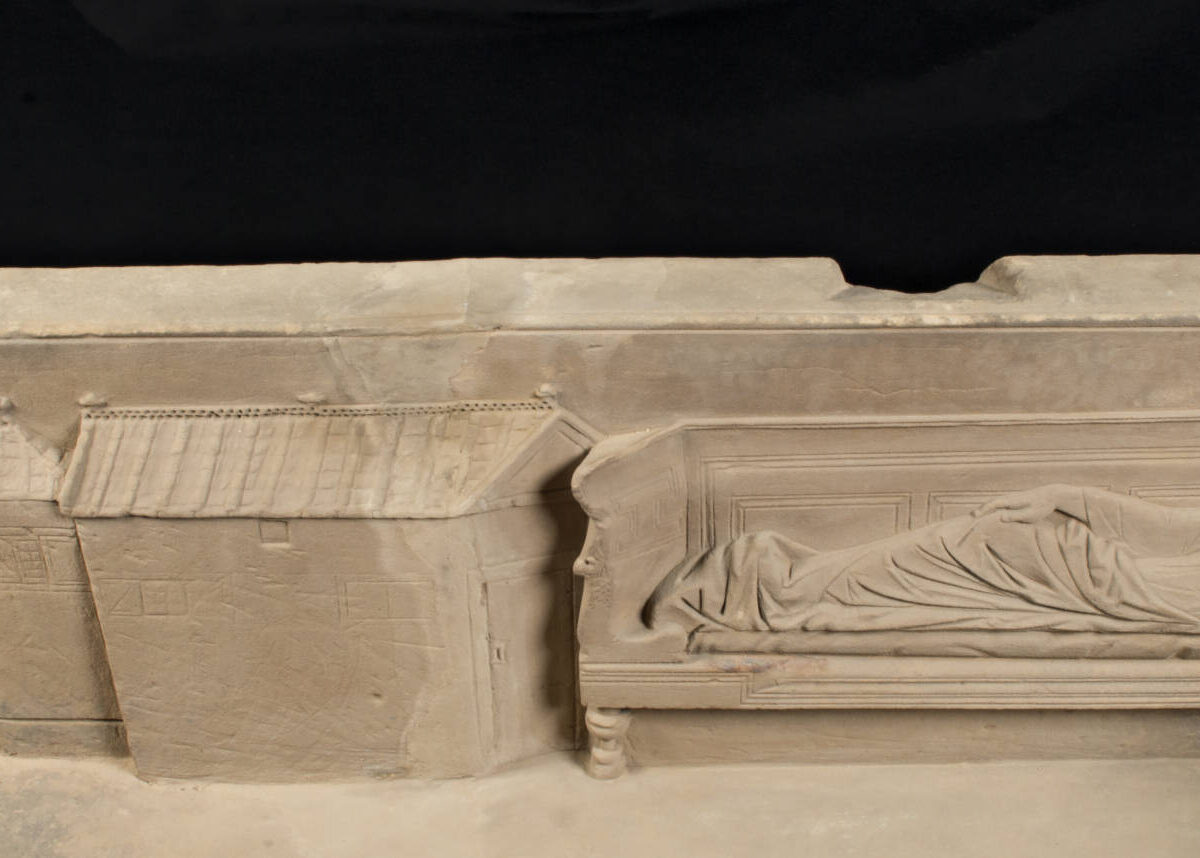
Since the end of September, two restorers have been working on the burial chest that miner Albert Wierts found in 1930 during excavation work near his house in Simpelveld. The chest, made of Nievelsteiner sandstone, is almost 2.50 metres long, weighs 800 kilos and contains the cremation remains of a woman who was between 35 and 50 years old at the time of her death. The woman was possibly the owner of a Roman villa rustica nearby. The burial chest is unique thanks to the sculptural work on the inside which shows the interior of the villa.
X-ray research
The burial chest is badly damaged. At the time of discovery, it was already broken into pieces and grave robbers had also made a hole. Since its discovery, several attempts at restoration have been carried out. The filling materials, glue residues and restorations now need to be replaced or removed. Therefore, the restorers are dismantling the burial chest and will reassemble it later. They are also looking for paint and pigment remains. Recently, during the restoration, an X-ray examination was carried out in an attempt to determine whether the floor and walls of the burial chest contained iron objects, but without success. The sandstone walls turned out to be too thick for the equipment used.
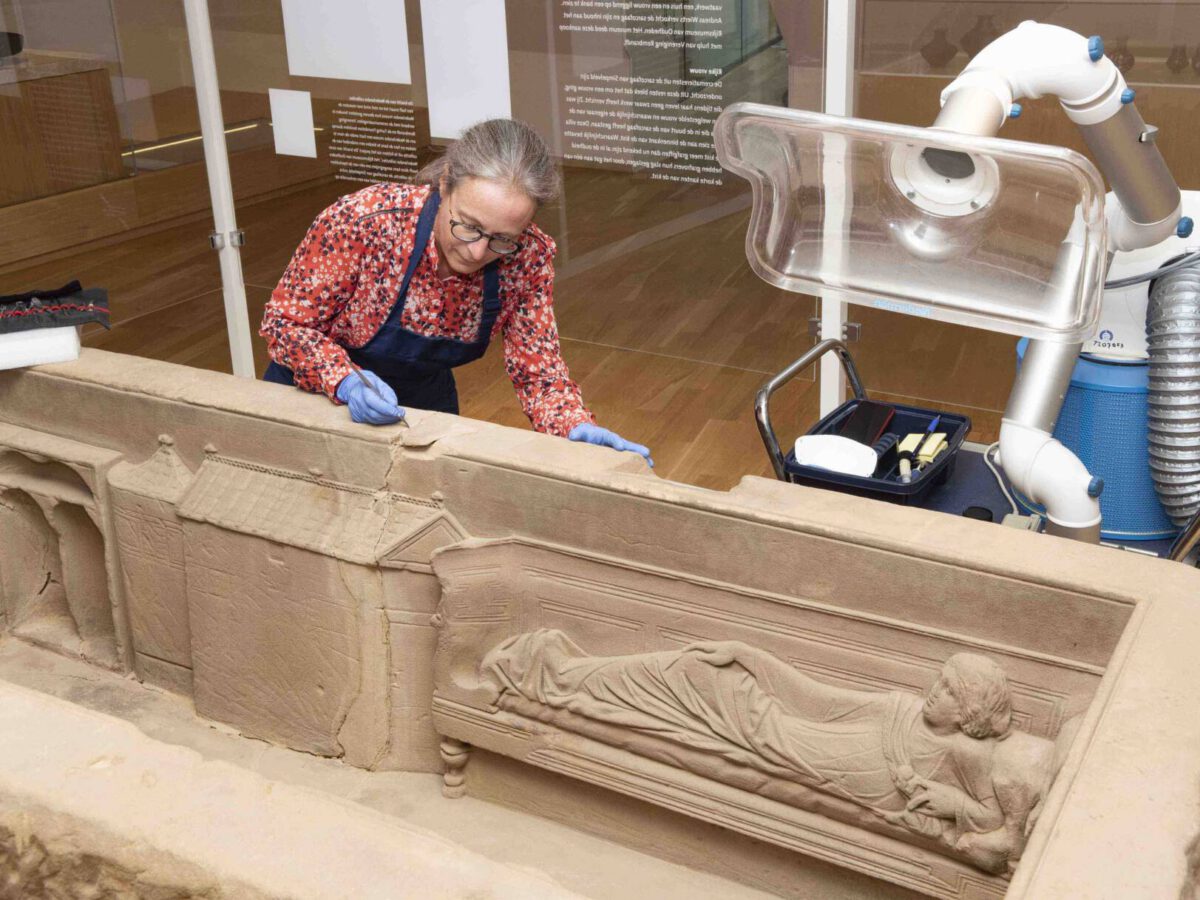
Follow the restoration
Visitors to the museum on Tuesdays, Wednesdays and Thursdays can follow the work of the restorers between 2 PM and 5 PM. The restoration is expected to be completed in January 2021. The sarcophagus will then be placed in an anti-reflection glass display case. Thanks to 3D scans, visitors will also gain a better insight into the sculptural work inside the chest.
.
25 Roman burial chests
To date, 25 Roman burial chests have been found in the Netherlands. They are often recorded not as burial chests but as sarcophagi. That name is incorrect because a sarcophagus contains a body. This is not the case with the Roman burial chests; only cremation remains have been found inside them. Well-known discoveries along the Via Belgica are the burial chest in Bocholtz (2003), four burial chests at Vossekuilenweg in Heerlen (1920), and one weighing no less than 5,000 kilos at Tinnegietersdreef in the Maastricht district of Belfort (1964).