Simpelveld cinerary chest is unique in the world
Author: Harry Lindelauf
Photography: Rijksmuseum van Oudheden
These are the favourite Via Belgica finds of the experts. Discover what archaeologists answer to our question: what is your favourite Roman find along the Via Belgica in South Limburg? The answers are varied and surprising. From a bronze Diana leg to spectacular sandstone cinerary chests. In ten episodes we present the experts’ choices. In the ninth episode:
Tom Buijtendorp— Publicist and historian
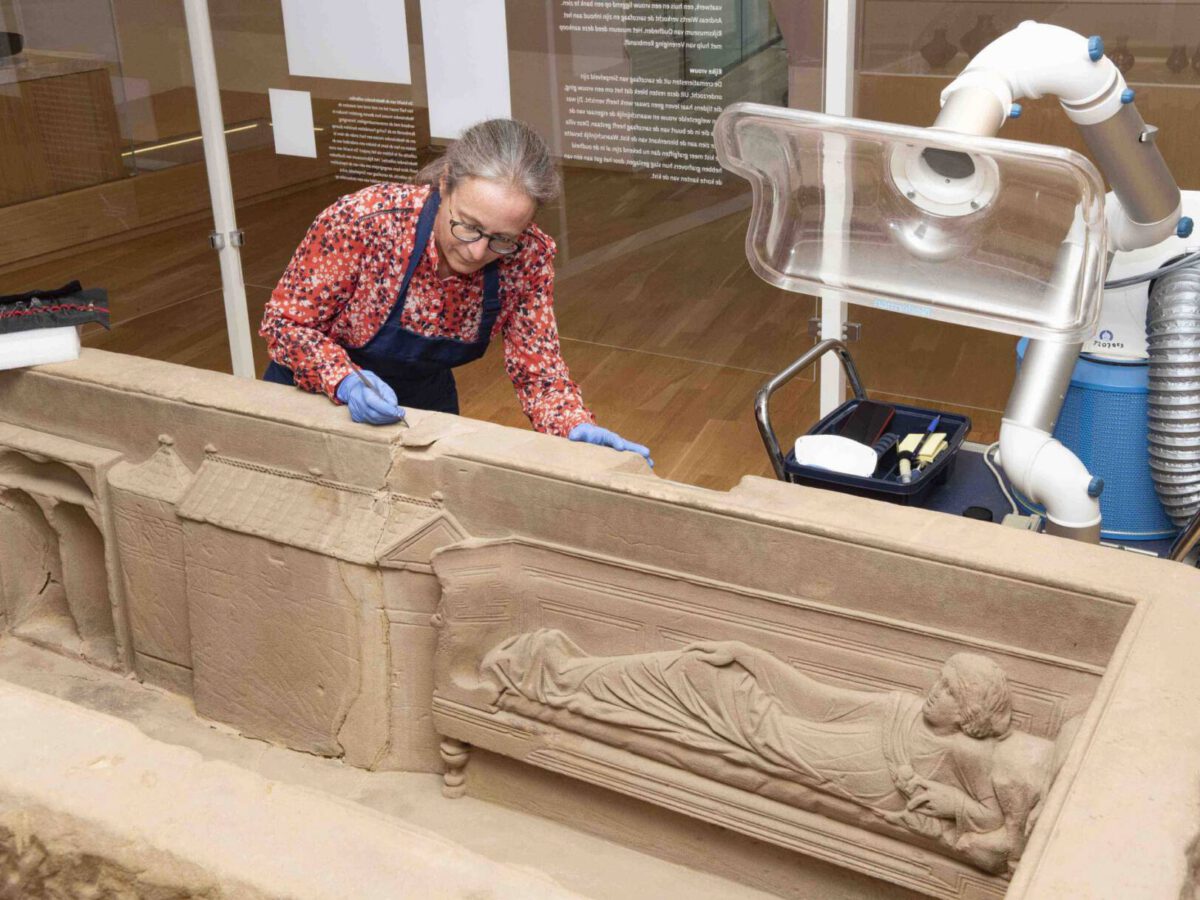
“While researching my book ‘The Golden Age of the Romans in the Low Countries’ I discovered how remarkable the cinerary chest of Simpelveld is. This resulted in two substantial chapters about the only Roman cinerary chest in the world with images on the inside instead of the outside.”
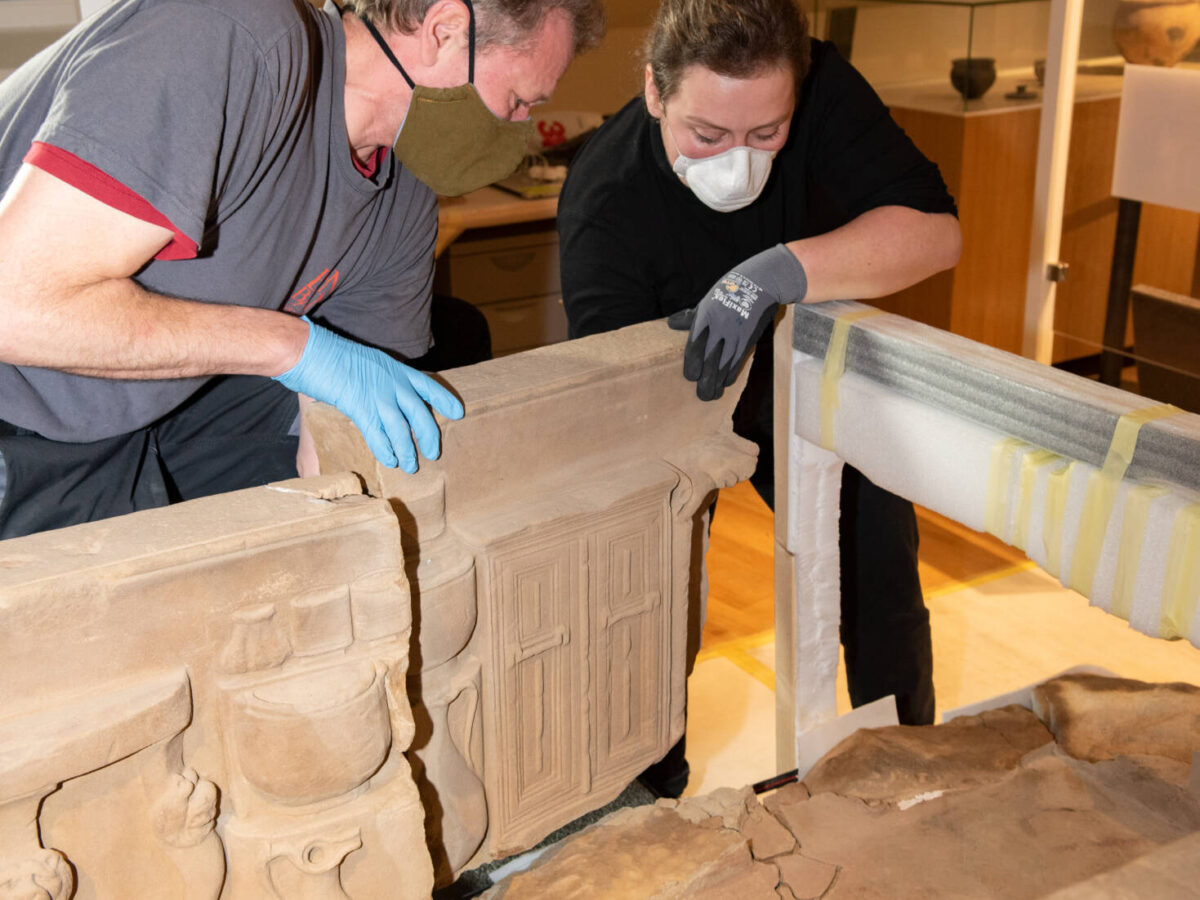
Restorers dismantle the cinerary chest and rebuild it.
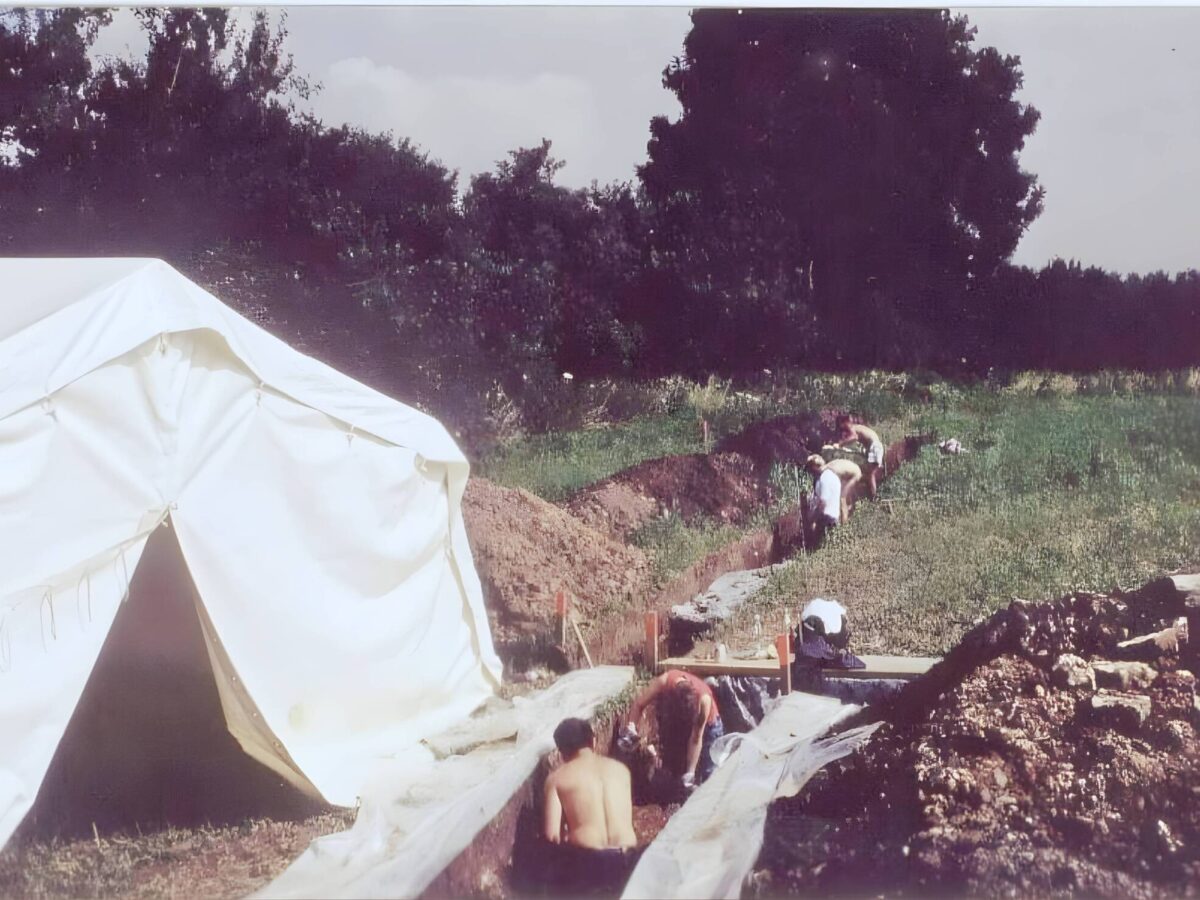
ublicist and historian Tom Buitendorp was given the opportunity to take measurements during the restoration. He worked with a scaled measuring rod: each Roman finger of 1.85 centimetres represents a Roman foot of 29.6 centimetres. “It turned out that the height measurements of the depicted villa corresponded to my reconstruction of the Roman villa excavated nearby, which belongs to the cinerary chest. Furthermore, I discovered that the heated bath wing must have been depicted. That makes it the only Roman depiction in the world of an actually excavated Roman villa, shown at a scale of 1:16. I also noticed that the proportions of the cinerary chest, with a scale of 1:4, match the largest room of the villa, including the thickness of the walls. Although coincidence cannot be excluded, it would fit with the exceptionally precise representations of the furniture. We may therefore be looking at the layout of the reception room of the villa.”
In pieces
The unique cinerary chest has been restored since late 2020 at the National Museum of Antiquities in Leiden. It is a huge job requiring a delicate approach. The sandstone chest is 2.4 metres long, over one metre wide and 76 centimetres high. These dimensions result in a weight of about 1500 kilos. The chest was already broken into pieces at the time of discovery and had stood on the same unstable wooden support since 1930.
Very precise
In Leiden the cinerary chest has been completely dismantled. The support has been replaced and all restorations from the past 90 years are being removed. The result is a fragile collection of puzzle pieces, sometimes made of powdery sandstone. Piece by piece the fragments are now being conserved and put back into place. Meanwhile, the completion date of the restoration has been moved to June 2021. “The entire process is very precise, and we are therefore taking plenty of time. But we are steadily progressing,” according to the restoration team.
Also read why Saskia Stevens chooses this find.
Renske Dooij cleans the sarcophagus in the early phase of the restoration.