Roman villa in Blankenheim
Villa in Blankenheim
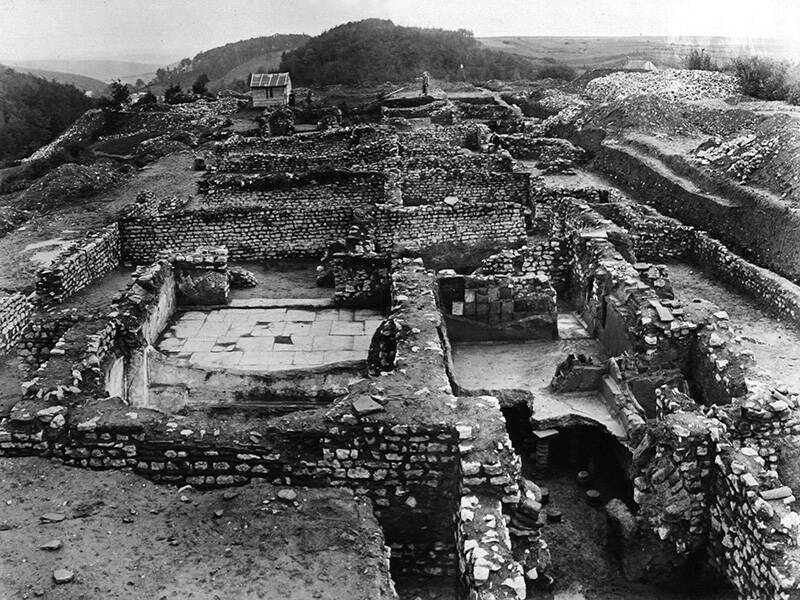
The first archaeological investigations took place as early as 1894. It was decided to preserve the exceptionally well-preserved walls of the main building and make them accessible to the public. However, the ancient stonework weathered and deteriorated very quickly. The excavations of 1914 focused on the earlier construction phases. Some of the building walls uncovered at the end of the 19th century are still partially visible in the ground today. The farmyard and outbuildings were archaeologically investigated in several excavation campaigns until 1931.
The Roman villa in Blankenheim
The villa at Blankenheim is one of the most important archaeological monuments in the Rhineland from Roman times. It was once a large estate (villa rustica) with a luxuriously furnished main building as well as stables, barns, coach houses and servants’ quarters, all grouped around a spacious farmyard.
The estate, measuring approximately 250 x 120 meters, covered a considerable three hectares. It was built at the end of the 1st century AD and continuously farmed until the mid-4th century. The main building, the owner’s or tenant’s residence, was defined by a wide colonnade (porticus) on the valley side and made a monumental impression even from a distance. The six outbuildings around the perimeter of the farmyard in front were arranged axially symmetrically. There is considerable evidence to suggest that the estate owner’s apparent wealth was also based on income from secondary occupations, such as operating quarries and mining ore deposits in the immediate vicinity.
The Roman villa of Blankenheim is the only known example of a representative axial villa in the Rhineland.
Modern presentation
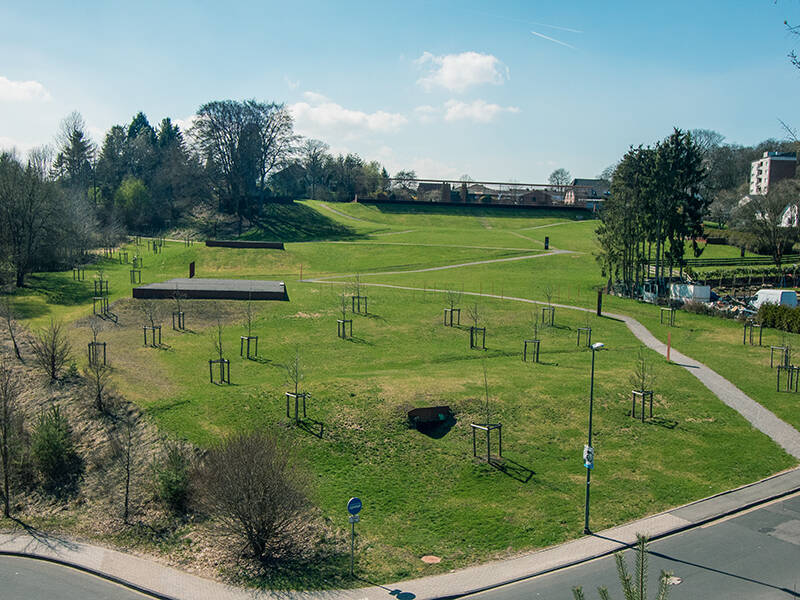
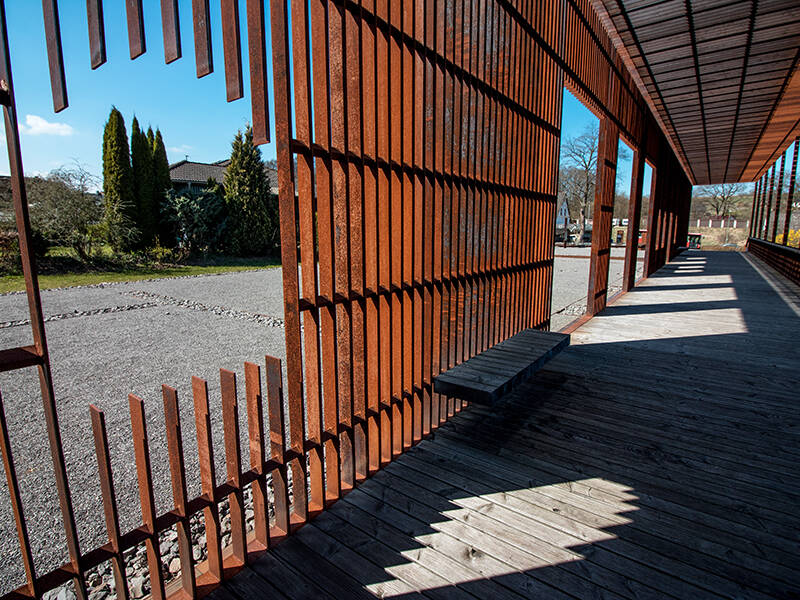
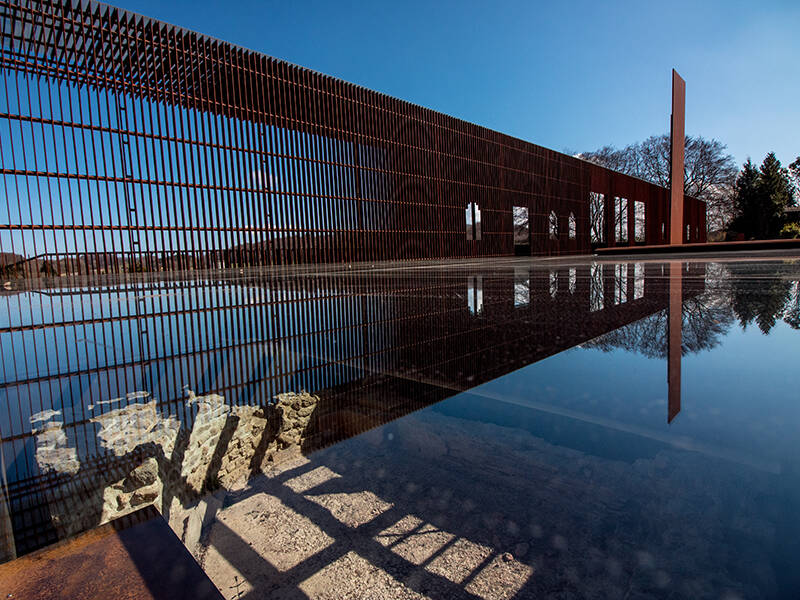
As a result of an architectural competition held by the municipality of Blankenheim, the nearly 60-meter-long colonnade of the main building was reconstructed using modern materials. The replica, with its striking, rust-colored steel louvers, is visible from afar. The design comes from the renowned architectural firm Schneider and Schumacher from Frankfurt am Main. The ground plan of the main building is represented by steel bands in the terrain, while sections of wall and flooring are distinguished by different types of gravel. Two “archaeological windows” offer glimpses into the original Roman structure. The entire complex was designed by the landscape architects GTL Gnüchtel Triebswetter from Kassel, allowing visitors to learn about the archaeological findings from information panels and enjoy the park. The ground plans of the outbuildings are also visualized using modern steel elements.
Fun to know
- First photo: the colonnade of the main building has been reconstructed using modern means. Photo: Cristof Ziegelberg
- Second photo: the complex of the Roman villa. Photo: Cristof Ziegelberg
- Third photo: the colonnade is reflected in the 'archaeological window'. Photo: Cristof Ziegelberg
- Fourth photo: The main building of the Roman villa Blankenheim during the excavations in 1894. Photo: LVR-Amt für Bodendenkmalpflege im Rheinland/LVR-LandesMuseum Bonn