The Roman Burial Chamber of Weiden in Cologne
The Roman Burial Chamber of Weiden
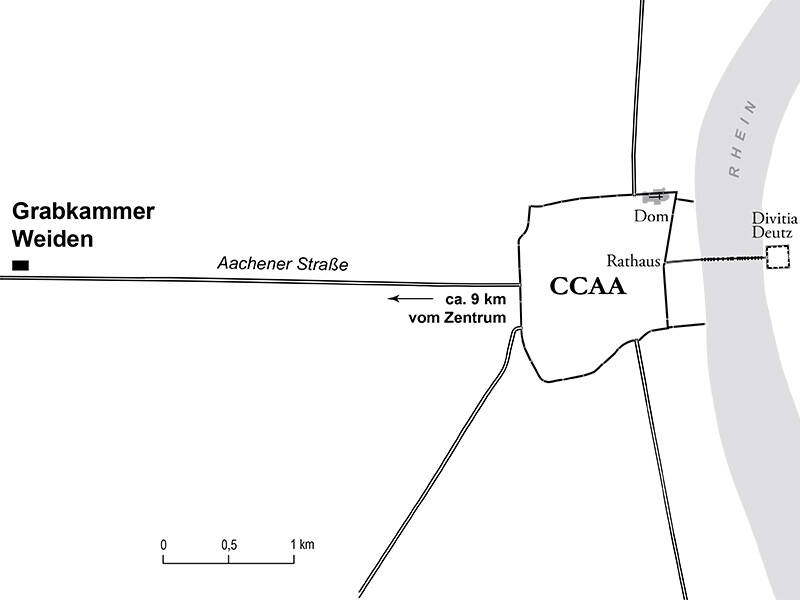
The Roman tomb in Cologne-Weiden is the jewel among the archaeological monuments of the Rhineland. The underground burial chamber, built from stone blocks weighing several tons and sealed with a massive trapdoor, was discovered by chance during construction work in 1843. It lies directly along the Roman road, about nine kilometers in front of the walls of Roman Cologne. The Roman tomb was purchased in 1844 by the Prussian state, which had a protective structure built around it. It is the first archaeological monument along the Rhine to have been preserved and made accessible to the public.
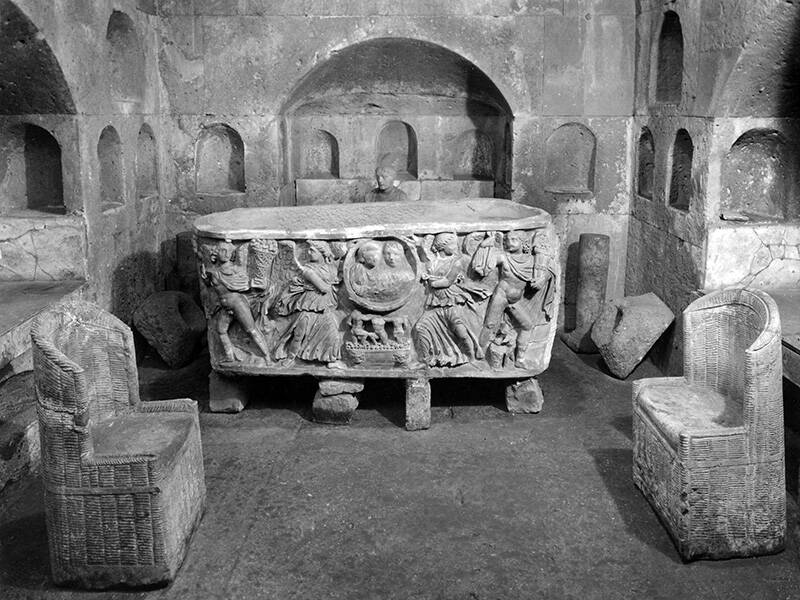
The burial chamber, dating from the 2nd century AD, is luxuriously furnished like a dining room. As if made for eternity, benches and armchairs of precious marble and limestone stand inside. The tomb was used for generations by a wealthy family until the 4th century AD. They were likely the owners of a large nearby estate (villa rustica). Marble portraits depict deceased family members. An imposing monumental tomb once rose above the underground structure. This is where the marble sarcophagus originally stood, richly decorated with figures and imported from Rome, and now visible in the burial chamber. The family tomb was not the only grave at this location—there were several others nearby.
On the other side of the Via Belgica, remains of walls from a building were found. It may have been a mansio—a stopping place along the Roman imperial road. Travelers could stay overnight here, eat, and relax in the bathhouse. Stables and workshops, blacksmiths and wagon makers, veterinarians and caretakers for draft animals were available to guests.
Fun to know
- First photo: Burial chamber, website Erlebnisraum Römerstraße
- Second photo: Grabkammer Köln-Weiden. Photo: Römisch-Germanisches Museum der Stadt Köln