Tongeren: Roman Wall
Place of interest: Roman wall in Tongeren
Tongeren — the first and oldest city in Belgium. Founded by the Romans around 10 BC, it was burned down by the Batavians half a century later, only to rise again, proudly rebuilt. Tongeren became the illustrious capital of the civitas Tungrorum, the administrative district of the region, where the Mediterranean influence of Rome was undeniable: a flourishing villa landscape, a magnificent aqueduct, grand temples and bathhouses, and markets brimming with exotic goods.
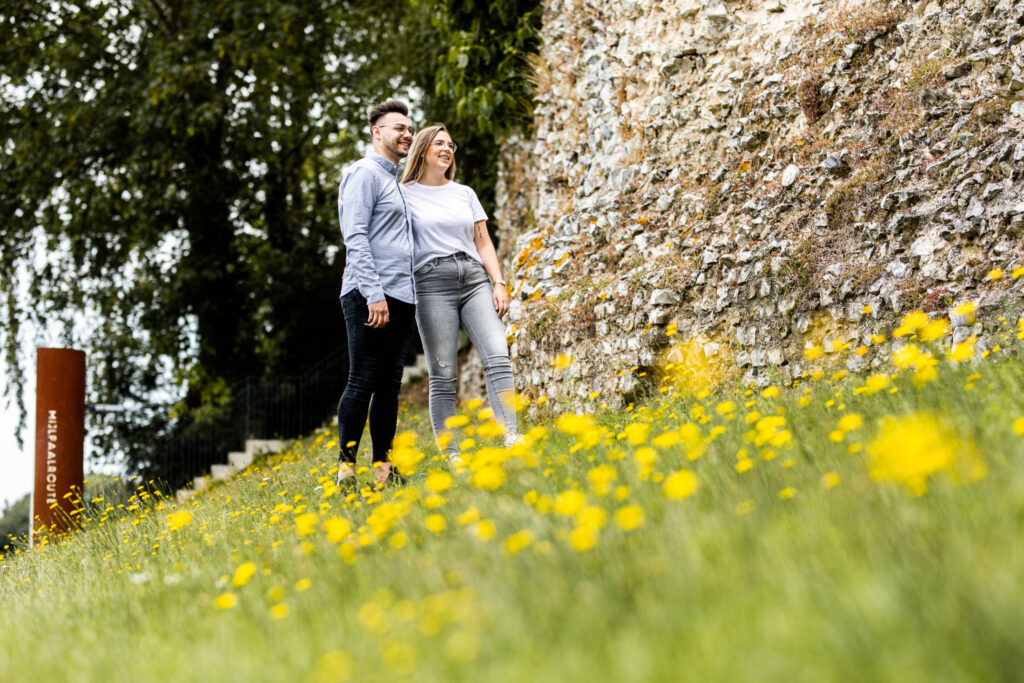
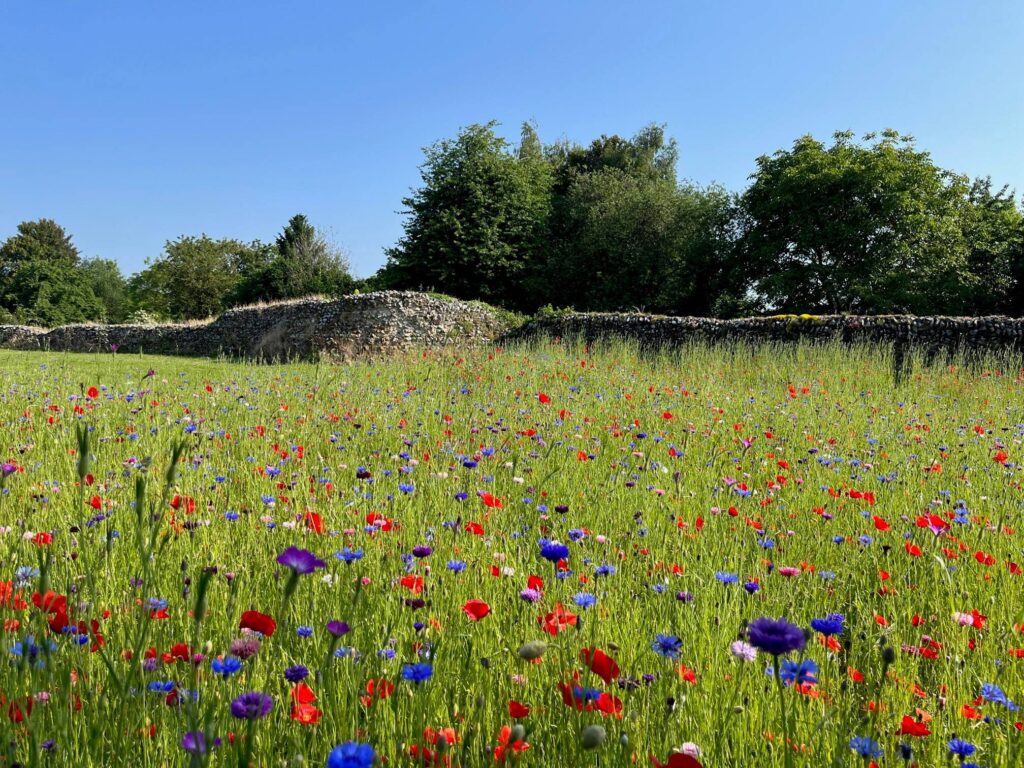
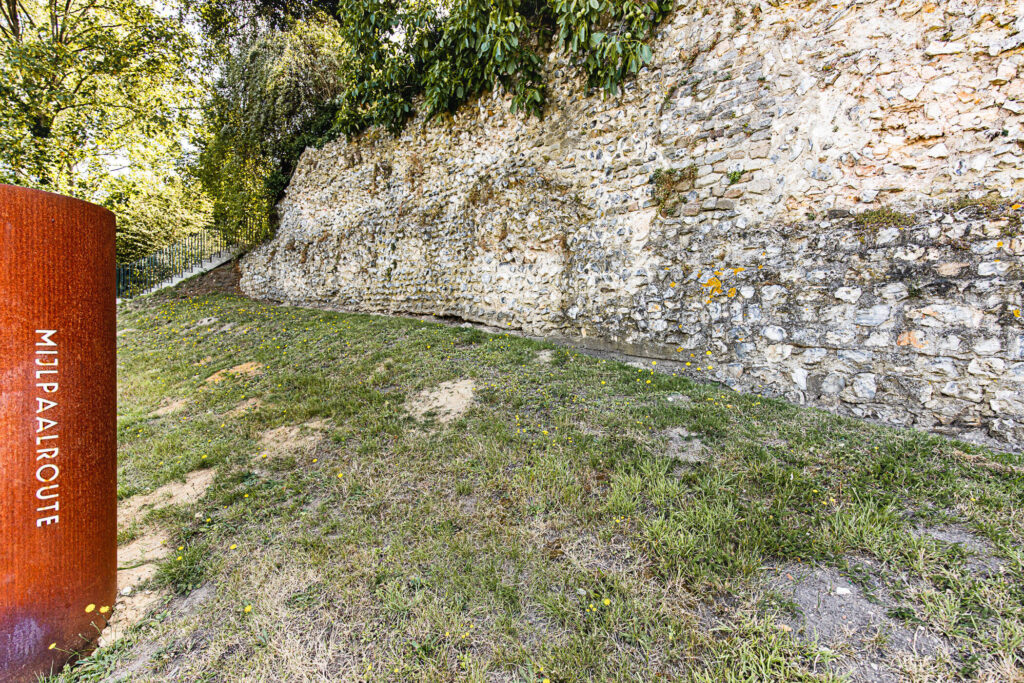
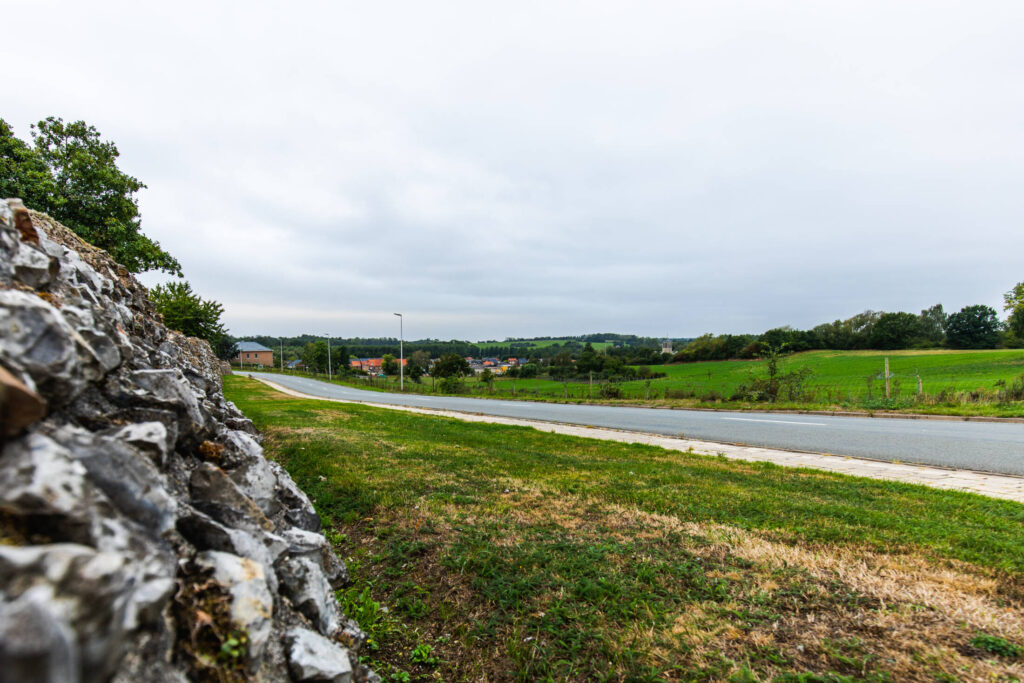
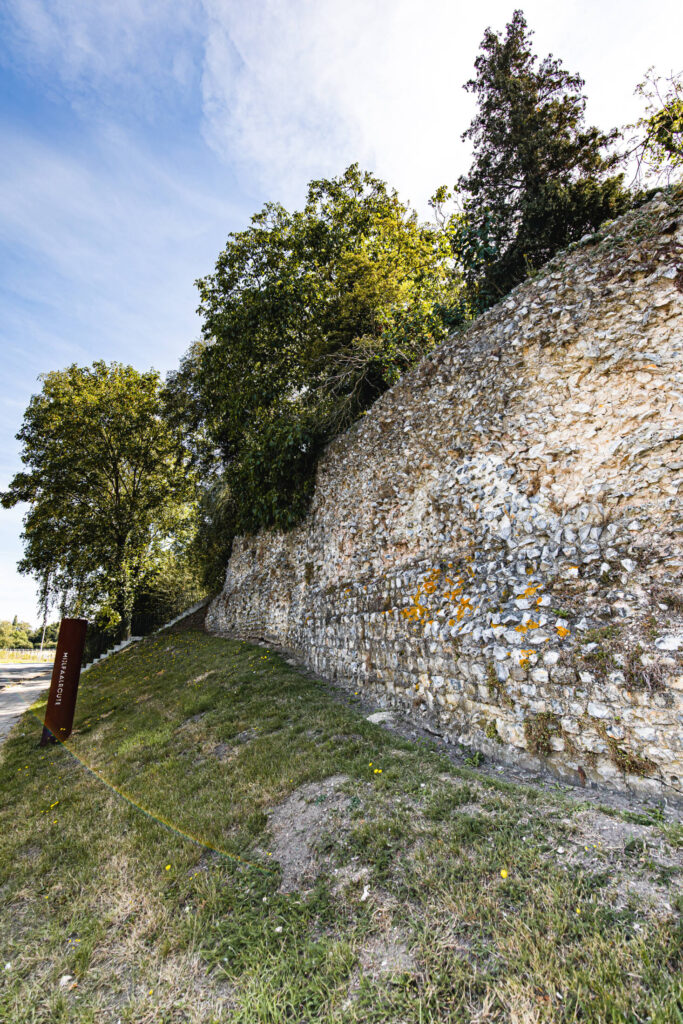
Even today, the Romans are never far away in Tongeren-Borgloon. Most hotspots are just minutes apart. Along your journey, you can view parts of the 2nd century Roman city wall of Tongeren along the Cesarlaan, and remains of the 4th century Roman fortification in the Teseum.
The Roman Wall
At the end of the 2nd century AD, Tongeren, then known as Atuatuca Tungrorum, was given a monumental city wall, ranking among the most impressive in the northwestern provinces of the Roman Empire. With a length of about 4.5 kilometers, the wall enclosed an area of nearly 100 hectares, instantly making Tongeren the largest walled city in the region.
The wall was built of local limestone, reinforced with an earthen core, and equipped with more than twenty semicircular towers, several monumental city gates, and one or more ditches. Despite its impressive construction, its defensive function has been called into question. Above all, the city wall emphasized Tongeren’s status as the administrative and economic centre of the civitas Tungrorum.
In the 4th century, the city was once again fortified with a wall enclosing a smaller area than the 2nd-century ramparts. This wall, fitted with massive towers, focused on the administrative and religious centre of Tongeren. The reduction in enclosed space reflects the changing circumstances: the pressure of Germanic incursions and the need for a more defensible urban core. Remains of this late Roman fortification are still visible today in the Teseum.
An Immersive Change to the Roman Walk, 2027
The story of Tongeren doesn’t end here. In 2027, the Roman city walk of Tongeren will receive a multidimensional upgrade as part of the VIA VIA project. The Roman hotspots on it will be enhanced with reconstructions and immersive storytelling. You will get an even clearer sense of the Roman road and the Roman city of Tongeren, and you will also be invited to visit the aqueduct, the Plinius springs, the Gallo-Roman temple, and other local sites. Through an app, you will see what the streets of Atuatuca Tungrorum looked like in the second century. Your guide? An AI character from the glory days of Roman Tongeren.
Are you ready for a stroll through the past?
“We cross a modern aqueduct and reach the edge of the city. Atuatuca Tungrorum. I have dreamed of visiting the only city in the region for so long. It does not disappoint. So many colours and scents. So many sounds. Barking dogs, shouting people, the rattling carts of traders like us. The streets overflow with delights. The finest fabrics. Exotic fruits and woods. Bottles and flasks. Oil from the south. Meat, bread, and perfumes. Two women argue loudly in a language I do not understand. Men in open doorways beckon passers-by inside. The sweet aroma of a bathhouse mingles with the stench of boiling animal bones for glue. I am ecstatic and despondent at the same time. For how can we sell our wares in this place? Here, in this city that already has everything?” – Ammulva Iucunda