Tempsplein is a Roman hotspot
Author: Harry Lindelauf
Photography: Gemeente Heerlen, Hilde Vanneste
These are the favourite Via Belgica finds of the experts. Discover what archaeologists answer to our question: what is your favourite Roman find along the Via Belgica in South Limburg? The answers are varied and surprising. From a bronze Diana leg to spectacular sandstone cinerary chests. In ten episodes we present the choices of experts. In the last episode:
Hilde Vanneste— Regioarcheoloog Parkstad
“I don’t have one top find. Many important finds have been made, but very special are the archaeological remains at the Tempsplein in Heerlen. Because of them, we now know for sure that Heerlen did not originate from an indigenous settlement, but that it was founded by the Romans.”
As regional archaeologist for Parkstad, Hilde Vanneste reads the connections between the finds and the meanings they have to – among other things – colour in the Roman picture of Coriovallum.
The elevated Tempsplein is the heart of the vicus Coriovallum. The reason for that foundation lies in the crossing of the Via Belgica (east-west oriented) and the Roman road from Trier to Xanten (north-south). Such a crossroads is worth defending, and several finds point to the military character of Coriovallum.
Hilde: “Access to fort is a unique find in the Netherlands.”
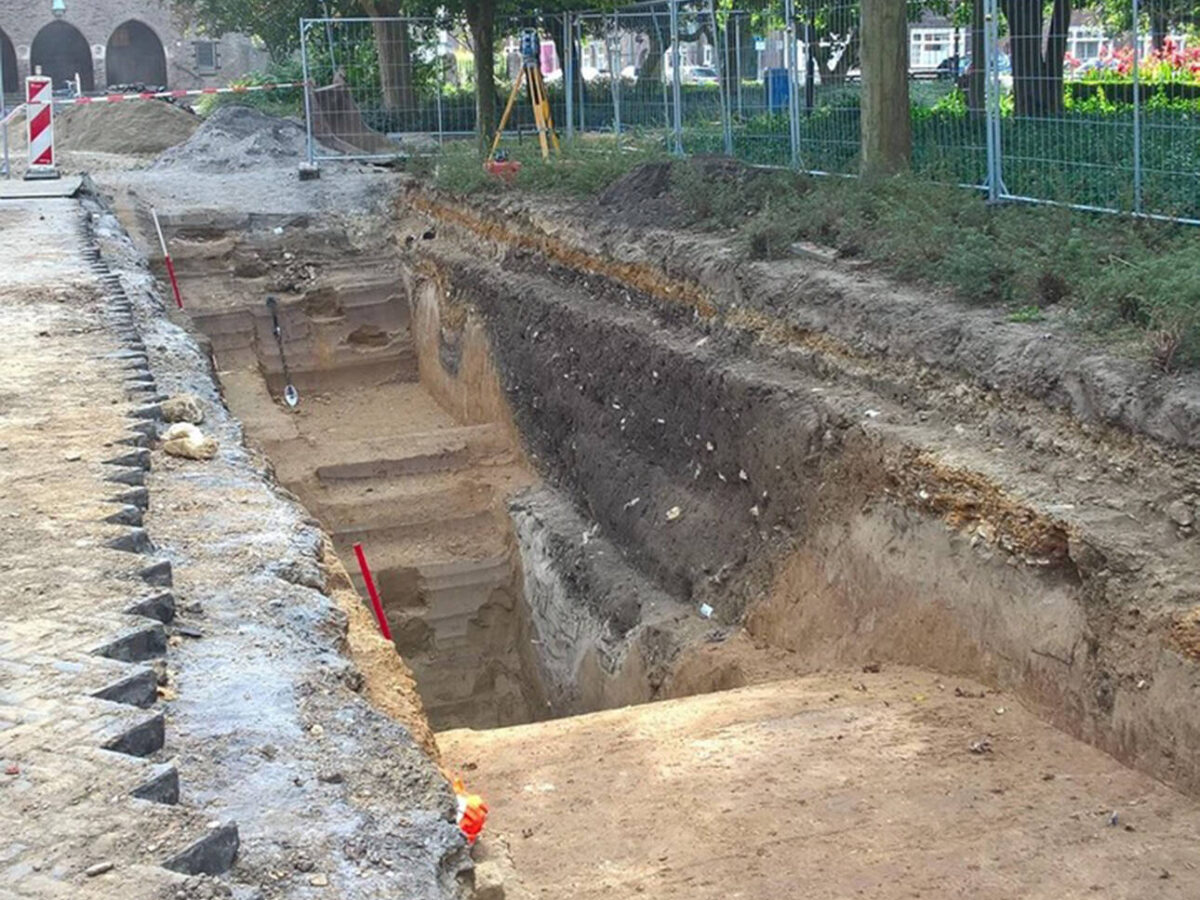
The V-shaped ditch is clearly visible thanks to the dark colour of the fill.
Fortification
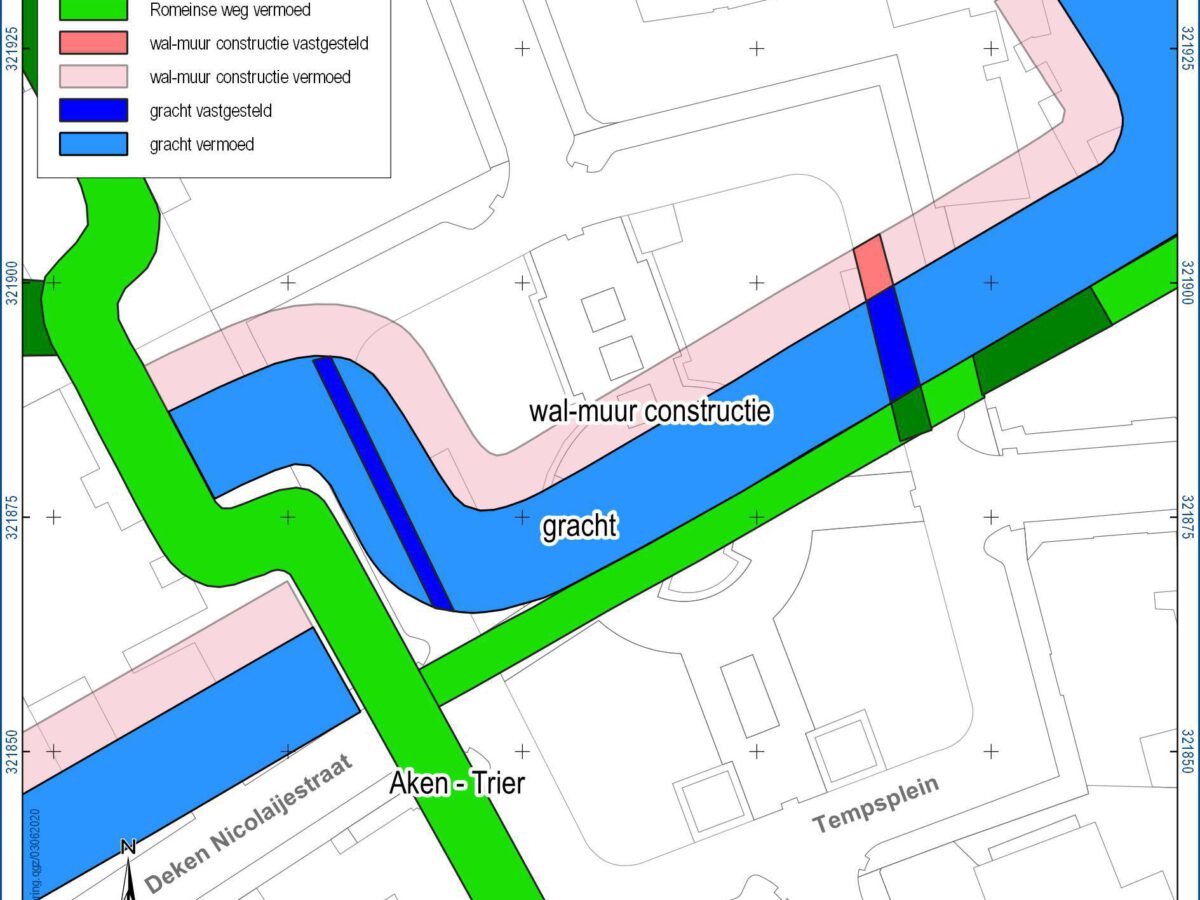
Around the third century Coriovallum is made defensible. There is a fortification – you may also call it a fort – with a V-shaped ditch that has been found in several places around the bathhouse and centrally on the Tempsplein. The defensive works consist further of an earthen rampart on which a palisade or a wall was placed. In 2016, work on the modern sewer produced a find that is unique in the Netherlands: it concerns a “clavicula”, a protected entrance to the fortification. During the excavation, the profile of the V-shaped ditch presented itself very clearly to the researchers thanks to the fill of dark soil. In the fill of the ditch, remains of horse harness and a bronze lock plate were found. Large smithing-slag pieces also turned up. This find points to a professional working of iron, possibly for the production of weapons and other material for the army.
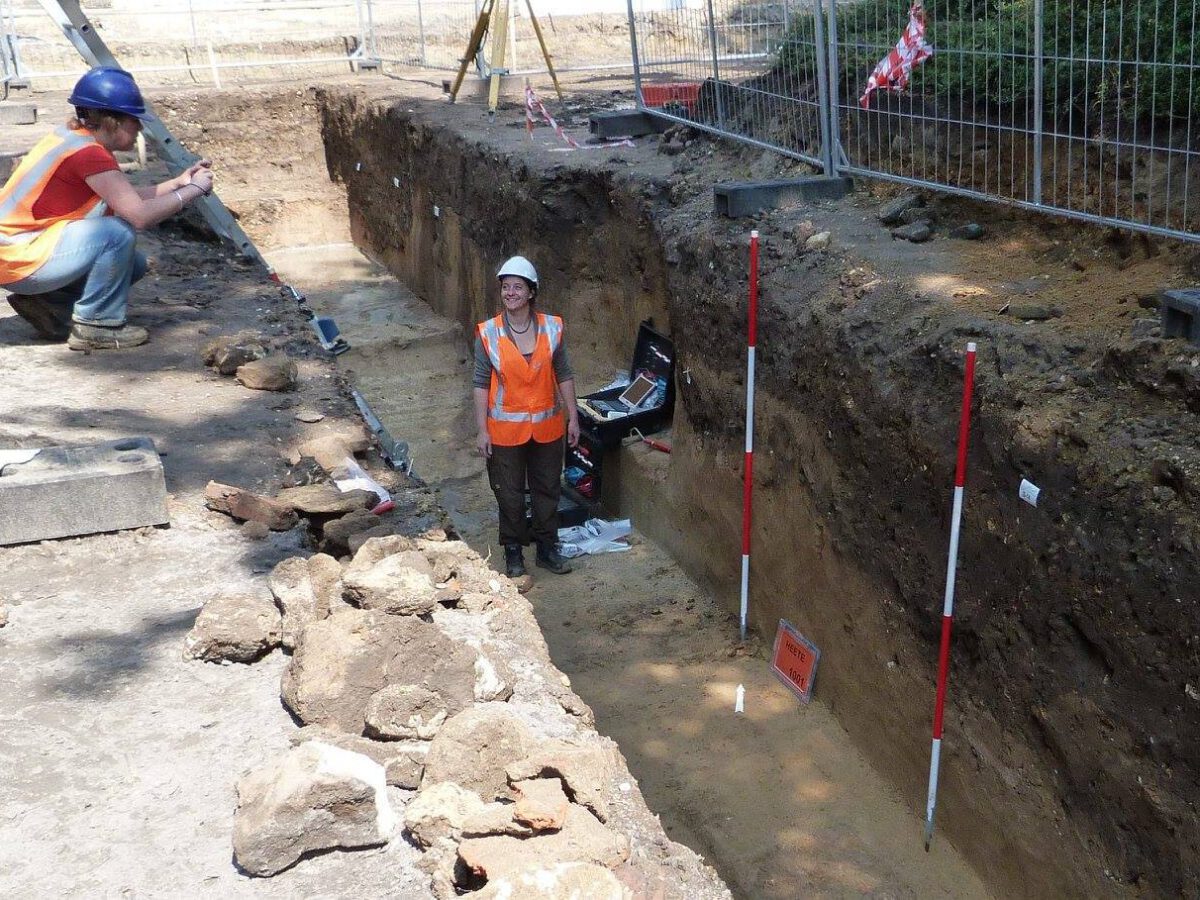
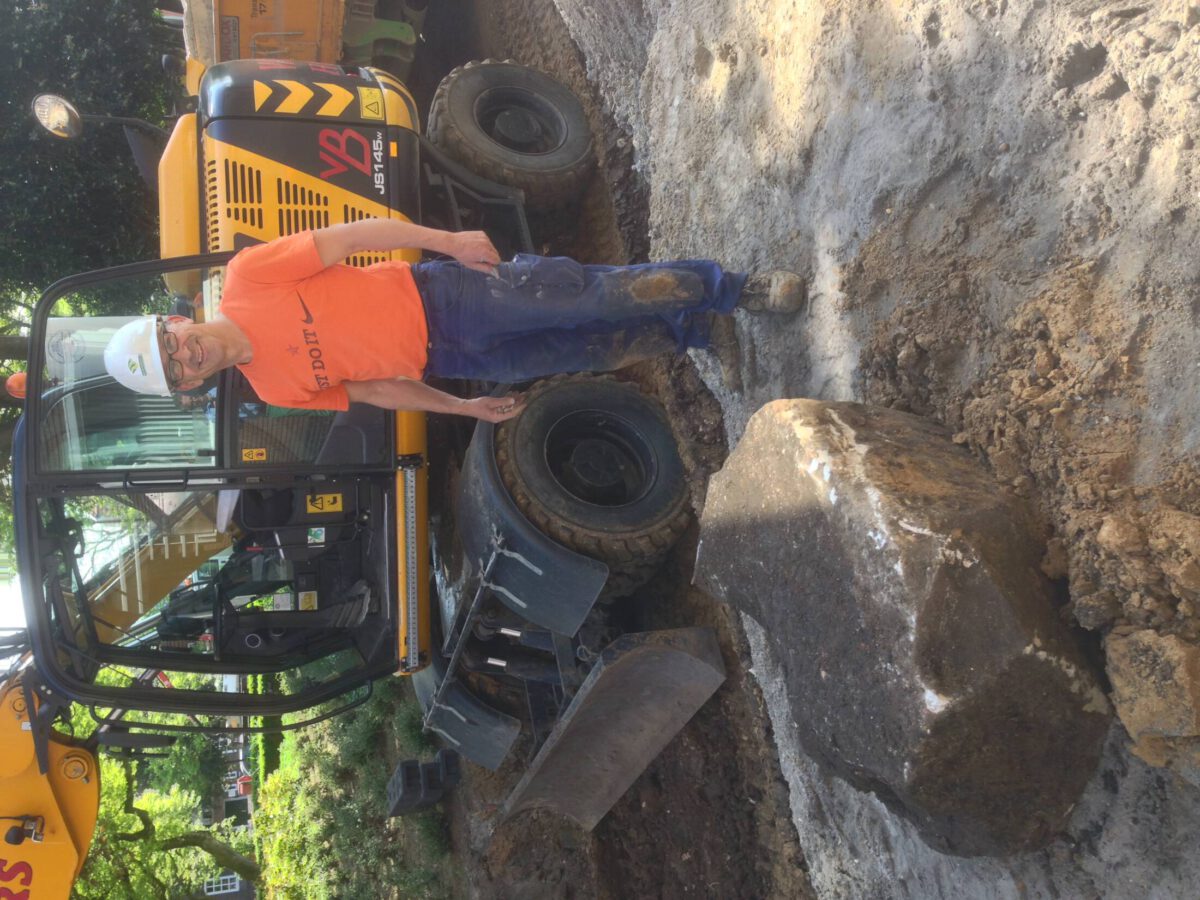
Photo: Gerard Tichelman of RAAP at one of the monumental fragments found under the Tempsplein.
Granary or temple
The V-shaped ditch of the Tempsplein belongs to the V-shaped ditch that was discovered a little further on, next to the Thermenmuseum. A modern reconstruction shows the depth and steep slope of the walls. In reality the ditch is deeper and wider. The defensive works protect houses, military barracks, many pottery kilns and the by now famous baths of Coriovallum. Several monumental building materials and foundations that have been found belong to a building of some prestige, possibly a large granary or a temple from the second or third century.
Photo: Municipality of Heerlen – Overview of the locations where the V-shaped ditch has been demonstrated.