The ash casket of the man from Bocholtz.
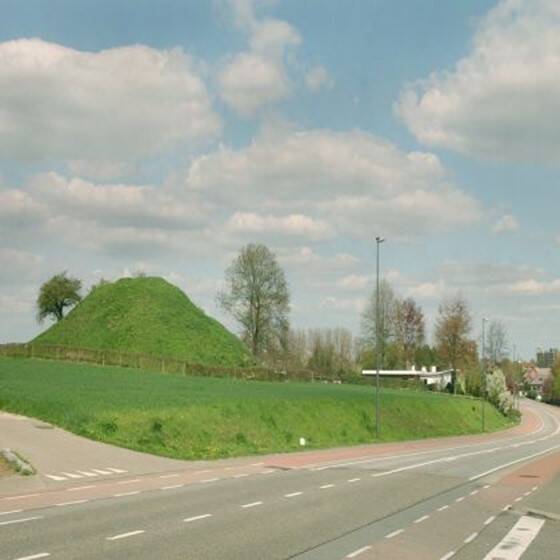
Helweg, Bocholtz
A few kilometres from the findspot of the Lady of Simpelveld lies the Roman valley of Vlengendaal–Bocholtz, a landscape once dotted with impressive villa estates. Within just one square kilometre, archaeologists uncovered four Roman villas in 1911 and 1913 — evidence of a thriving community along the ancient Via Belgica, the Roman road connecting Maastricht and Cologne.
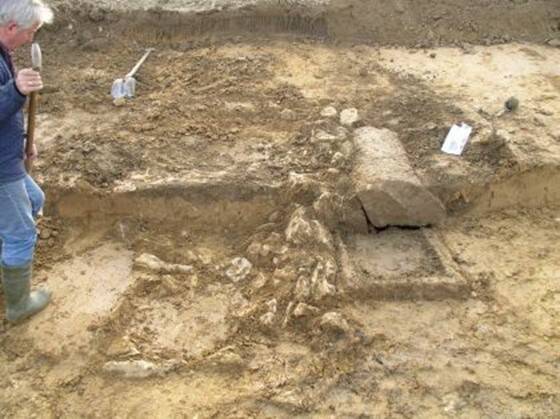
In 2003, farmer Hupperetz struck a large stone with his plough. This turned out to be one of the most spectacular finds ever uncovered in the Netherlands. Hidden beneath the soil lay a nearly intact sandstone cinerary chest, a remarkable rarity among Roman funerary monuments in the Netherlands. Archaeologists excavated it with great care. Inside were the cremated remains of an adult man (between 20 and 34 years old), later dubbed the Lord of Bocholtz.
The Grave Goods
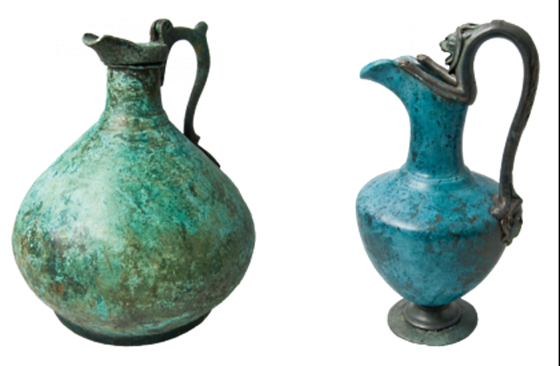
The ash casket was found in a tumulus, a burial mound. This points to the customs of the Tungri, a tribe that lived in the area around present-day Tongeren. The grave goods found within the urn and surrounding burial chamber are striking in their beauty and craftsmanship. They include fine bronze and glass vessels, among them a perfectly preserved bronze balsamarium — a Roman ointment jar shaped like a male bust. Such an object would have been a costly possession, befitting a person of high status. Other finds, such as an inkwell, suggest the deceased was literate and likely a member of the local Gallo-Roman elite. Later research identified the Lord of Bocholtz as a Roman military veteran who may have retired to this prosperous villa landscape.
His burial, rich in symbolism and luxury, reflects the enduring prestige of those who lived — and died — along the Roman road.
Today, the cinerary chest can be seen in the Information Centre Hoeve Overhuizen.