Ash box and Roman road in Jülich
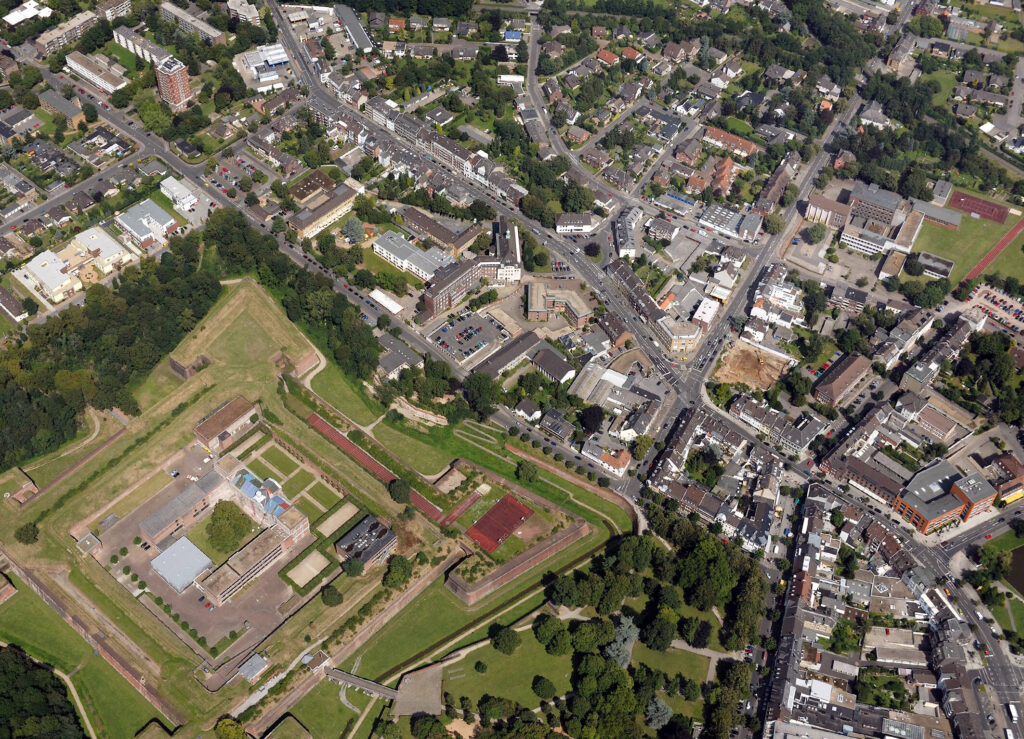
The Schloßplatz in front of the citadel
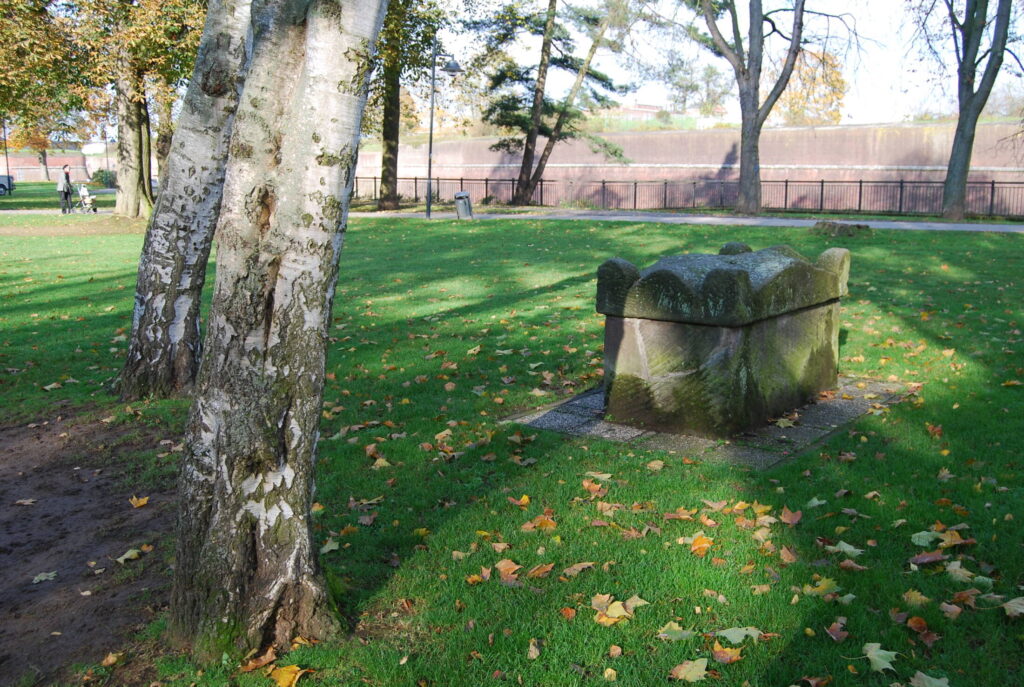
The Schloßplatz in Jülich was created as a park at the end of the 19th century above the moat of the former Renaissance city wall. This also cut off the Roman road, which has been preserved in the east of the city in its current course. At the corner where the “Römerstraße” ends at the Schloßplatz, there is a Roman ash box, a stone box that served as an urn to hold the ashes of the deceased. This type of burial was common in Roman times and was practiced until the end of the 3rd century AD. After that, burial of the body became the norm. The Jülich ash box does not come from the city centre, but was found in Kirchberg near the Eichhorn paper factory and donated to the city of Jülich in 1904, which placed it on the new Schloßplatz.
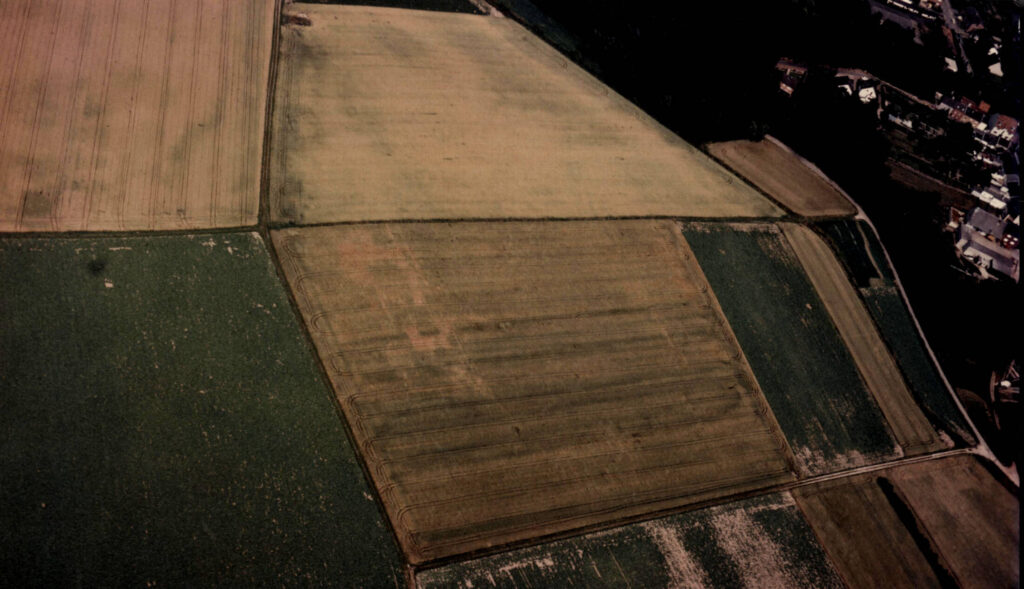
The ash box is shaped like a house, with the trough as the base and a cross-shaped roof with triangular gables on all sides. Decorative tiles (acroteria) are reproduced at the corners. The burial belonged to a wealthy Roman estate, whose foundation walls are still preserved in the fields west of the Lohner Fließ stream on the outskirts of Kirchberg. Viewed from the air (middle field), the foundations of the main building stand out clearly on the left edge of the field (Aerial photograph towards the northeast by Gunter Amtmann, 17 July 1983).
Fun to know
- First photo: aerial photo of the Citadel, Schlossplatz. Image rights: A. Petersen
- Second photo: Ash box - Schlossplatz
- Third photo: aerial view. Photo: Gunter Amtmann, 1983.