Via Belgica bench at the Kanjelbeek unveiled
Author: Via Belgica
Photography: Philip Driessen
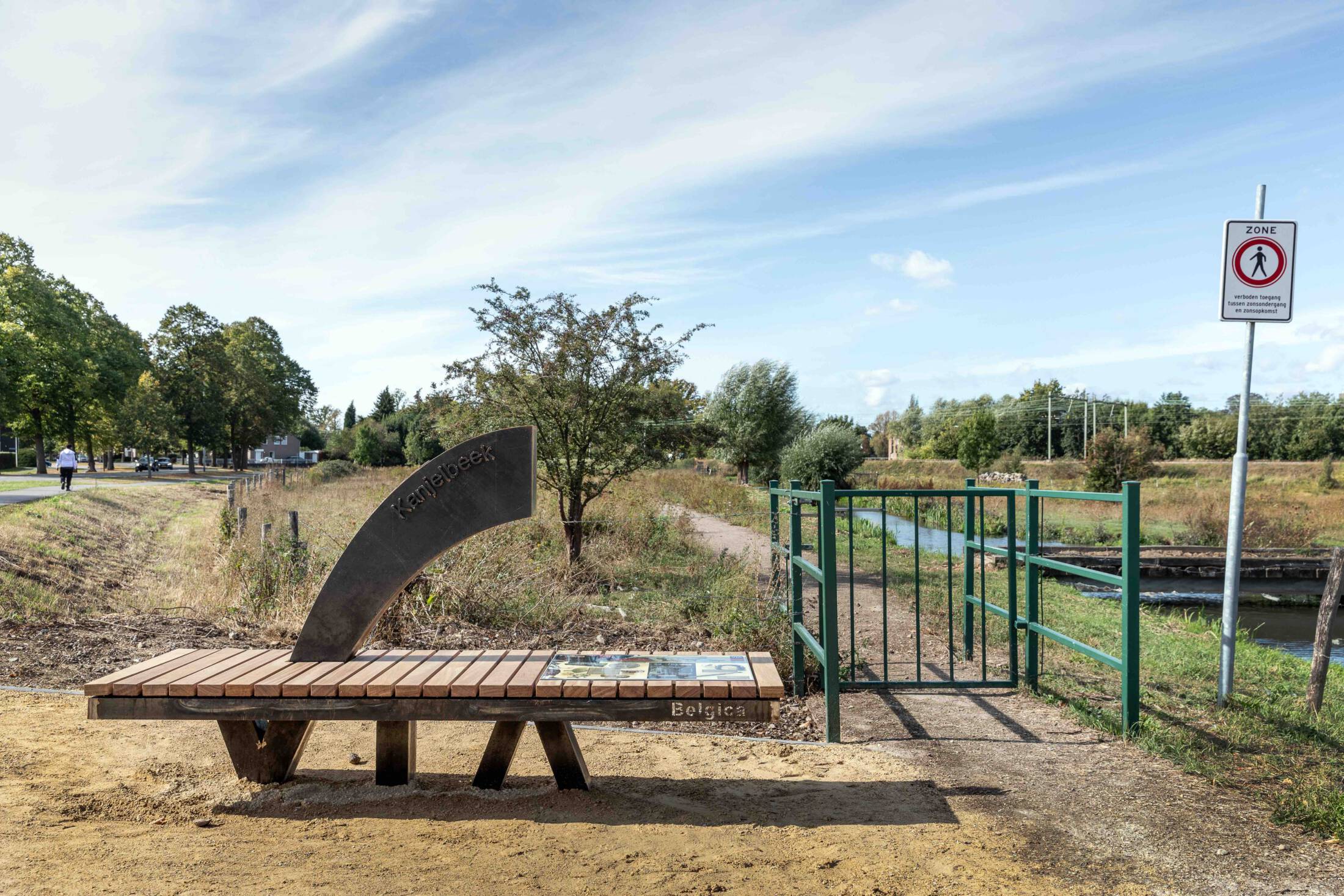
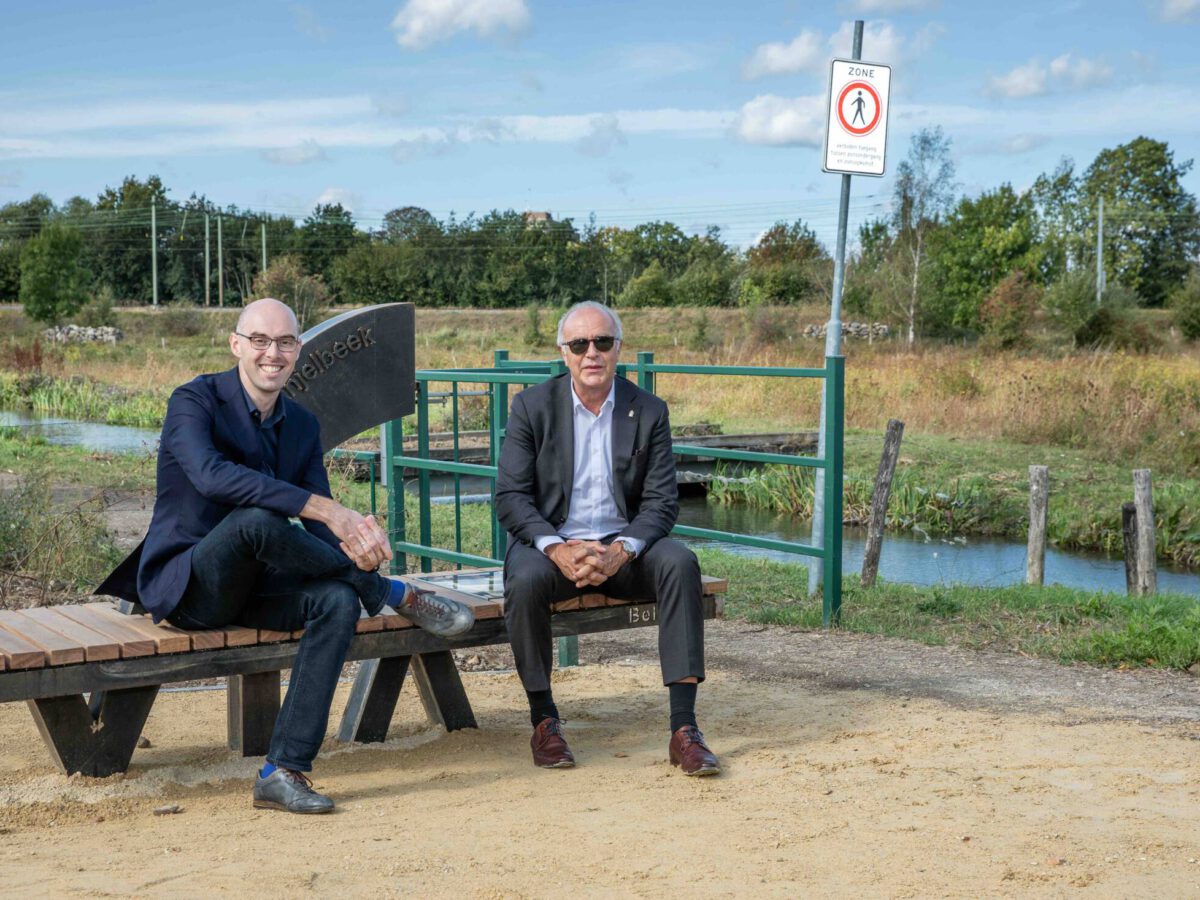
On Thursday 24 September, the 7th Via Belgica bench was unveiled on Meerssenerweg in Maastricht. The bench provides insight into how the Romans lived in our region and how they largely shaped the present landscape. Alderman Gert-Jan Krabbendam and provincial executive member Ruud Burlet carried out the unveiling.
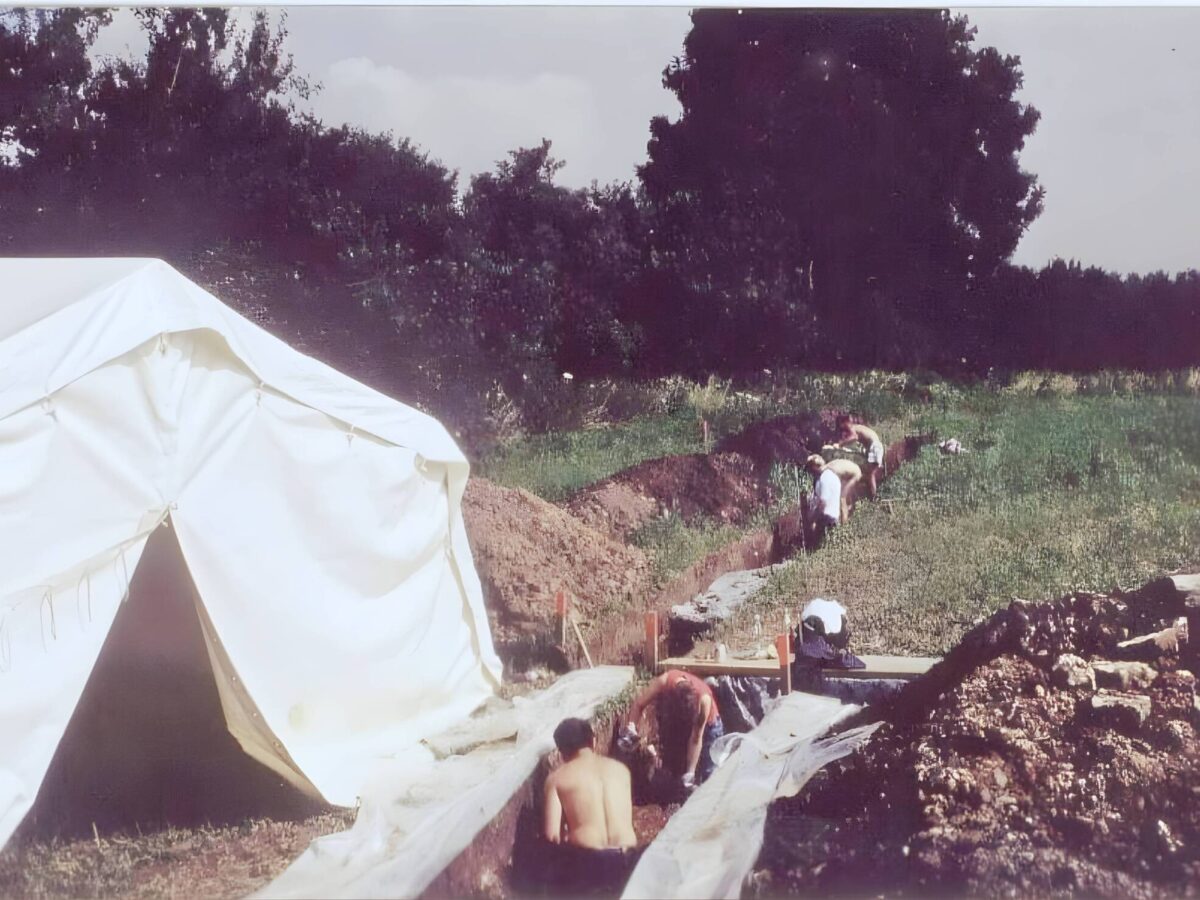
The Via Belgica bench is located at the crossing with the Groene Loper, opposite Villa Kanjel. In Roman times, there was a roadside inn here, where travellers could stop for food and drink. Part of a Roman villa complex has also been discovered, which offers insight into the luxury and wealth of its inhabitants. Ruud Burlet, member of the Provincial Executive of Limburg and chair of the Via Belgica steering committee: “It is wonderful to see how many steps we are taking together to bring the Roman past back to life. Through modern communication such as VR glasses or an app, but certainly also by walking the Via Belgica route yourself. All of this contributes to a growing awareness, among young and old, that the past still plays a role today. This place near the Kanjelbeek makes you pause and reflect. That is exactly what we aim for with the Via Belgica project.”
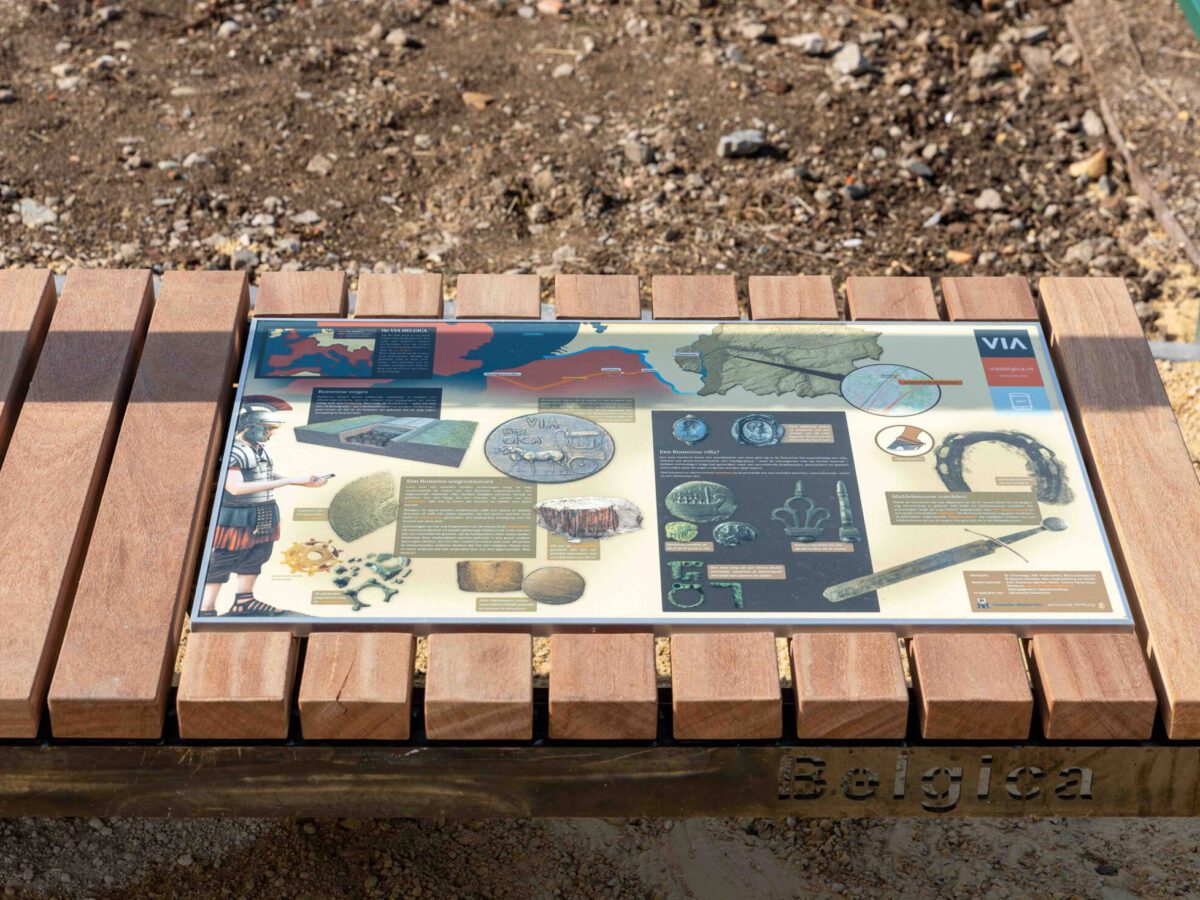
The theme of the bench is the Roman landscape and the Via Belgica in rural surroundings. Because of the wet environment so close to the Kanjelbeek, Roman engineering troops built a dam here on which the road was laid. The exact location of the Via Belgica could be determined a few years ago thanks to the A2 project. This tells us that it largely corresponds to the present Meerssenerweg and gives insight into the activities that took place along the road.
Alderman Gert-Jan Krabbendam, responsible for archaeology, called the new feature “a new link in the chain of information benches” in our Roman South Limburg. “It is sometimes difficult to imagine what the world of our ancestors looked like centuries ago, but the municipality of Maastricht does want to offer that experience to visitors and to our inhabitants,” said Krabbendam. “With images and stories we bring our past vividly back to life.” The benches are located in striking places in the landscape, all of which have a story to tell. The furniture was designed by landscape architect Barry Kerckhoffs of Bureau Verbeek. Kris Förster developed the stories for the information panels.