Theft of stone blocks leads to the discovery of a villa
Author: Harry Lindelauf
Photography: RMO, Marc Hermans/Studio BKL, Landschaftsverband Rheinland
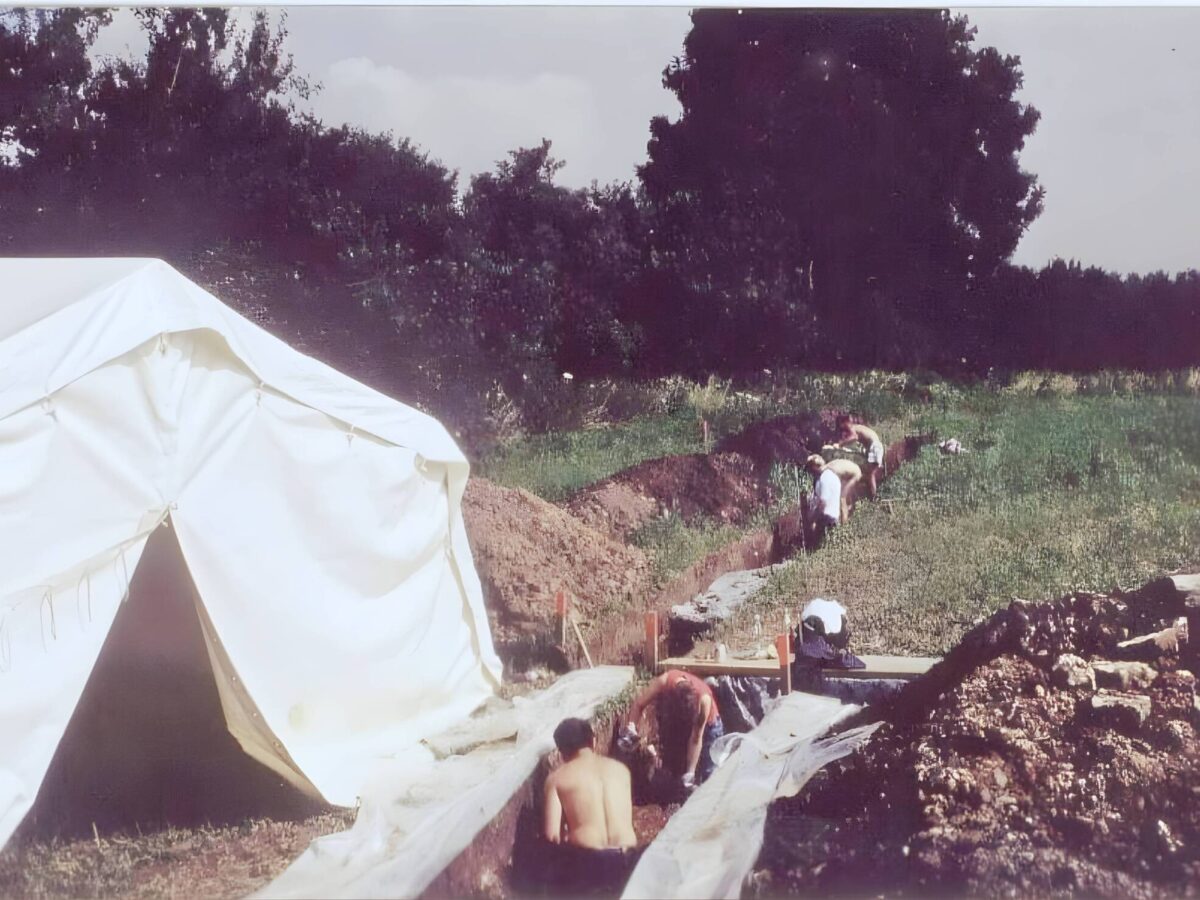
This is the story of a remarkable villa rustica in Bocholtz. A story in which a 14th-century border and the night-time theft of dozens of large sandstone blocks play an important role. Discover the story of the villa with two names.
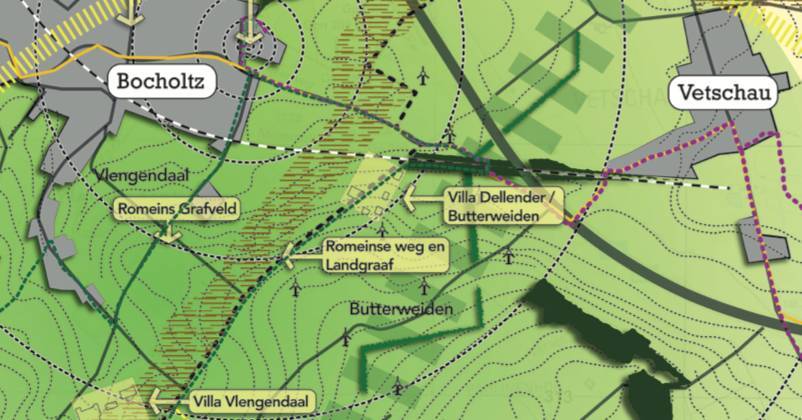
The remains literally lie on the border. On the Dutch side it is known as Villa Dellender, while the German neighbours call the villa Butterweiden. The exact location lies where the Roman valley of Bocholtz meets a German wind farm near Vetschau.
Our story of Butterweiden/Dellender begins in 1982. One night, dozens of sandstone blocks are stolen here. They most likely now form part of someone’s garden wall. A resident of Bocholtz hears about the theft and goes to take a look. While exploring the “crime scene”, he finds remains of Roman wall structures and fragments of pottery.
Illegal treasure hunters
A year later the site receives another visit. This time the visitors bring a metal detector and discover — as becomes clear years later — around 700 Roman silver coins.
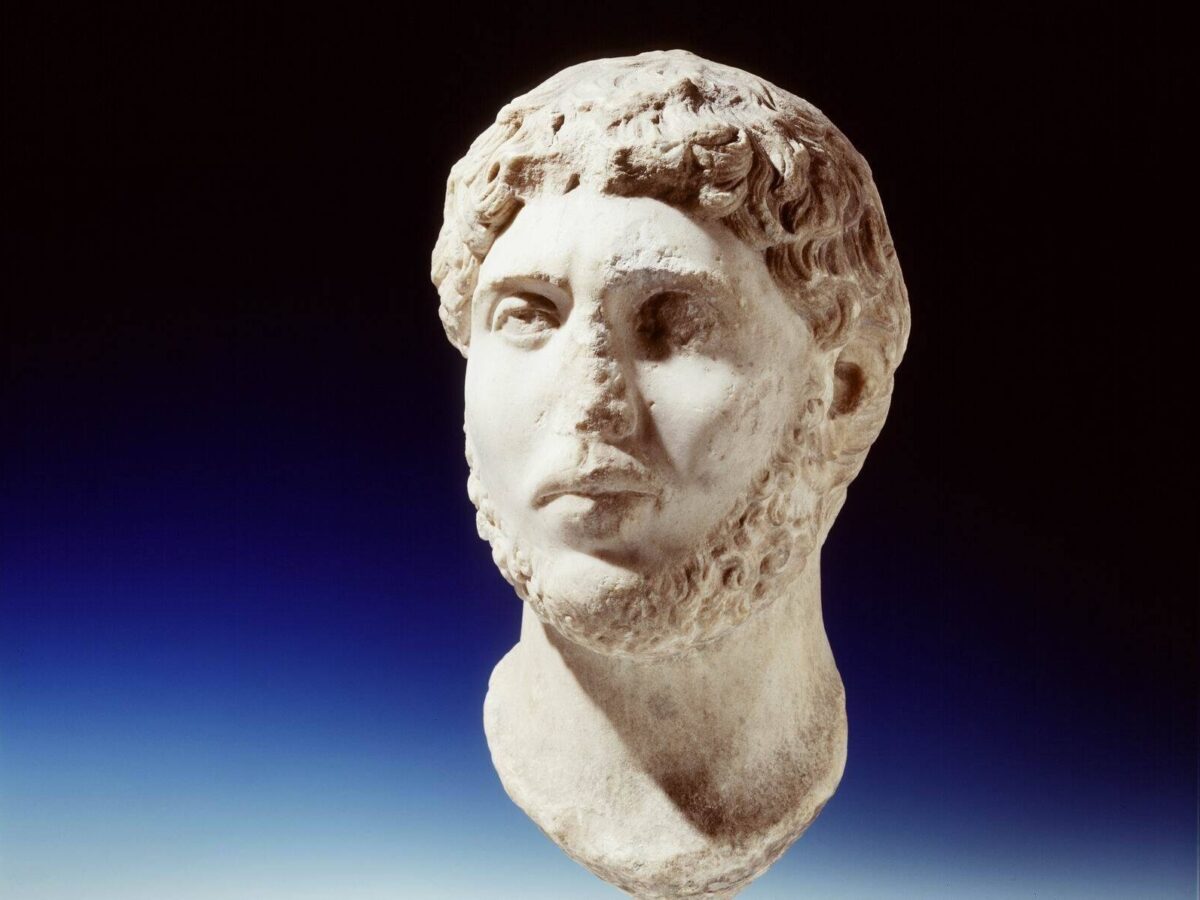
The illegal treasure hunters contact the State Museum of North Rhine-Westphalia in Bonn. After difficult negotiations, the museum manages to purchase part of the find. The oldest coin dates from AD 120, while the youngest dates from 257 or 258, during the reign of Emperor Gallienus. The coins the museum could not purchase disappear through auctions and remain untraceable.
Photo: Publius Licinius Egnatius Gallienus, emperor from 253 to 268. This statue resembles other portraits of Gallienus, but it is possible that a private individual had it made to resemble the emperor.
“Excavation – how it’s done”
Scientific interest in the site only arises in 1992, stimulated by the exhibition Spurensicherung and a conference in Aachen. German archaeologists focus their attention on the villa, also to give students a practical lesson in excavation.
Because the remains lie exactly on the border, the idea is for the Netherlands and Germany to join forces. The Dutch State Service for Archaeological Heritage is therefore approached. They participate, but cautiously, as there is little funding available.
The outcome is striking: hardly any remains are discovered on the Dutch side, while many more are found on the German side. The remains in the Netherlands suffered greatly from 500 years of agricultural activity. On the German side they were much better preserved beneath the boundary bank belonging to the landgrave of the imperial city of Aachen.
This 14th-century border ditch, four metres wide and three metres deep, runs straight through the Roman complex. The German side of the site was also used as pastureland for centuries, meaning the remains were not destroyed by ploughing.
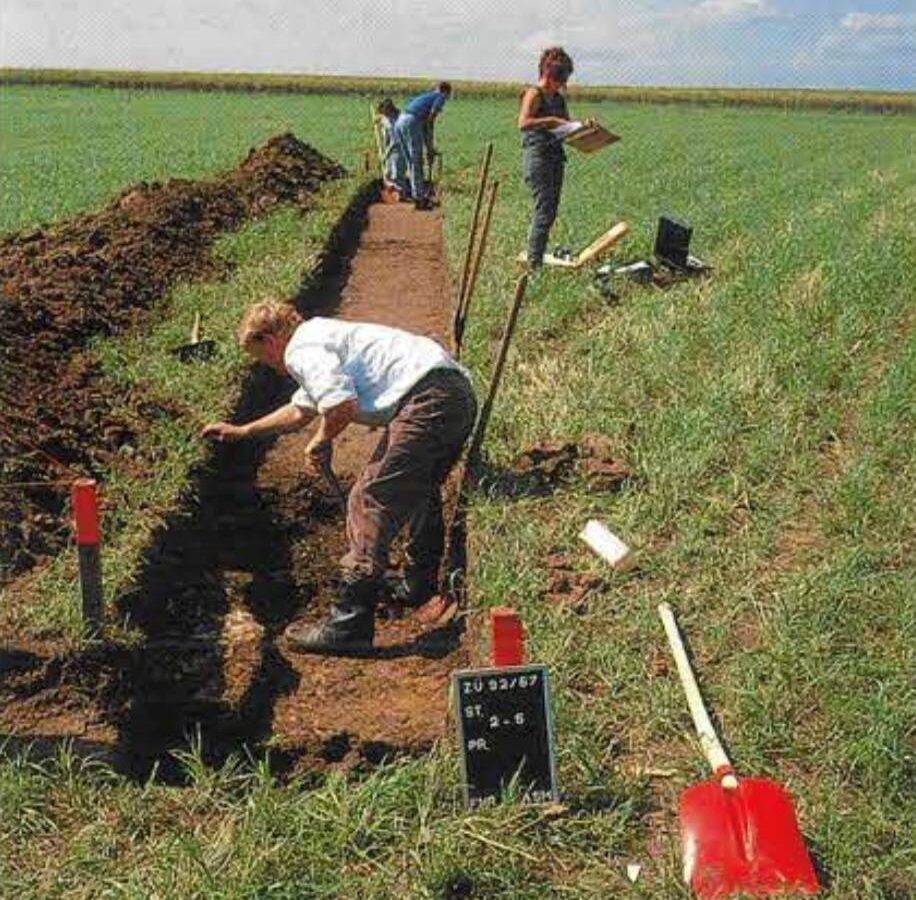
Photo: Several test trenches were excavated during the investigation in 1992.
Watchtower or grain storage
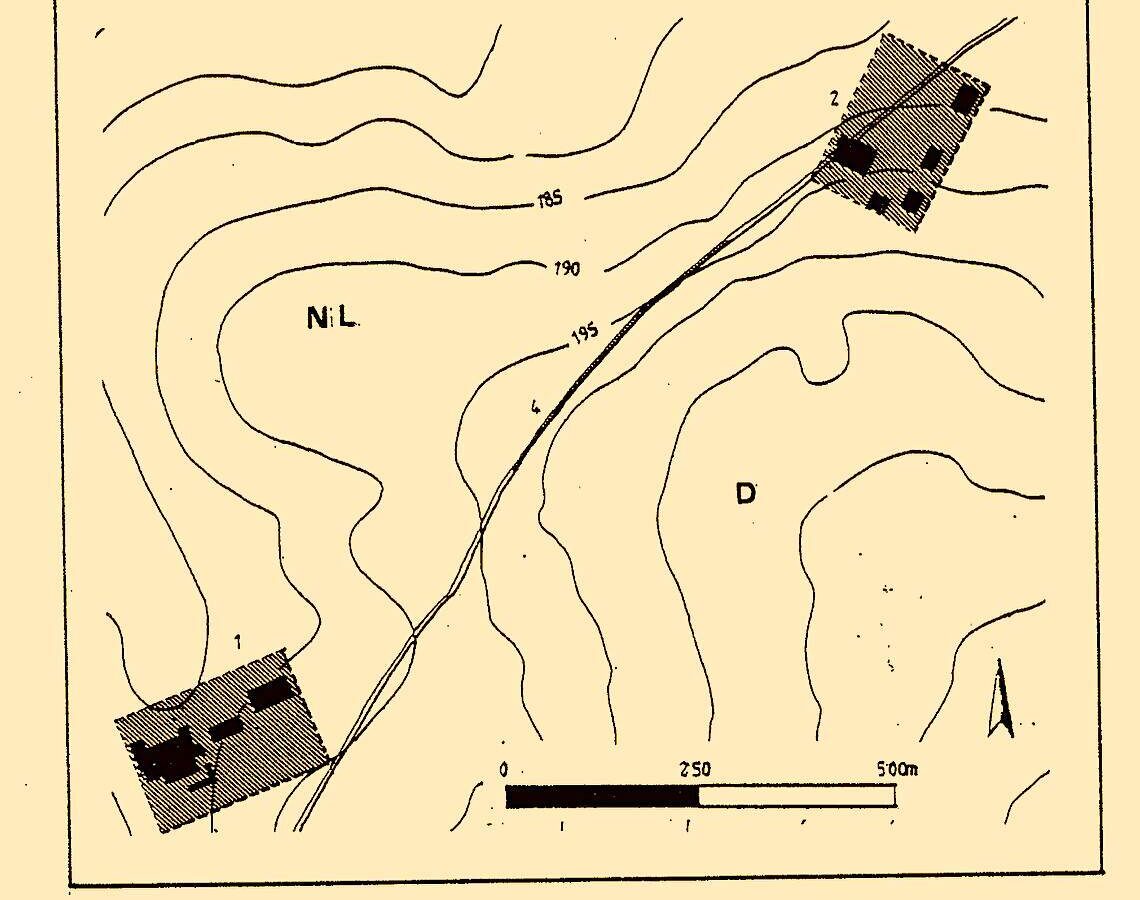
Archaeologists uncover a villa complex measuring 250 by 140 metres and the foundations of a large residence measuring 45 by 30 metres with corner towers.
Four additional buildings are discovered: a bathhouse — added later — and two barns or workshops. Particularly striking is the heavy foundation of a fourth building measuring 5 by 5 metres, probably a combination of a watchtower and a grain store.
Villa Butterweiden appears to have been built in phases. The earliest finds date from the first and second centuries, while most finds date from the third and fourth centuries.
On the Dutch side the archaeologists are disappointed: they find only a few small graves and a drainage channel. Water for the Roman farmstead here probably came from the spring of the Amstelbach/Anselderbeek, located nearby.
Photo: The remains of the villa with two names lie at the highest point of the Roman valley.
Bocholtz limestone
The main building had two successive furnace rooms used for hypocaust floor heating. In a later phase one of these heating rooms was used as storage for building materials.
The site also yielded waterproof plaster from the bathhouse, pottery, a bronze mirror and fragments of glassware. The foundations were built using limestone quarried locally until after the Second World War.
Other building materials included clay roof tiles, coal-bearing sandstone and sandstone from the Nievelsteiner quarry in the Worm valley.
Burnt timber
All remains of the buildings are covered by a thick layer of burnt wood from the roof construction and large quantities of broken roof tiles. This indicates that Villa Dellender, like many Roman farmsteads, was plundered and burned down.
The youngest coin found at the site dates from the reign of Emperor Gallienus. During his rule the region suffered from raids by hostile tribes. This may explain why around 700 Roman coins were hidden in the ground here.
Photo: The well-known Villa Vlengendaal lies less than one kilometre away — a distance the Romans could easily cover thanks to a connecting road discovered between the two villas.
Villa Butterweiden/Dellender forms part of the cross-border park of the Roman villa landscape Bocholtz-Vetschau, made possible thanks to funding from Interreg Meuse-Rhine, the Regio Deal Parkstad Limburg and the Province of Limburg.