A look inside a 1,900-year-old cellar — soon possible in Heerlen
Author: Harry Lindelauf
Photography: Gemeente Heerlen
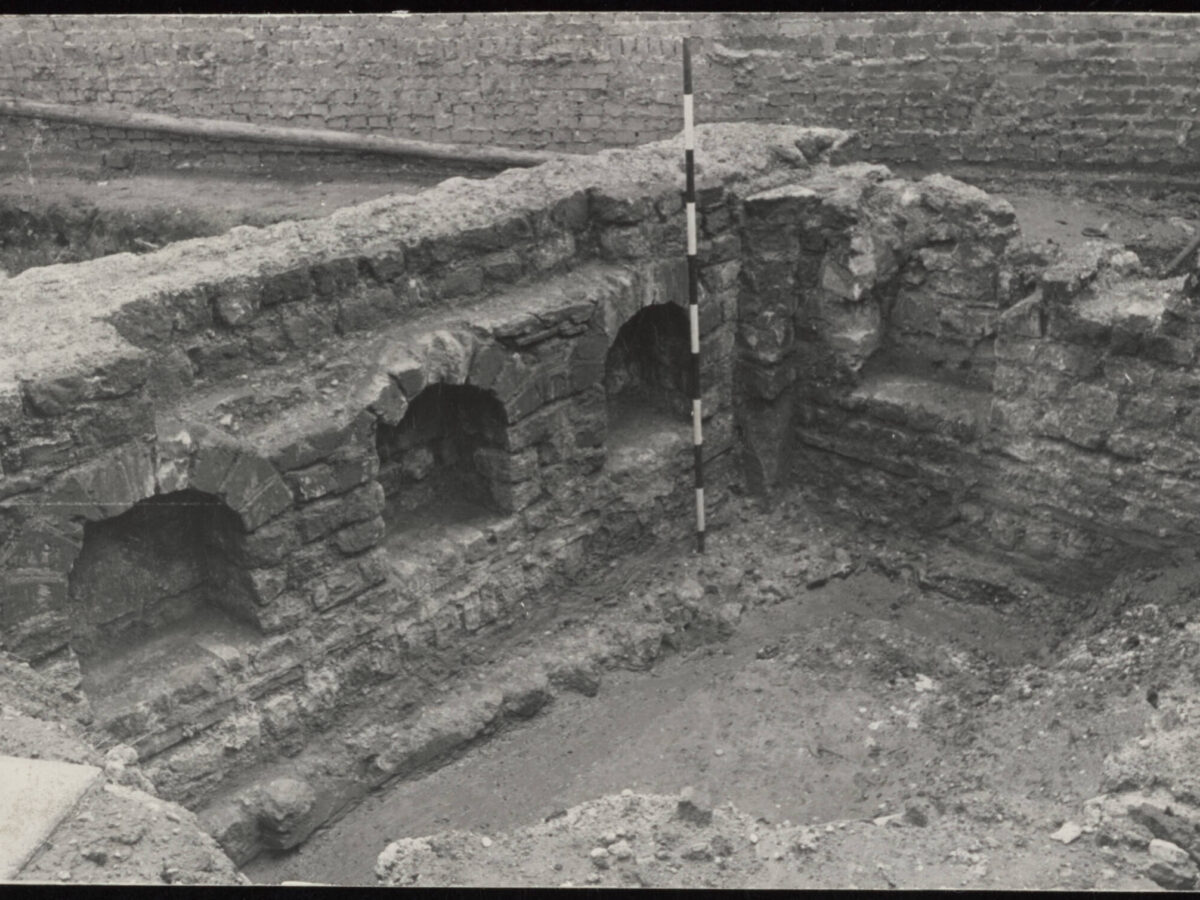
It is located very fittingly on Coriovallum Street in Heerlen and was built 1,900 years ago as part of a residential house. We are talking about the Roman cellar beneath the basement of the office of estate agent Aquina.
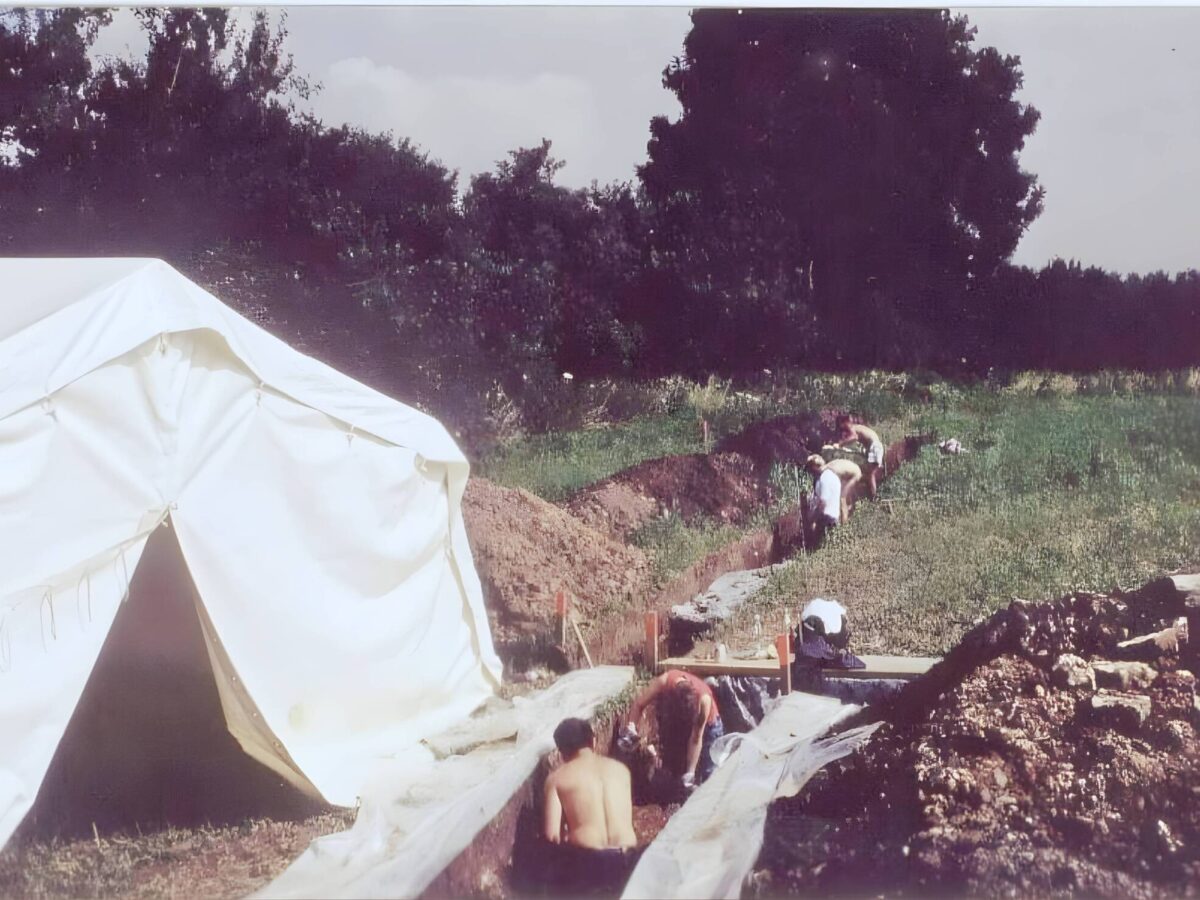
In 2022, the cellar was cleaned, measured and documented in detailed drawings and photographs. According to archaeologist Yannick Raczynski-Henk, some matters became clear during this process and (unfortunately) some remained unclear. He shared his insights with visitors of the Limburg Archaeology Day on 1 April 2023 at the Limburgs Museum in Venlo.
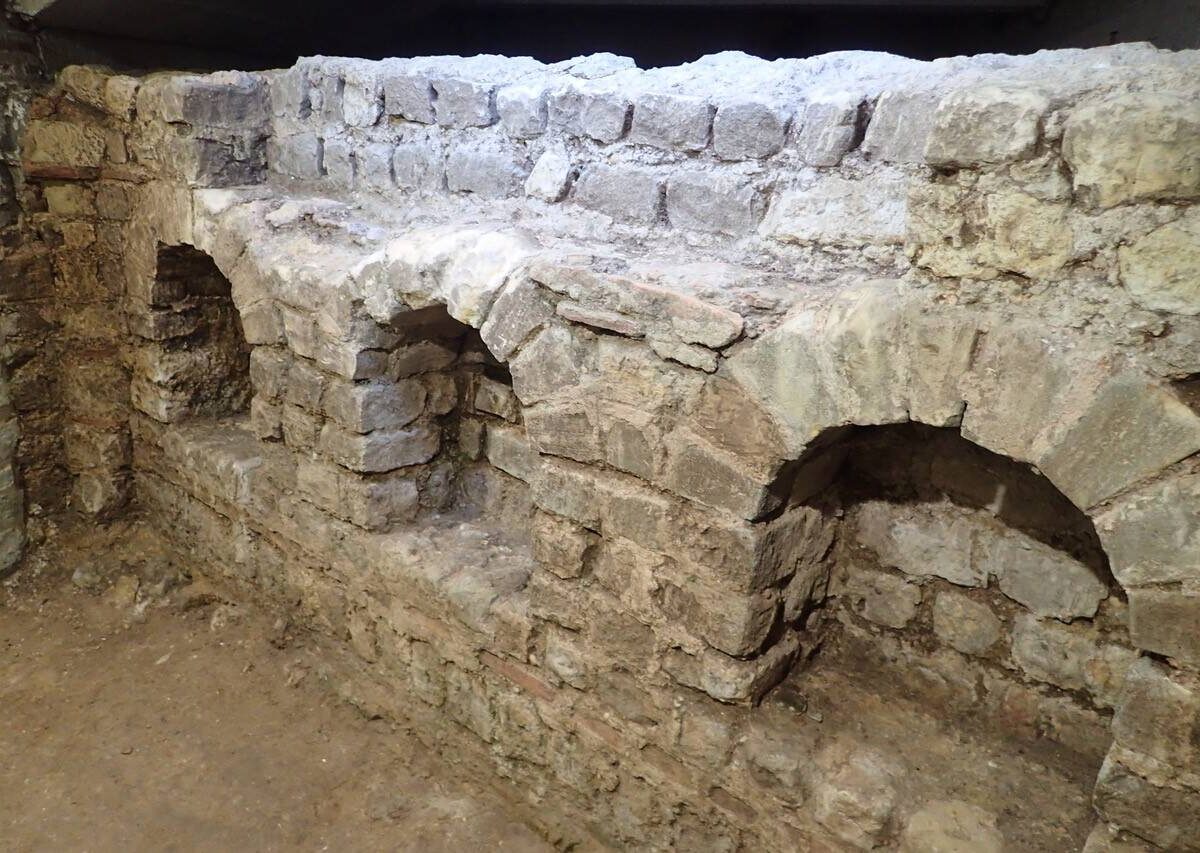
To begin with what is clear: the cellar was constructed in the first century. The walls are made of Kunrader stone, the vaulted arches above the niches are made of marl, and for the floor the Romans used red-coloured concrete. It is also clear that the cellar was filled up with rubble around the year 270. Soil and fragments of pottery, such as bowls and mortars, ended up in the space. The youngest remains date from 270 — the period during which Germanic tribes carried out large-scale raids in the region, plundering and burning houses and farms.
A special find within the fill of the cellar is a fragment of an oil lamp with multiple wicks. This type of oil lamp has not previously been found in South Limburg.
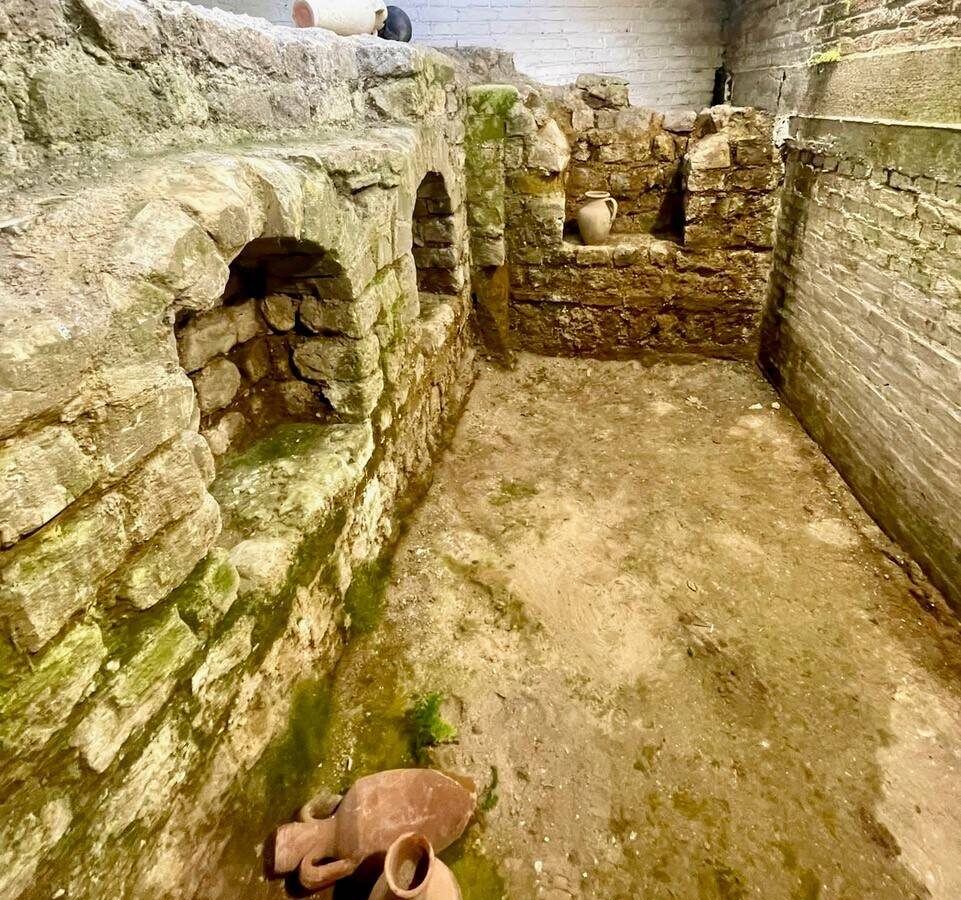
Was this a wine cellar?
This is where the list of certainties ends. The series of uncertainties begins with the dimensions. The space discovered in 1952 measures 3.2 metres by 3.2 metres. But in one corner, the beginning of a support pillar for a cross vault was found and part of it lies outside the current room. It is possible that the original space was longer than 3.2 metres.
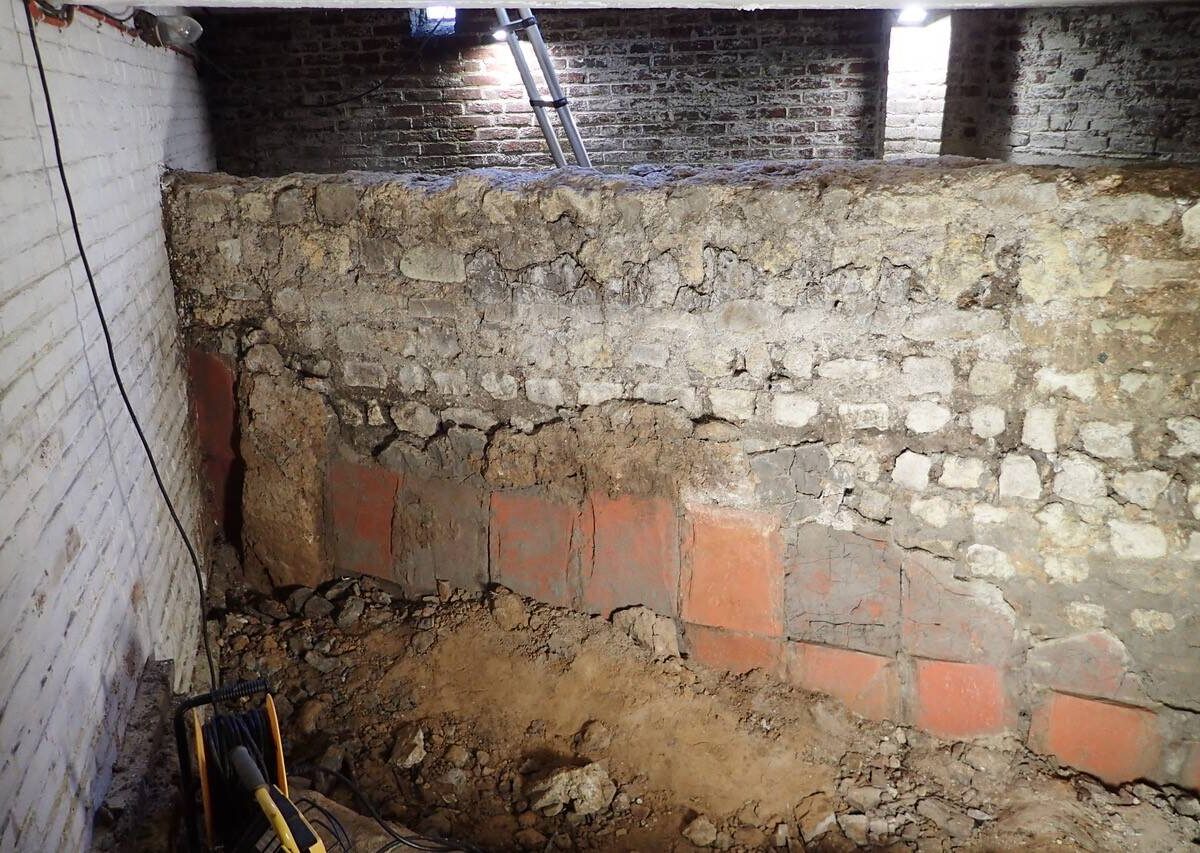
Another puzzle is the function of the cellar. The three built niches are remarkable, and so is the exterior. It was made waterproof with a great deal of extra work: first a plaster layer of fatty blue clay was applied against the Kunrader stone. This was followed by upright roof tiles and, finally, as the outer layer, plaster of concrete mortar. The question is: why was all this protection against moisture necessary? One possible answer: perhaps the drainage of the Roman bathhouse passed through here. But no evidence has been found.
It is also unclear what the cellar was used for. The niches, the concrete floor and the special moisture protection raise the cellar above the level of an everyday storage space and suggest the possibility of a wine cellar.
New visitor experience
After the research and cleaning, visitors will soon get a better view of the cellar. The municipality of Heerlen is currently developing a new viewing module to enhance the experience. More news will follow.