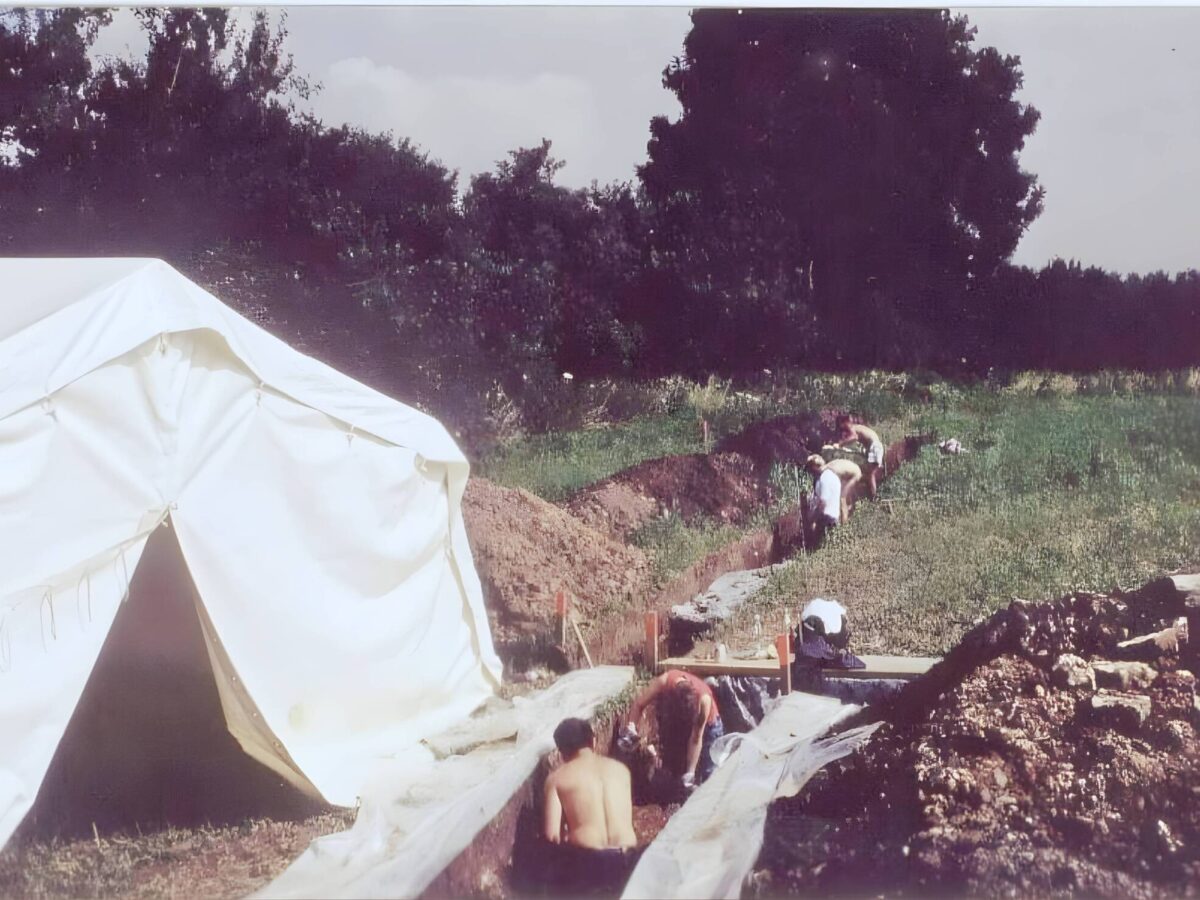
A new future for the Roman past
Author: Harry Lindelauf en Ankie Bosch
Photography: Thermenmuseum en Jonathan Vos Photography
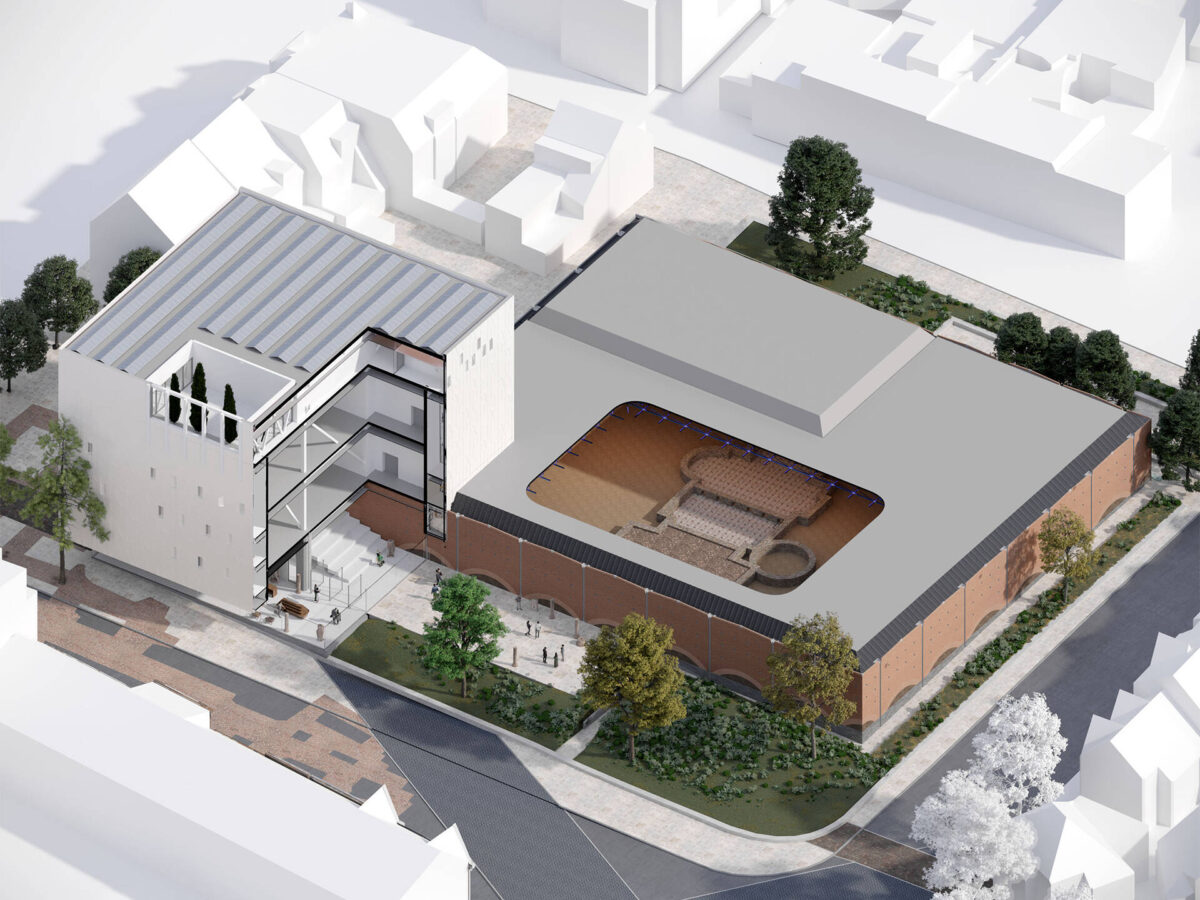
The Roman past in South Limburg is well established, thanks in part to Via Belgica. In the coming years, the Roman Museum in Heerlen will provide new impulses. Quartermaster for the museum Benoît Mater and Via Belgica project leader Toos Hofstede look ahead (and back). And they explain why Via Belgica is so much more than an old Roman highway.
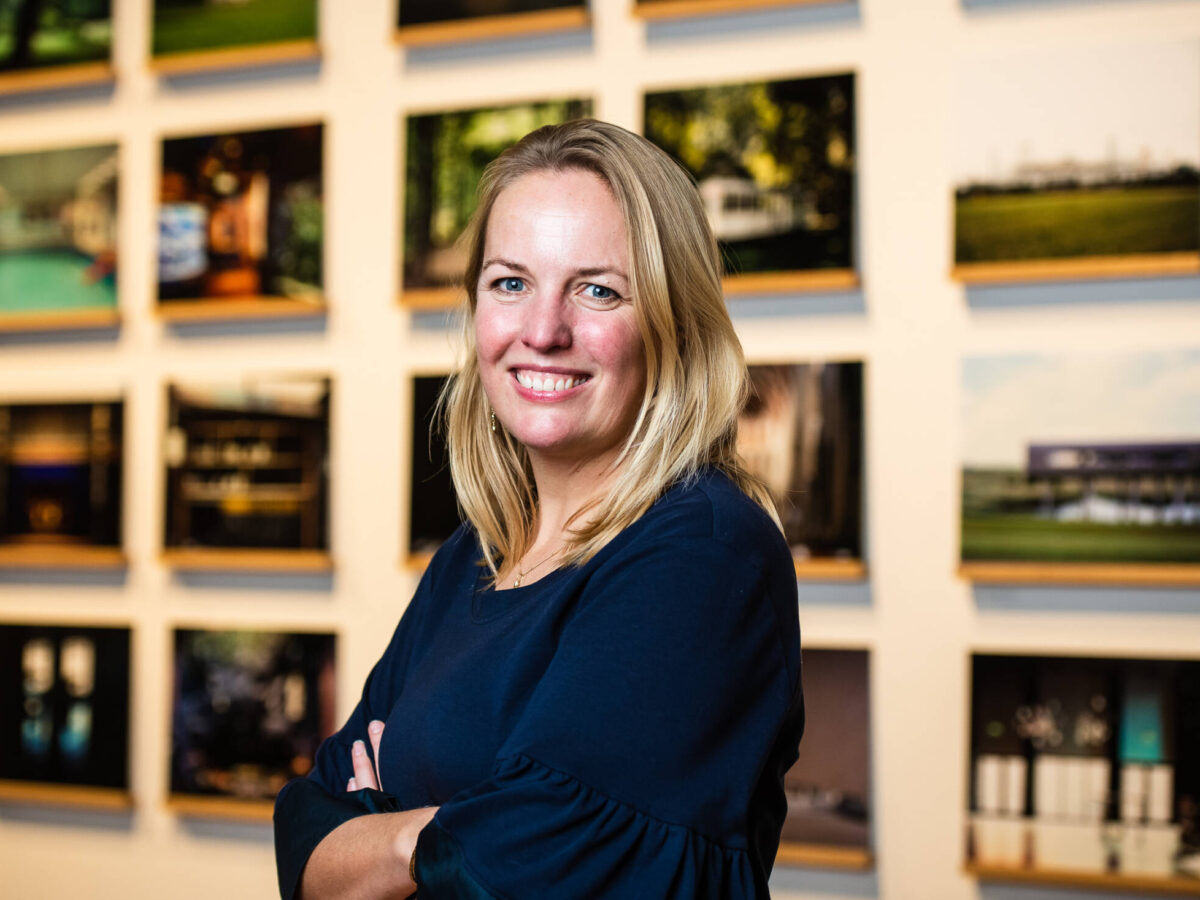
What they share: enthusiasm for the region’s Roman heritage. That enthusiasm has grown for Toos Hofstede since she took on the role of project leader six years ago. Benoît Mater brought it with her after her studies in Mediterranean archaeology and wants to convey here the passion that Italians have for their heritage. “We want to plant a seed in the hearts of Limburgers and Dutch people. We may be proud of this remarkable heritage. So that we feel more connected to the past we share.” Toos: “We give our future a past, and our past a future.”
Find your way
Since Toos took office, Via Belgica has no longer been regarded solely as the old Roman highway. Toos: “Via Belgica is about more than the search for a 2,000-year-old road. It tells us the story of the Roman past of South Limburg. Via Belgica is the starting point for discovering who we were and who we are. And for rediscovering the unique offerings of this region.”
Close to the people
“With Via Belgica, the Roman past has gained a future because we have brought it closer to the people,” says Toos. “Under the motto ‘find your way’, archaeology, culture and tourism have been combined, as have past and present.” Entrepreneurs and cultural providers in the region help carry the story forward. The result is a broad and varied offering: from archaeological finds to recipes, walking routes and virtual reality.
‘Via Belgica is the starting point for discovering who we were and who we are.’— Toos Hofstede
New prestige
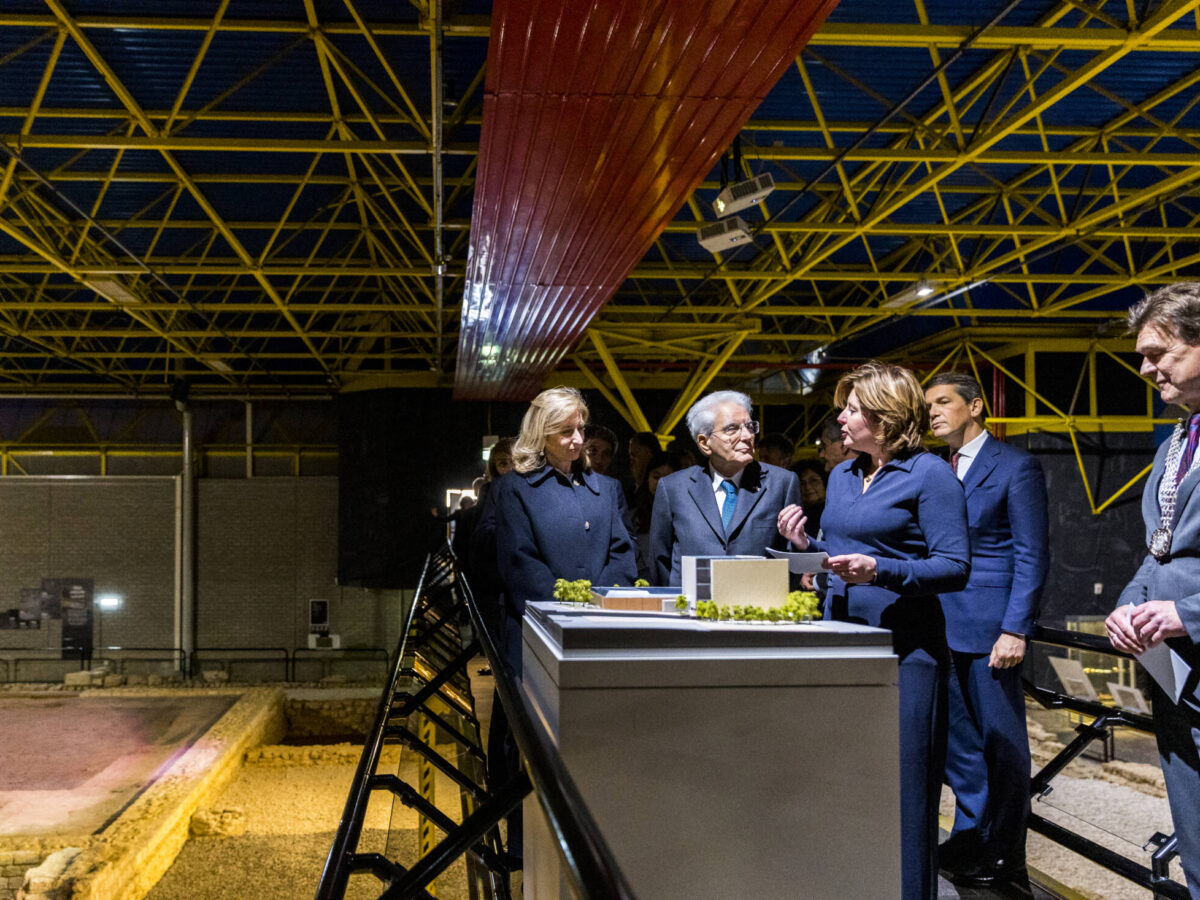
That offering will be expanded in the summer of 2026 with a new Roman museum. The plan is ready, preparations are in full swing. If the green light is given, the current Thermenmuseum will close its doors in 2024 and construction of the new museum will begin thereafter. The new building must become a museum of national prestige and international appeal. Benoît: “We want to be the Roman museum of the Netherlands. A museum that presents the Roman past between the Meuse and the Rhine, between Tongeren and Cologne.”
Gateway
For residents of the region and visitors, the new museum will form the gateway to the Roman heritage. “The stories come together there in one central place and are deepened in the surrounding region,” Toos explains. “For example, through a walk in the villa landscape of Bocholtz, the artwork of the Lady of Voerendaal, a Roman dinner at Villa de Proosdij, or a wine tasting at Château Genoels-Elderen.”
Cooperation
Toos: “Whether people come for the beautiful nature, Limburg gastronomy or archaeology, we always do our best to open the doors to the Roman past from all those interests.” The cooperation between the Province of Limburg and the municipalities has proven invaluable. “It was precisely this that made it possible to look beyond municipal and national borders. Here too, the whole is more than the sum of its parts.”
Fusion of cultures
What will also change in the new museum: a correction will be made to the one-sided focus on the Romans. Benoît: “The Roman period in our region is a mixed story. The culture that already existed was blended with the culture of the Romans. We want to show that fusion as well. How exactly we will do that — we are working on it. It is an exciting journey of discovery.”
‘Education is the means to convey Roman heritage and its influence on contemporary society.’— Benoît Mater
Schoolchildren and parents
For the coming years, Toos and Benoît also see education as an important task. “We can still take a major step there, not only towards young people, but also towards their parents,” says Toos. “The education I have in mind is intended for everyone. And therefore not confined to classrooms.” Benoît: “Schoolchildren and students remain an important group. But education is much broader — it is the means to convey Roman heritage and its influence on contemporary society.”
Across borders
The ambitions of the Roman Museum to look across the border fit very well, according to Toos, with the future of Via Belgica after her upcoming departure as project leader. “Roman heritage is not bound by national borders. It is therefore exciting to look beyond our own boundaries. With cross-border walking and cycling routes we are already doing so. Signposts, benches and information panels make it easy for residents and visitors to experience the Roman heritage. The website, the app and the Via Belgica guide — now in its fourth edition — show you the way. And I think the new Roman Museum will greatly enrich the existing offering.”