Painters’ journeys on Roman roads
Landschaftsgalerie: Museum in the Kulturhaus am Hexenturm, Kleine Rurstraße 20, Jülich
The road network established in Roman times continues to shape the infrastructure of Western Europe to this day. Before the railway was added as a new transport network in the 19th century, long-distance traffic mostly ran along preserved Roman roads. When landscape painting experienced a boom in tandem to the Industrial Revolution as a counterbalance to the changes of modernity, artists travelled along the routes established since Roman times. Their longing for unspoilt landscapes led them from the sea to the Alps and on to Rome. Open-air studies with the travelling paint box and the ideal landscapes composed from this treasure trove of motifs reflect the need of a society in transition for self-assurance in nature.
Johann Wilhelm Schirmer (1807–1863), born in Jülich, rose from journeyman craftsman to become the first professor of landscape painting at the Kunstakademie Düsseldorf and finally the founding director of the Badische Kunstschule in Karlsruhe. The paintings by him, his students and successors, including several women, showcase 100 years of development at the Düsseldorf School of Painting from 1825 to 1925, which found its motifs along the Roman roads of Europe.
An introductory video clip of the Landscape Gallery can be viewed here.
Fun to know
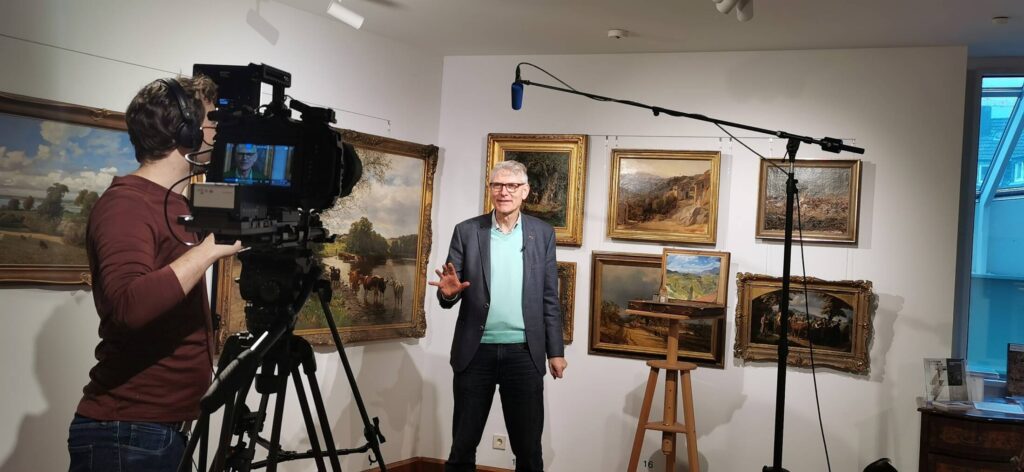
- First photo: paintings on the wall in the landscape gallery. Photo of Stadt Jülich
- Second photo: presentation in the landscape gallery. Photo: Angela van den Hoogen (2024)
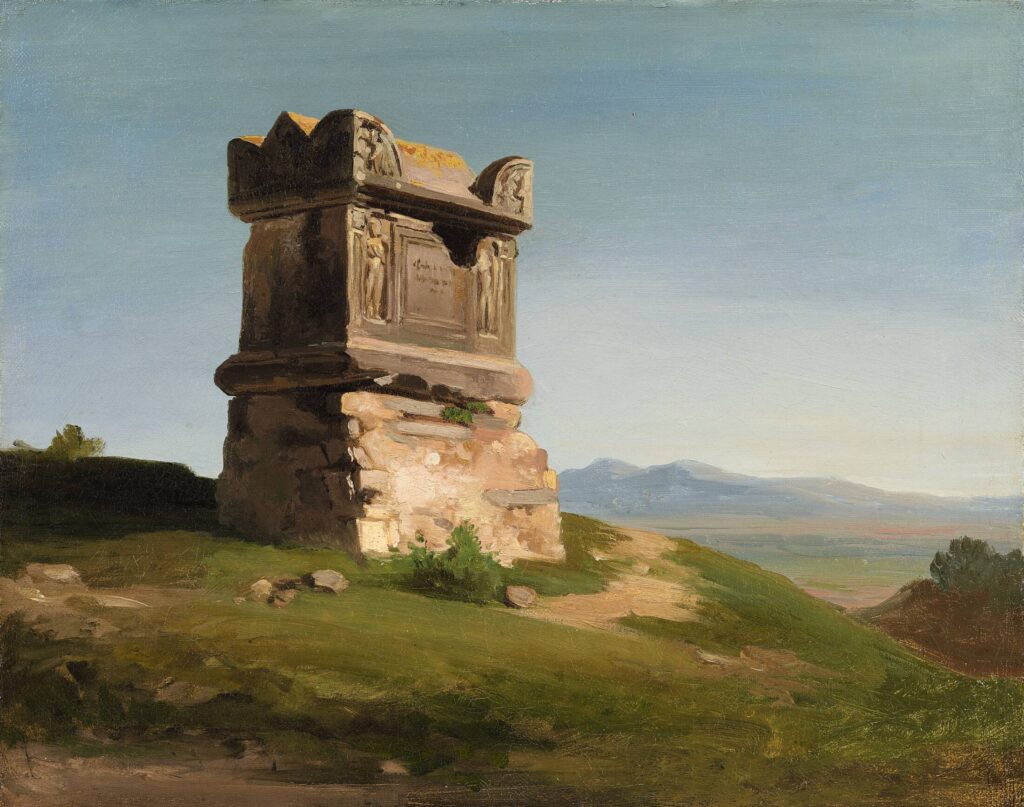
- Third photo: Roman landscape with Tomba di Nerone. Photo: Stadt Jülich
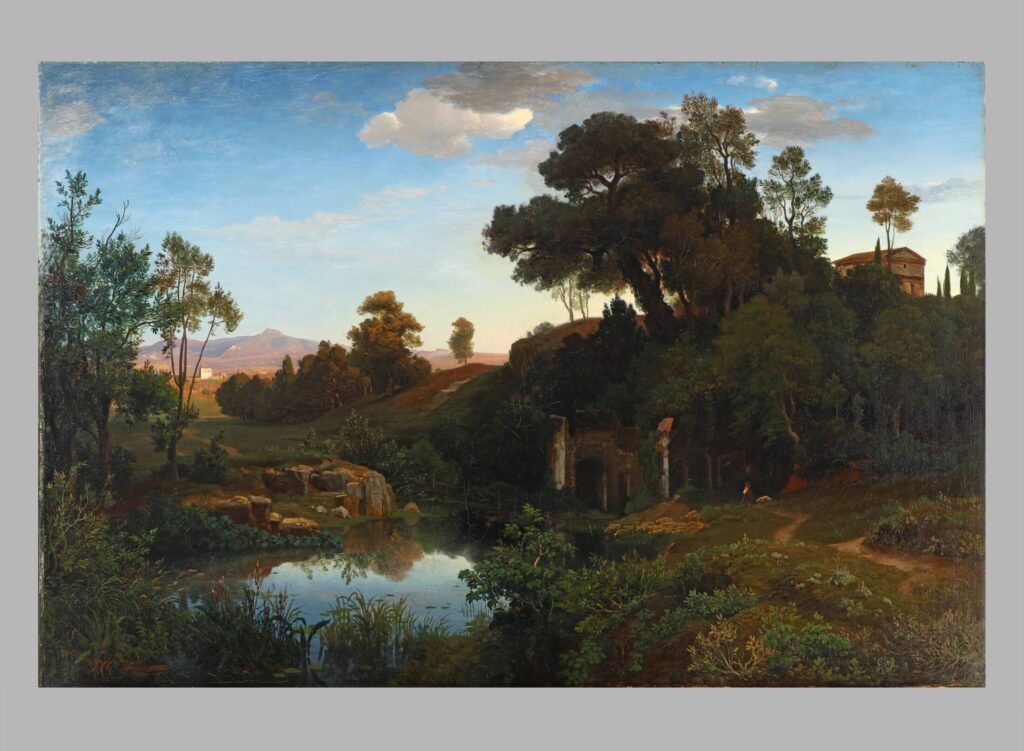
- Fourth photo: Schirmer - Cave of Egeria. Photo: Stadt Jülich
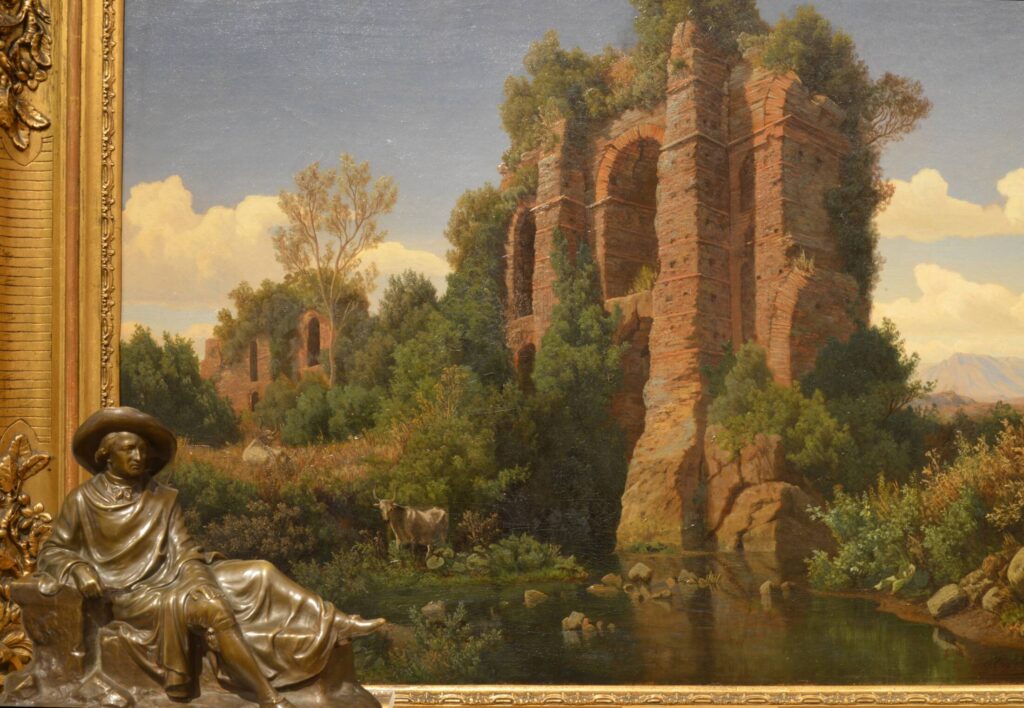
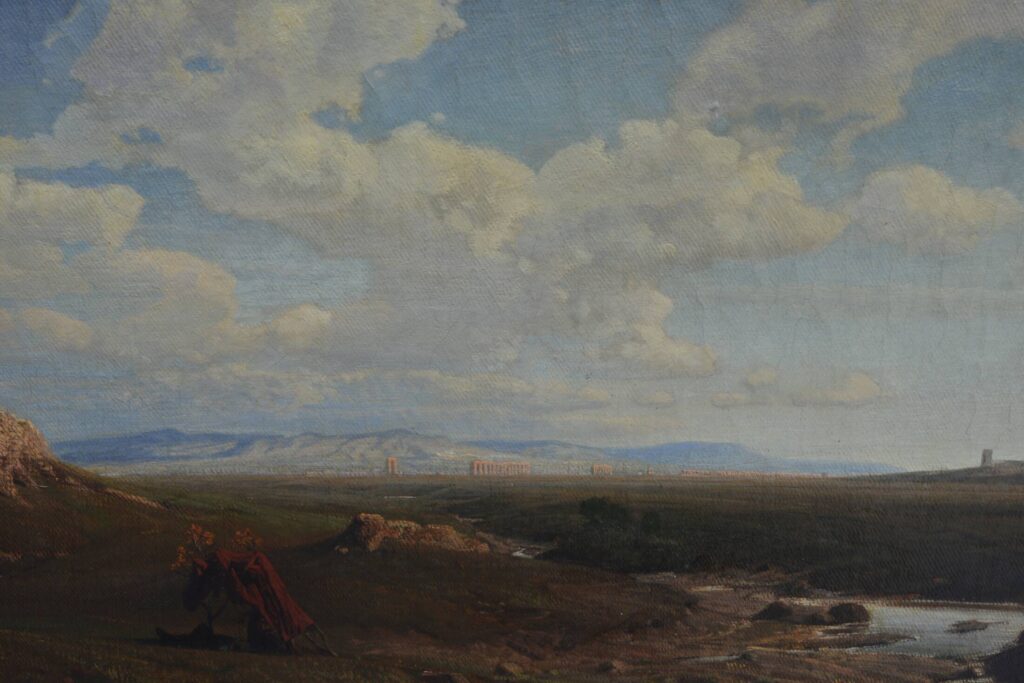
- Fifth photo: Arnold Overbeck - Ruins of an aqueduct in the Roman Campagna. Photo: City of Jülich
- Sixth photo: Valentin Ruths - Campagna landscape with resting rider and ruins. Photo: Stadt Jülich
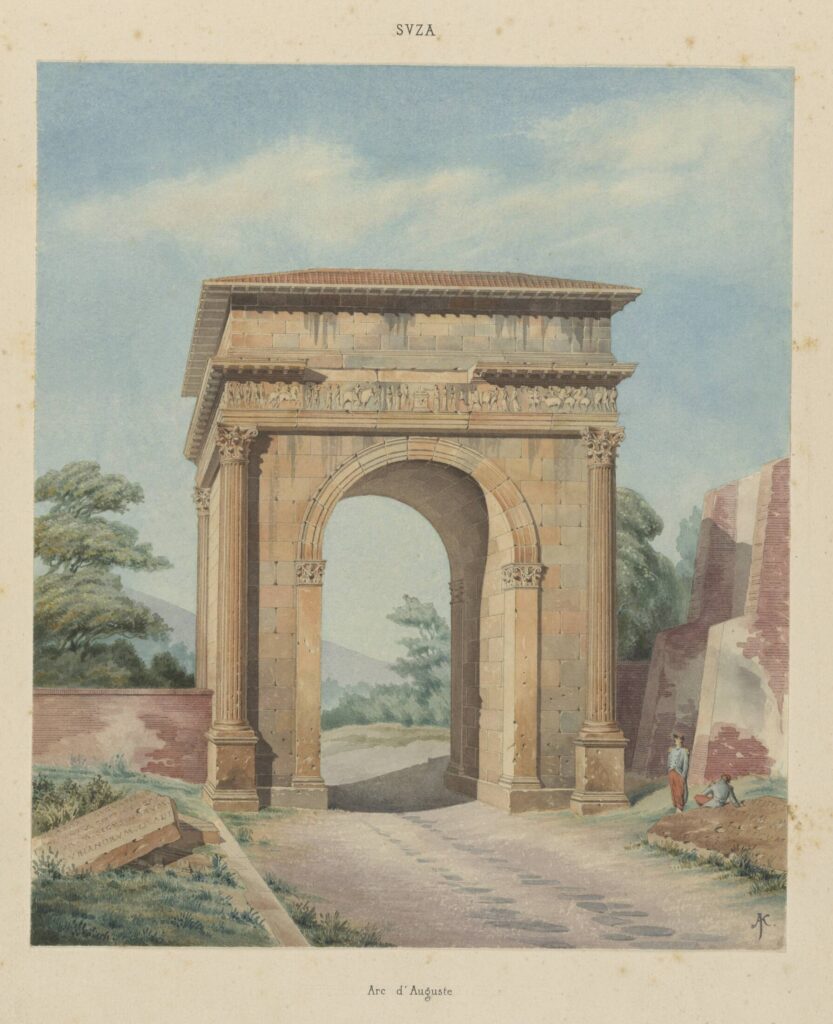
- Seventh photo: August Kessler - Arch of Augustus, Susa. Photo: Stadt Jülich