Roman bricks in Romanesque church architecture
Catholic church of St. Margareta in Kofferen
In Roman times, the numerous estates (villae rusticae) formed the basis for supplying grain to the small towns in the region and the military camps on the Rhine. When settlement patterns changed in the Middle Ages and concentrated in villages, the Roman estates were abandoned and fell into disrepair. More often than not all that remained on the surface was a pile of bricks. The Romans had established this artificial stone as a new building material in our area. Roman bricks, like metal and stone, were often reused in the Middle Ages.
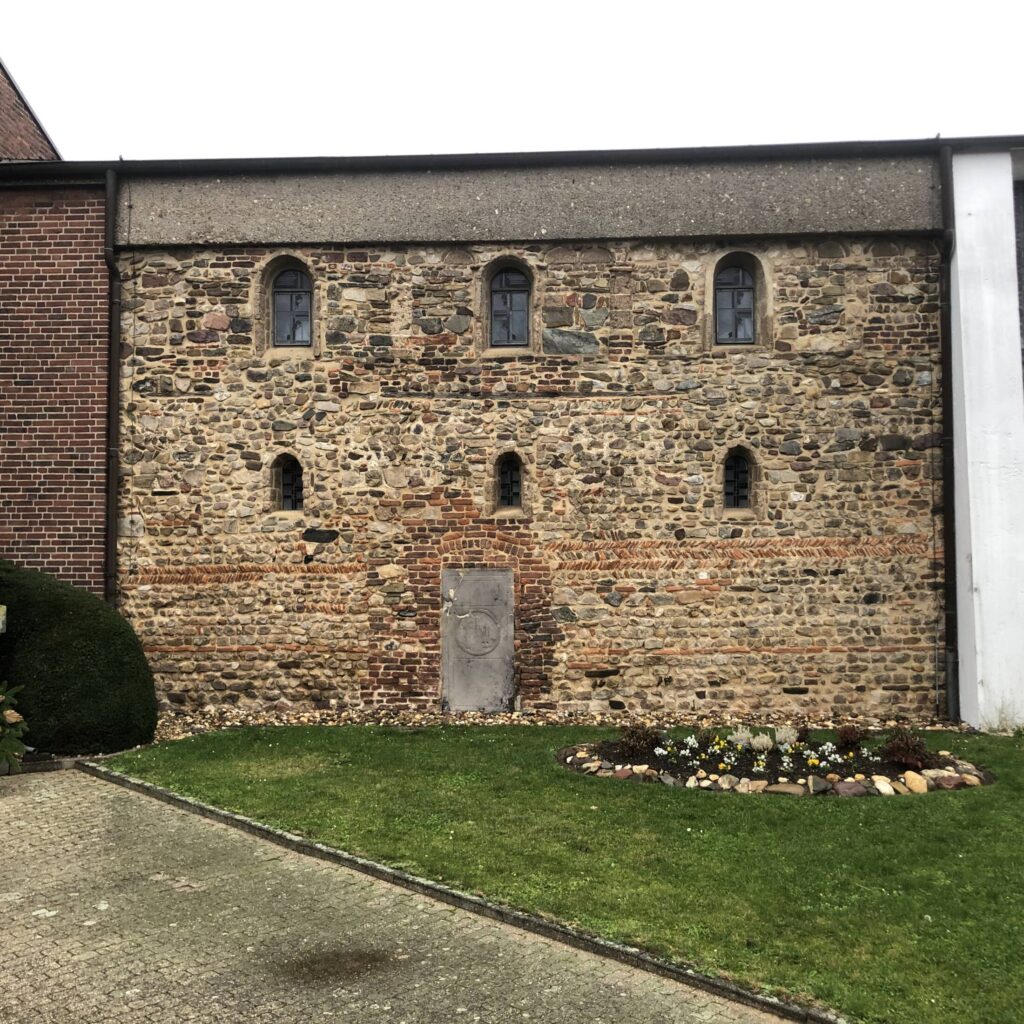
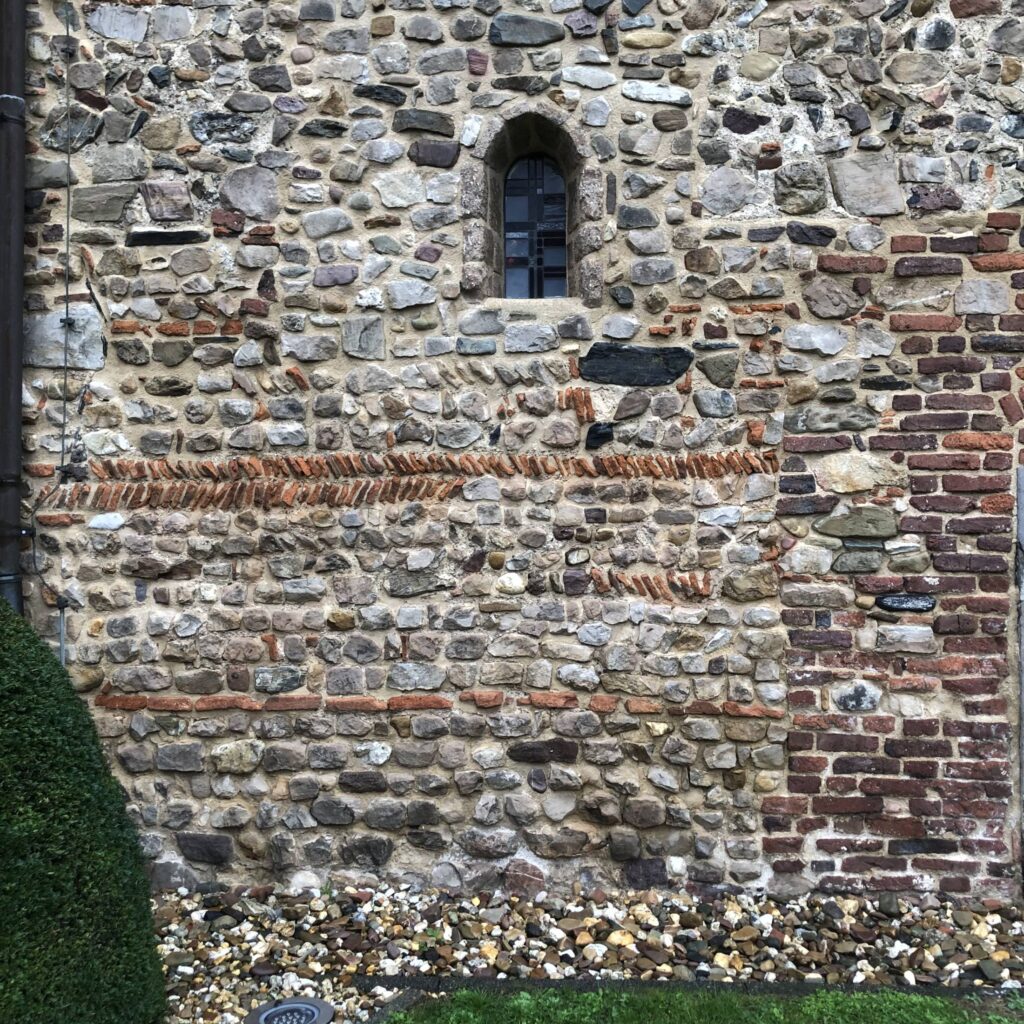
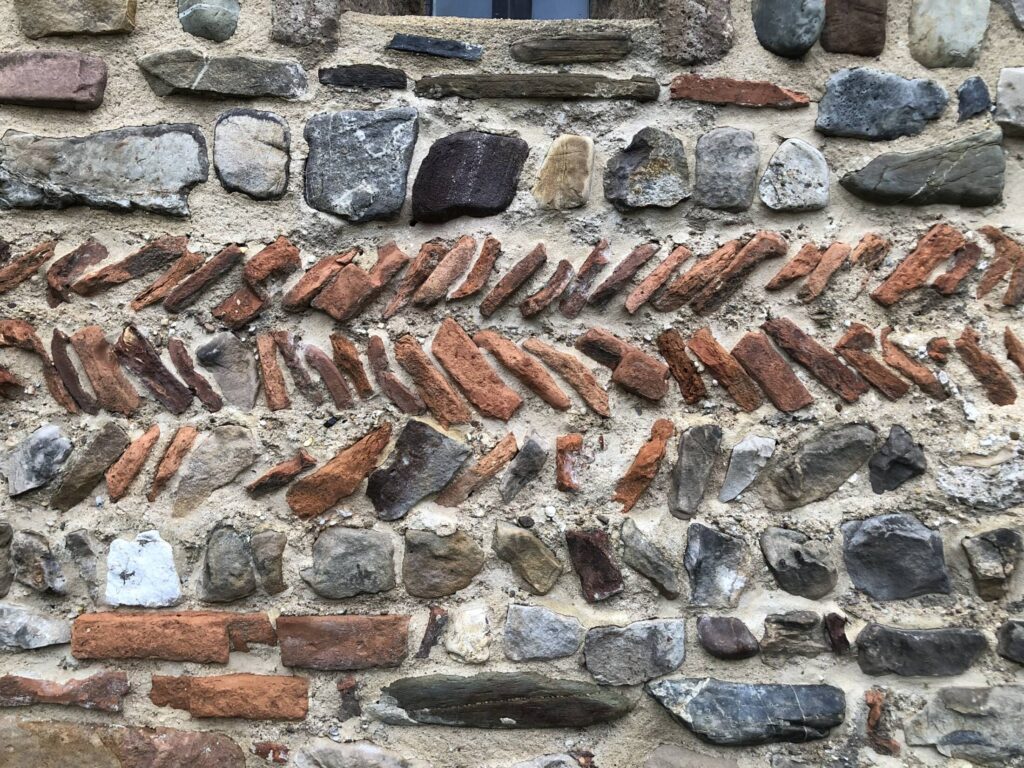
A special example of the continued use of Roman roof tiles is the south wall of the church in Kofferen (town of Linnich). The current church building dates from the 1950s, when the place of worship was rebuilt after the destruction of the Second World War. Only the south wall, which dates from the Romanesque period, has been preserved and contains the typical light red Roman bricks alongside river pebbles and quarry stones. In many places, the distinctive edge strip of the tegulae is visible in the masonry. The flat roof tiles are most densely laid at a height of about two metres, where they are arranged in a herringbone pattern, forming a multi-layered band in places with a special visual appeal. Another flat layer can be seen further down.
The wall pattern is so characteristic and well-known for the church that it was imitated in the design of the retaining wall around the pump on the forecourt.
Fun to know
- Photos of Stadt Jülich