Tongeren: Herstappeltombe Lauw
Place of interest: Herstappel tomb Lauw burial mound in Tongeren
Tongeren — the first and oldest city in Belgium. Founded by the Romans around 10 BC, it was burned down by the Batavians half a century later, only to rise again, proudly rebuilt. Tongeren became the illustrious capital of the civitas Tungrorum, the administrative district of the region, where the Mediterranean influence of Rome was undeniable: a flourishing villa landscape, a magnificent aqueduct, grand temples and bathhouses, and markets brimming with exotic goods.
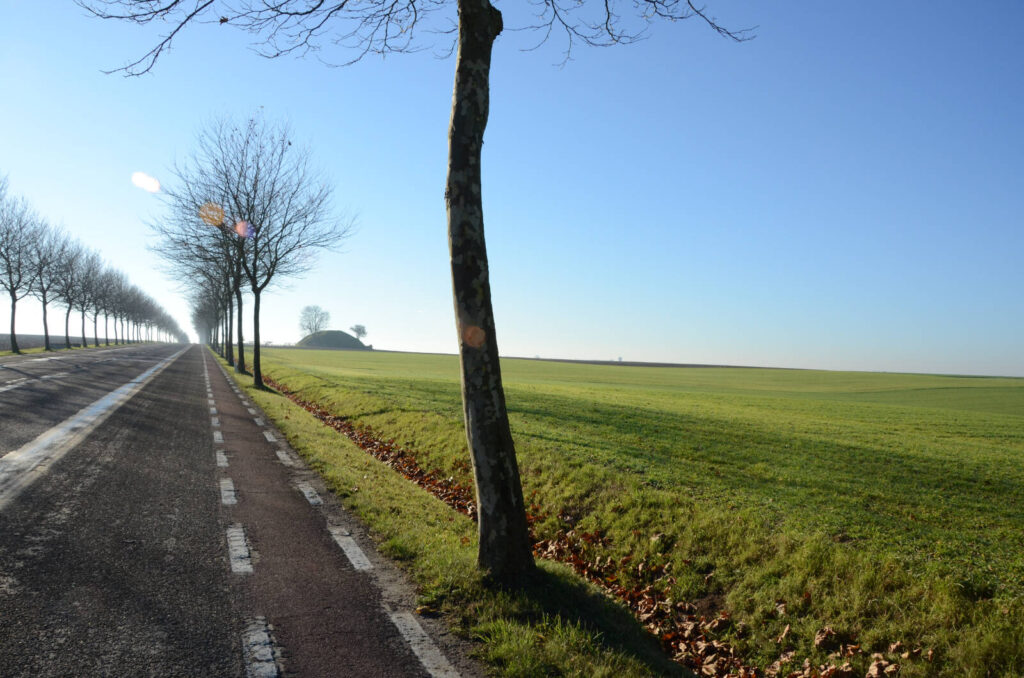
Even today, the Romans are never far away in Tongeren-Borgloon. Most hotspots are just minutes apart. Along your journey, on the Roman road to Huy and further on to Artlon and Metz, you can find the Gallo-Roman burial mound Herstappeltombe Lauw.
Herstappeltombe Lauw
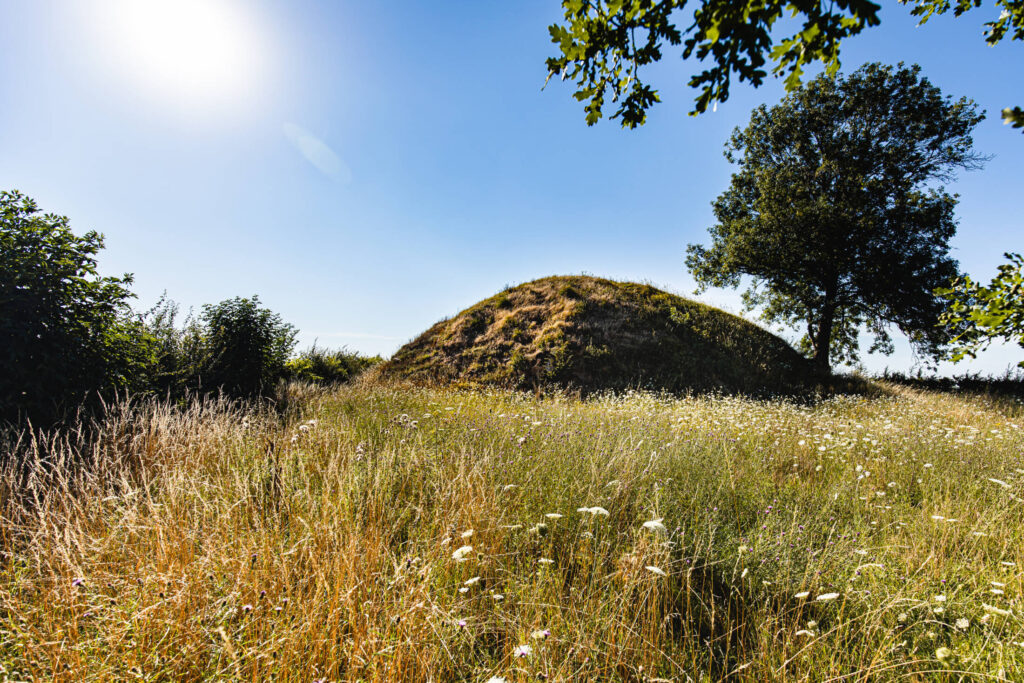
The Herstappel Tomb is a monumental burial mound that forms part of the wider fascinating funerary landscape around Atuatuca Tungrorum, modern-day Tongeren.
The mound has a diameter of about 32 meters and a height of roughly 8 meters, making it one of the larger tumuli in the region. Its construction is generally dated to the 2nd century AD, a period when the urban and rural elite of Tongeren increasingly opted for monumental grave forms along the approach roads.
The first known excavation took place in 1895, when François Huybrigts investigated the tumulus but found no traces of an intact burial chamber. The mound had probably already been disturbed earlier, possibly in the seventeenth century by French troops, who systematically dug into burial mounds in search of valuable objects.
More recently, however, the burial mound was threatened by collapse due to badger activity. To monitor this, the city of Tongeren commissioned a three-dimensional scan in 2015, which mapped both the stability of the mound and the interesting network of its tunnels.
An Immersive Change to the Roman Walk, 2027
The story of Tongeren doesn’t end there. In 2027, the Roman city walk of Tongeren will receive a multidimensional upgrade as part of the VIA VIA project. The Roman hotspots on it will be enhanced with reconstructions and immersive storytelling. You will get an even clearer sense of the Roman road and the Roman city of Tongeren, and you will also be invited to visit the aqueduct, the Plinius springs, the Gallo-Roman temple, and other local sites. Through an app, you will see what the streets of Atuatuca Tungrorum looked like in the second century. Your guide? An AI character from the glory days of Roman Tongeren.
Are you ready for a stroll through the past?
“We cross a modern aqueduct and reach the edge of the city. Atuatuca Tungrorum. I have dreamed of visiting the only city in the region for so long. It does not disappoint. So many colours and scents. So many sounds. Barking dogs, shouting people, the rattling carts of traders like us. The streets overflow with delights. The finest fabrics. Exotic fruits and woods. Bottles and flasks. Oil from the south. Meat, bread, and perfumes. Two women argue loudly in a language I do not understand. Men in open doorways beckon passers-by inside. The sweet aroma of a bathhouse mingles with the stench of boiling animal bones for glue. I am ecstatic and despondent at the same time. For how can we sell our wares in this place? Here, in this city that already has everything?” – Ammulva Iucunda