Worldwide attention for research into the Heerlen game stone.
Author: Harry Lindelauf
Photography: Het Romeins Museum, Restaura
From the academic journal Antiquity to the Kuwait Times and almost everything in between: the Roman board game from Heerlen became a global sensation at the beginning of 2026. The reason for this explosion of attention was the use of artificial intelligence and advanced 3D photography in the search for the game’s rules.
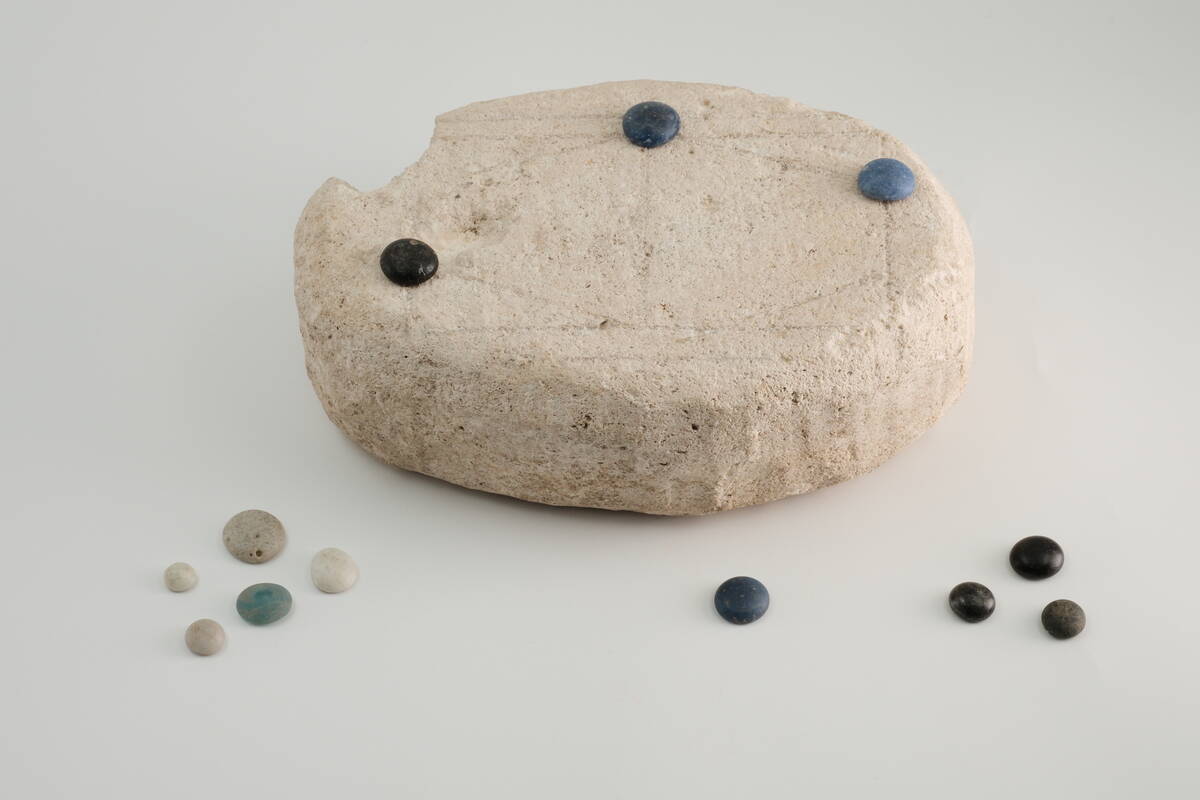
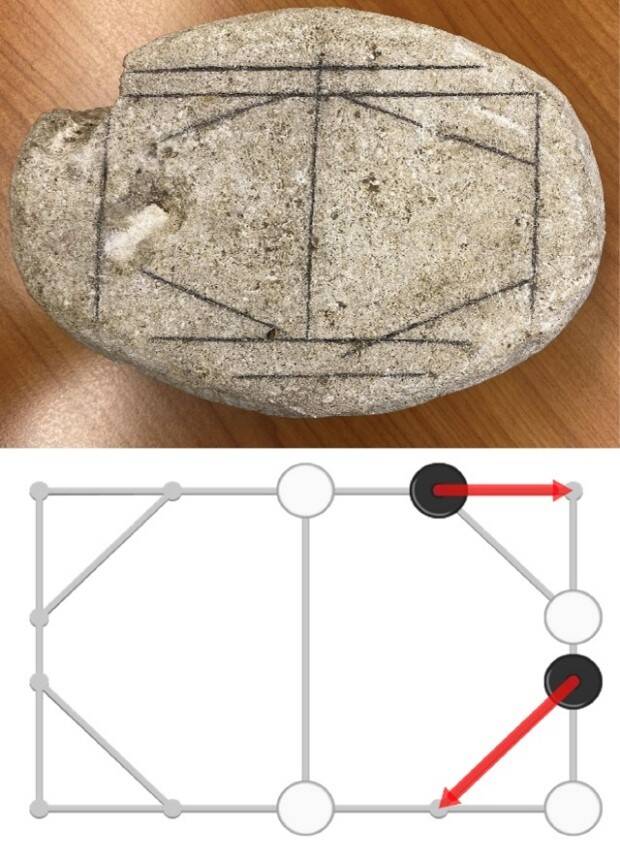
Everything revolves around a piece of limestone measuring 21 × 14.5 × 7 centimetres. The top and bottom of the 3.3-kilogram stone are flat, and four diagonal lines and one straight line are carved into the upper surface. The stone dates from between AD 300 and 500 and was found in Heerlen. Where, when and by whom it was discovered was not recorded at the time.
There is more uncertainty, for example about the purpose for which the stone was used. Archaeologist Walter Crist of Leiden University became very interested in this question. This is hardly surprising: he discovered the stone in the collection of the Roman Museum in 2020. He is also a specialist in ancient games:
“The appearance of the stone strongly suggested a game, but I did not recognise the pattern from other ancient games that I know.”
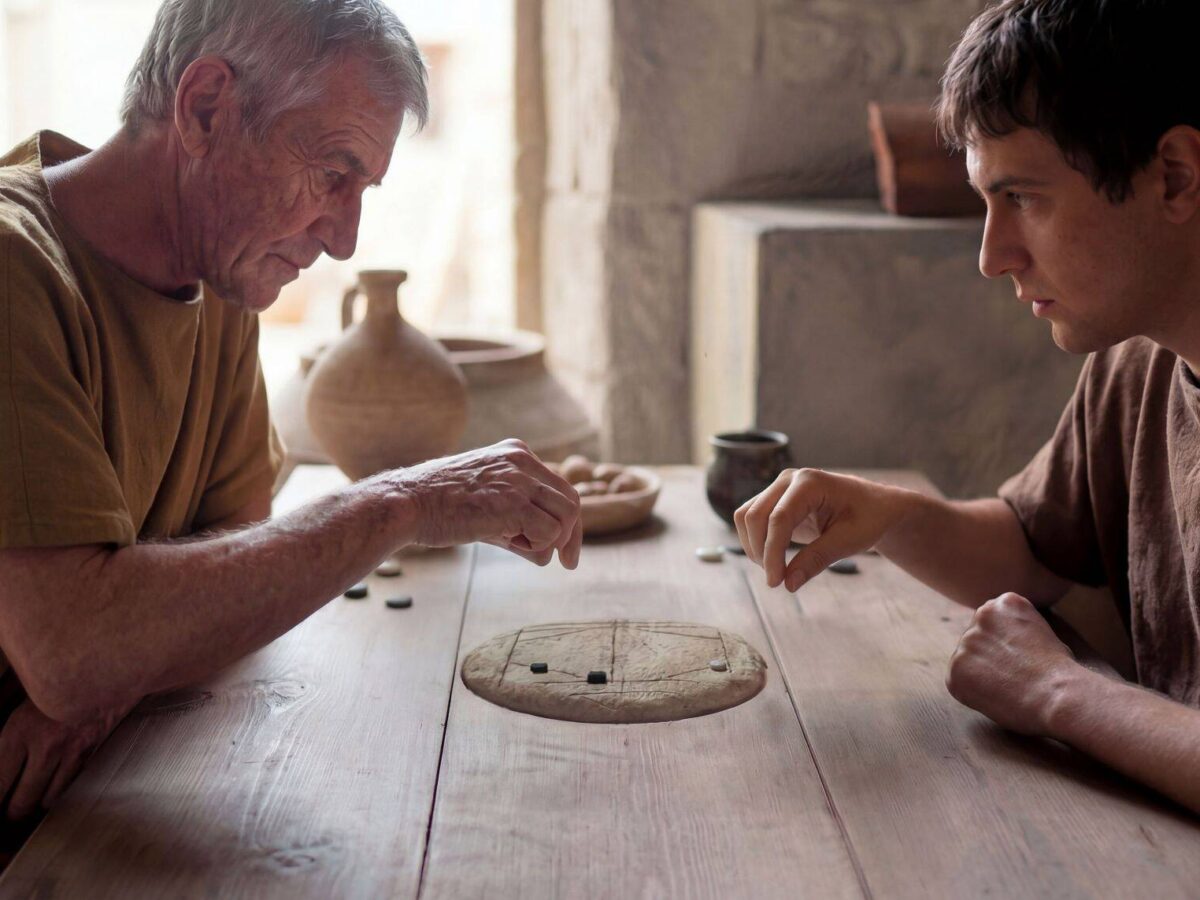
Photo: created with the help of AI.
Finely finished
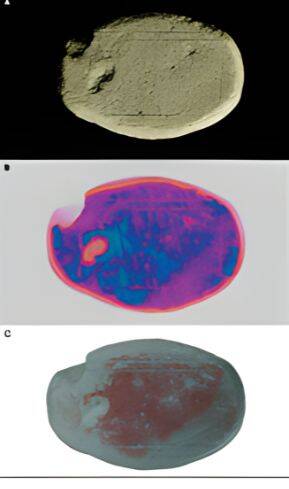
Crist examined the stone under a digital microscope, while Luk van Goor from the Heerlen restoration studio Restaura produced highly detailed 3D scans. These scans revealed microscopic traces of use on the stone. Walter Crist explains:
“Some of these traces are a fraction of a millimetre deeper than others. Those areas were therefore used more intensively. We can also see that the edges of the stone are neatly finished, which indicates that this is a finished product rather than a stone that still needed further working.”
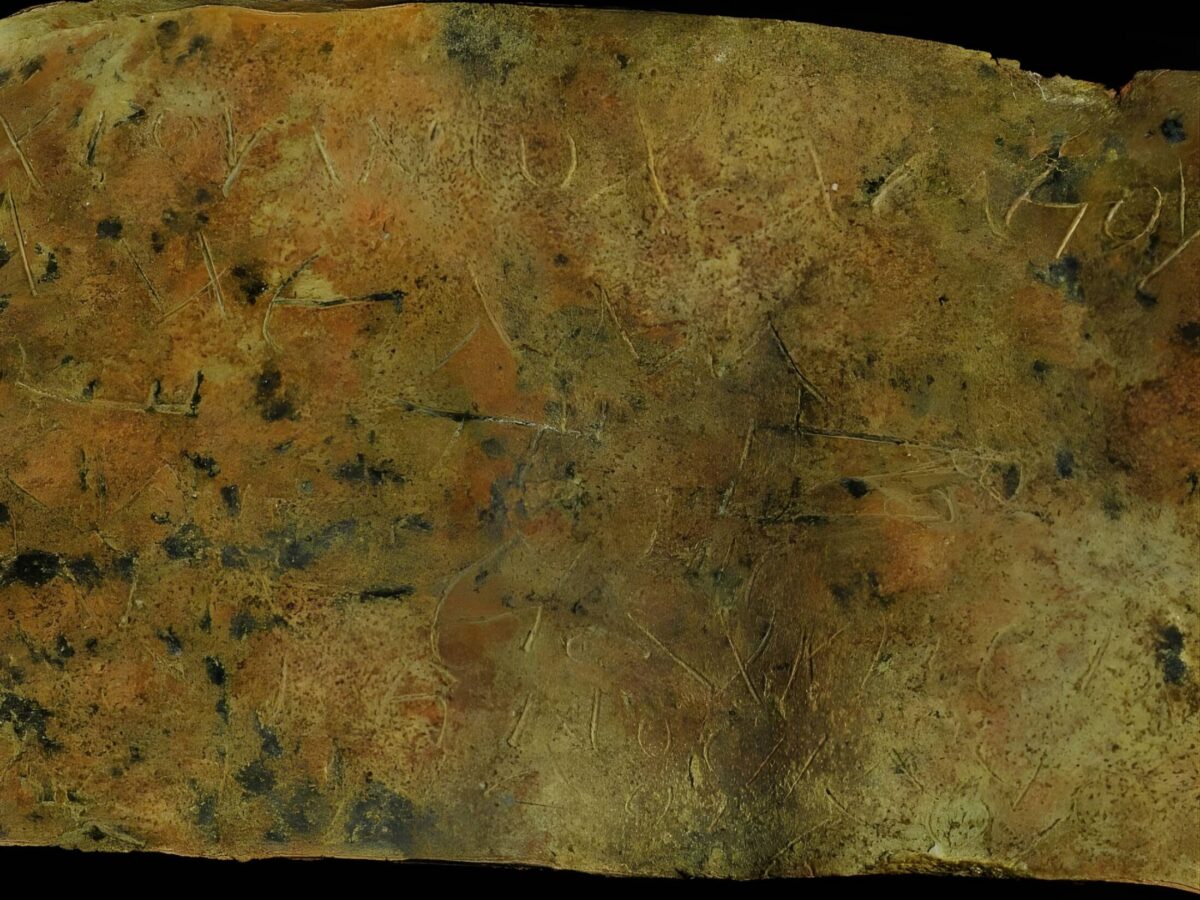
Photo: Four diagonal lines and one straight line are carved into the stone.
An international search
It became clear that the object was a board for a game — one in which two players, the hunter and the prey, try to block each other’s pieces. But the researchers wanted to go further: they wanted to discover the Roman rules of the game.
The investigation became international when participants from the ERC Digital Ludeme project were involved. This project, based at Maastricht University, studies ancient games with the help of AI. For each game, the rules are documented, missing rules are reconstructed, and the development and spread of the game are mapped.
Photo: rules of the Roman game
2,800 ancient games
The research team ultimately consisted of specialists from the universities of Maastricht, Leiden, Leuven and Adelaide, the Roman Museum Heerlen and the restoration studio Restaura. The team managed to solve the 1,500-year-old mystery in a very contemporary way. The most advanced photographic techniques were used to identify traces of use on the stone, and equally modern was the assistance of the AI-driven game system Ludii from Maastricht University.
The researchers fed the system with the rules of 2,800 ancient games from Europe. By searching and experimenting — letting two AI players compete against each other — the computer produced a highly plausible (scientists remain cautious) set of rules for the Roman board game. This set of rules was named Ludus Coriovalli (Coriovallum (= Heerlen) game).
Photo: At Restaura the stone was examined using specialised photographic techniques.
More discoveries
This new approach may lead to further discoveries. “It is the first time that an AI-driven simulated game has been used in combination with archaeological methods to identify a board game,” says Crist. “This gives archaeologists additional tools to identify games from ancient cultures.”
Discover the rules of the game on the website of the Roman Museum Heerlen.