Maastricht: Where the Roman Road Crossed the Meuse
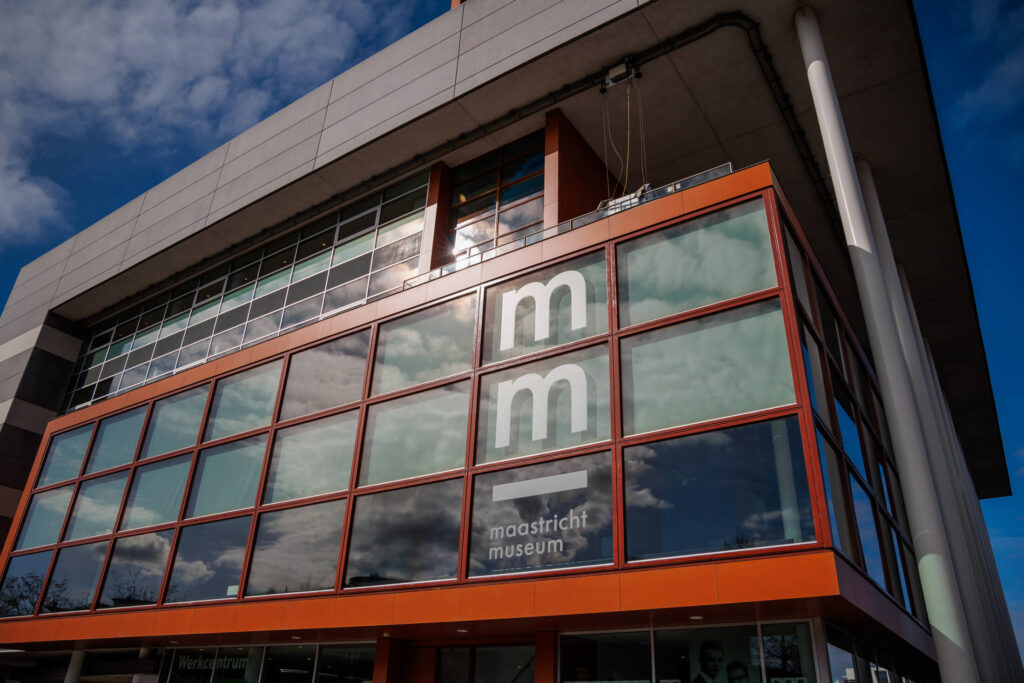
Maastricht Museum
There would be no Via Belgica without the Roman bridge that once spanned the wild Meuse. In Roman times, Maastricht was an indispensable link in the Roman road network — a crossroads where trade, culture, and innovation converged. It is hardly surprising that first a settlement and later a town sprang up around this bridge. Goods from across the Roman world were traded, stored, and distributed in its harbour — from local pottery and grain to exotic fruits and luxury trinkets. Maastricht also served as a transfer port for Roman Tongeren, Heerlen, and Aachen.
Roman Walking Route
Though the remains of the original stone bridge now rest beneath the waters of the Meuse, traces of the Roman past can still be found all around the city. To experience this history, a fascinating Roman-themed walking route guides you past countless Roman stories. Discover how the Romans lived, worked, and traded. How they dealt with new migrants, such as the Franks, and with religions such as Christianity. How they spent their leisure time in bathhouses and which gods they worshipped.
Significant Roman Finds
Following the route, or even just exploring the city, brings you face-to-face with remarkable archaeological discoveries. One of the most interesting finds is the Jupiter Pillar. In the second century, the people of Maastricht erected this monumental nine-metre-high column in honour of Jupiter, the supreme deity of the Romans. Its richly carved base depicted the deity with his eagle, surrounded by mythological scenes.
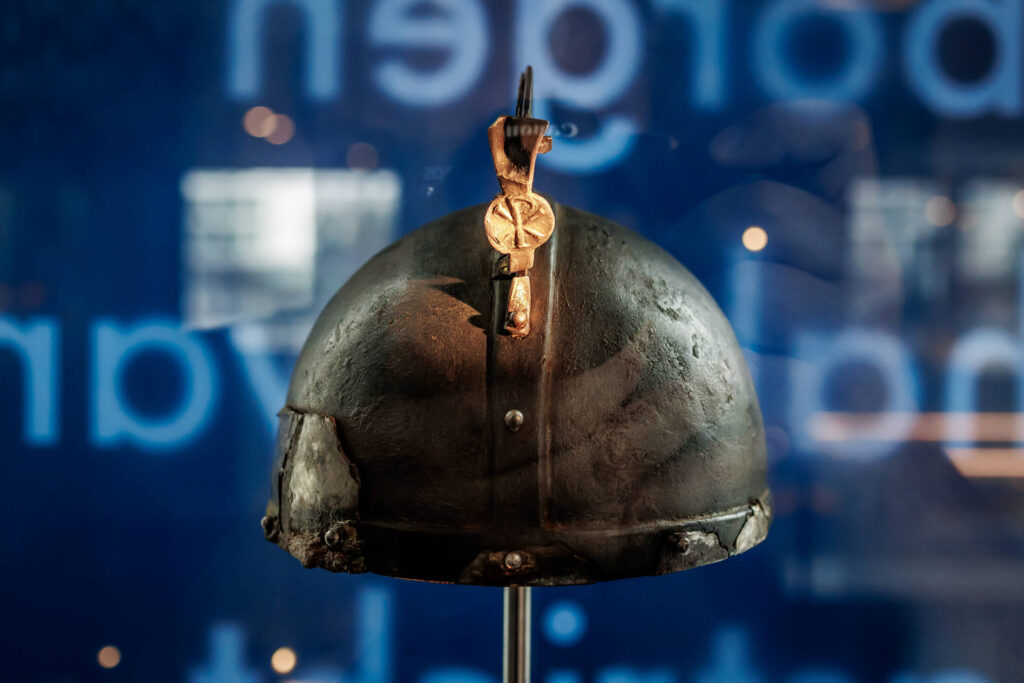
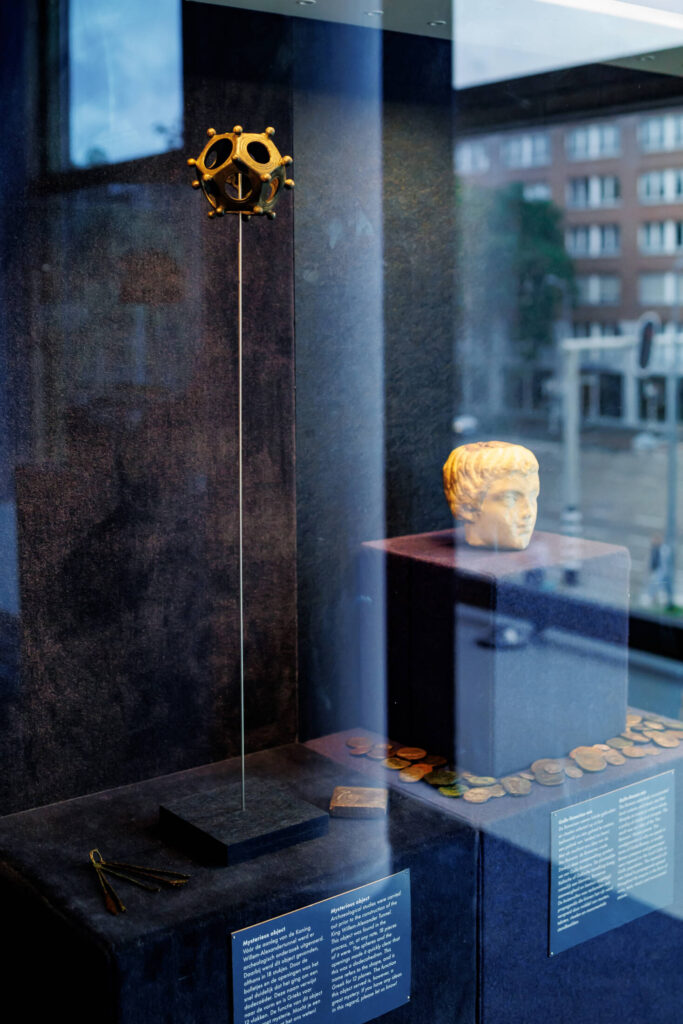
Among the most fascinating finds from Roman Maastricht is also a gravestone carved with a trading scene, once reused to reinforce the bridge across the Meuse. You can also encounter a reconstruction of the Roman bridge, a rubbing stone from the bathhouse inscribed with a remedy for eye ailments, and the largest hoard of Celtic gold and silver ever found in the Low Countries.
The Maastricht Museum
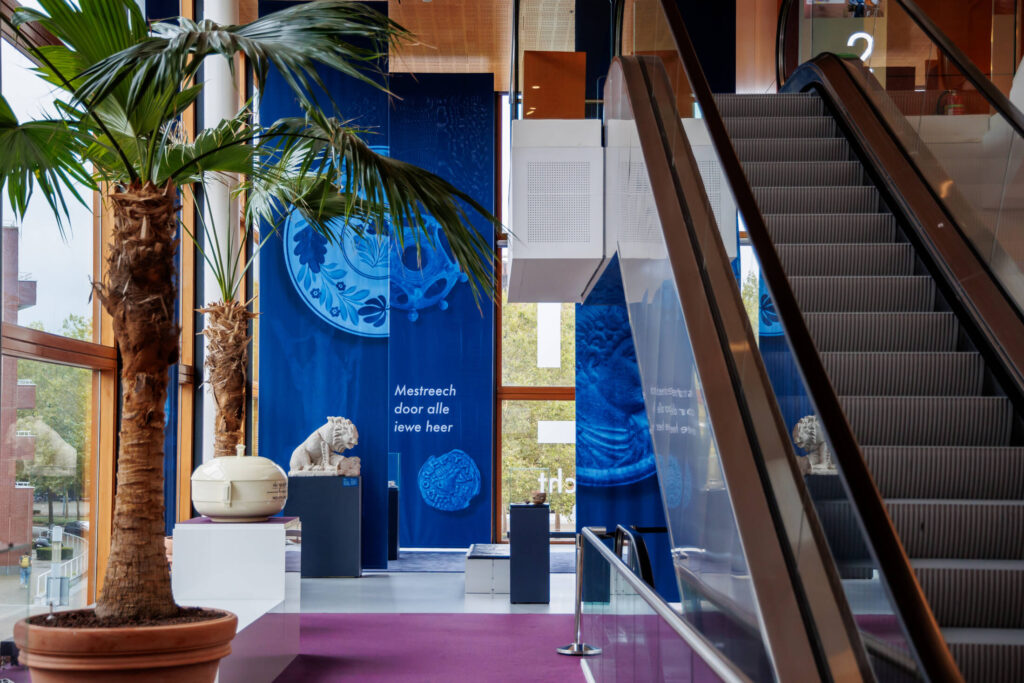
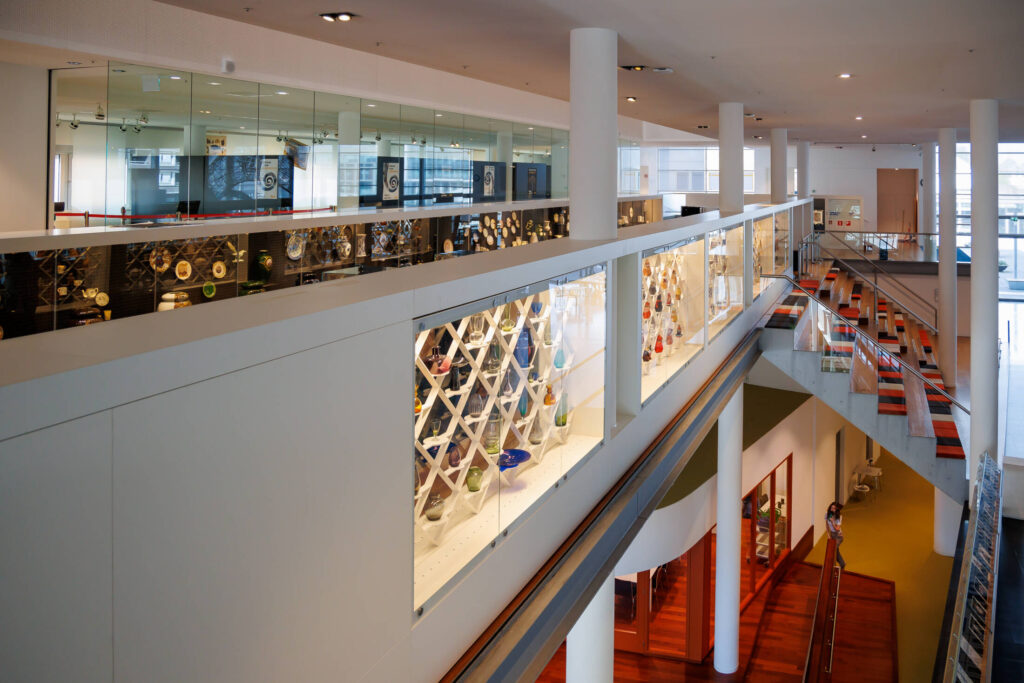
To place these discoveries in a broader context, Maastricht Museum reveals the city’s hidden stories. Exhibitions are presented in Dutch, English, and even in the local Maastricht dialect, helping keep this regional language alive.
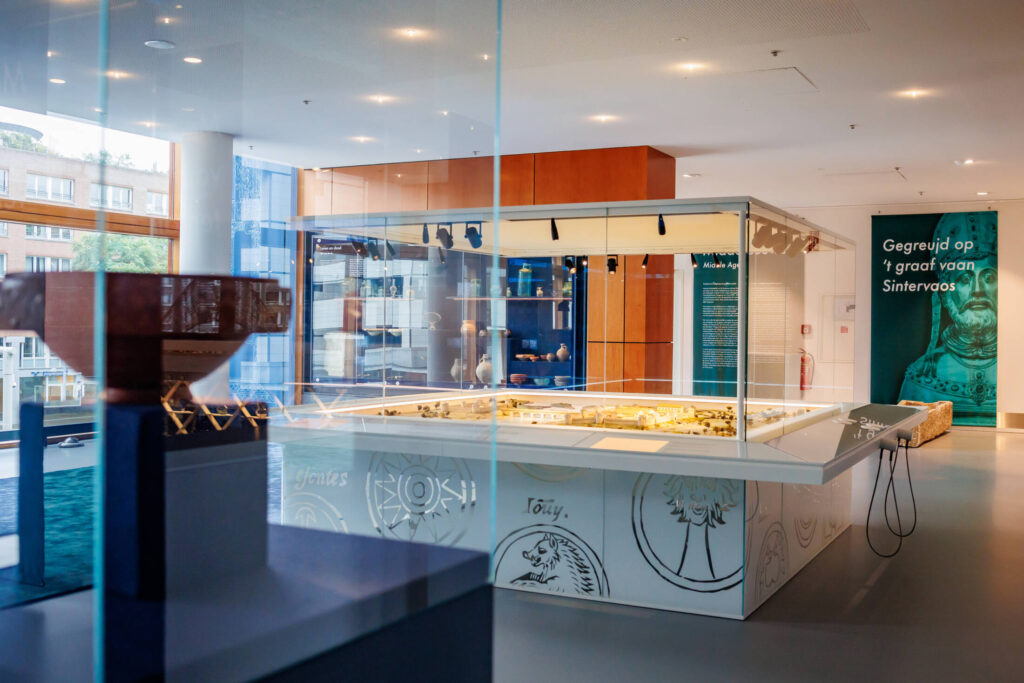
The museum’s journey through time begins around 7,000 years ago with the first permanent settlers, continuing into the Roman period when the first bridge across the Meuse was built. You will then travel through the early Middle Ages, when Maastricht grew into a political and religious centre, and onward to the fortified city of the 16th to 18th centuries. The story concludes in the early 19th century, when Maastricht became the Netherlands’ first industrial city.
A New Experience from 2027
Looking to the future, a new chapter is about to unfold. In 2027, the Maastricht Museum and the cellar of Hotel Derlon will be redesigned. Digital models, 3D experiences, and interactive touchscreens with cultural timelines will provide a deeper understanding of the city’s long and layered history.
Here, the Roman wine merchant Publius Attius Servatus will welcome you to Maastricht and lead you into the world of Roman gods and their worship – even lifting the veil on the mystery of the gravestone.
Together, these sites tell one story: the story of a city unlike any other in the Netherlands; a city where the Meuse still echoes with the footsteps of Rome.
Will you walk in their footsteps?
“‘Observation. Orientation. Determination.’ It was my father’s motto. Look around to see what sells. Make a choice. And then pursue it wholeheartedly. He too was a trader. Yet he struggled all his life to make ends meet. Perhaps our family is cursed — by that single curse tablet, so many generations ago. It is up to me to break the spell. To succeed where he failed throughout his life. Perhaps the turning point lies here. In this city, with its stone river bridge. With its little harbour full of exotic goods. With its temples and potteries. With its Jupiter column. A trade in statuettes of the gods — could that succeed? Observation. Orientation. Determination. I am ready. Ready to break the curse. Ready to give my family the future it deserves.” – Quintus Iulius Viator