Divers inspect condition of the ‘cradle of Maastricht’
Author: Harry Lindelauf
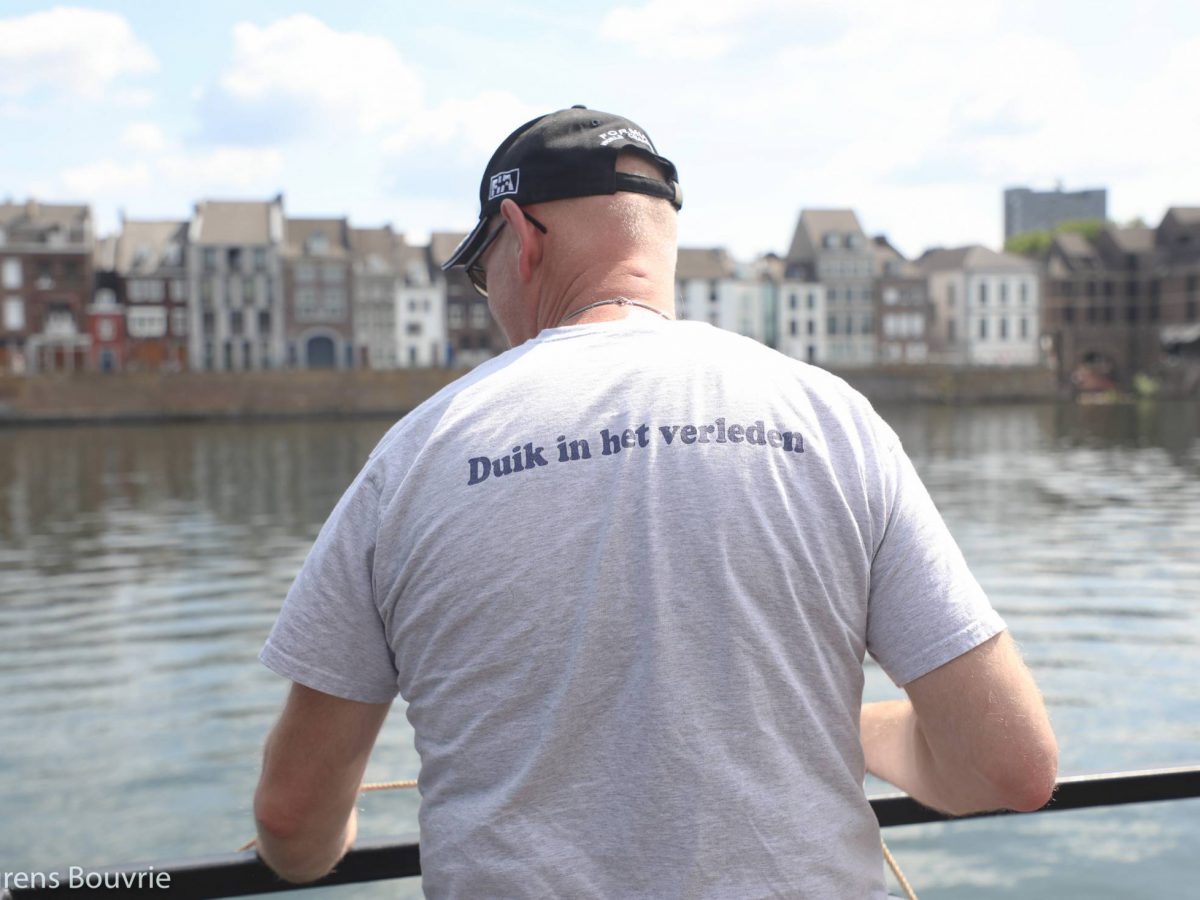
Photography: Laurens Bouvrie
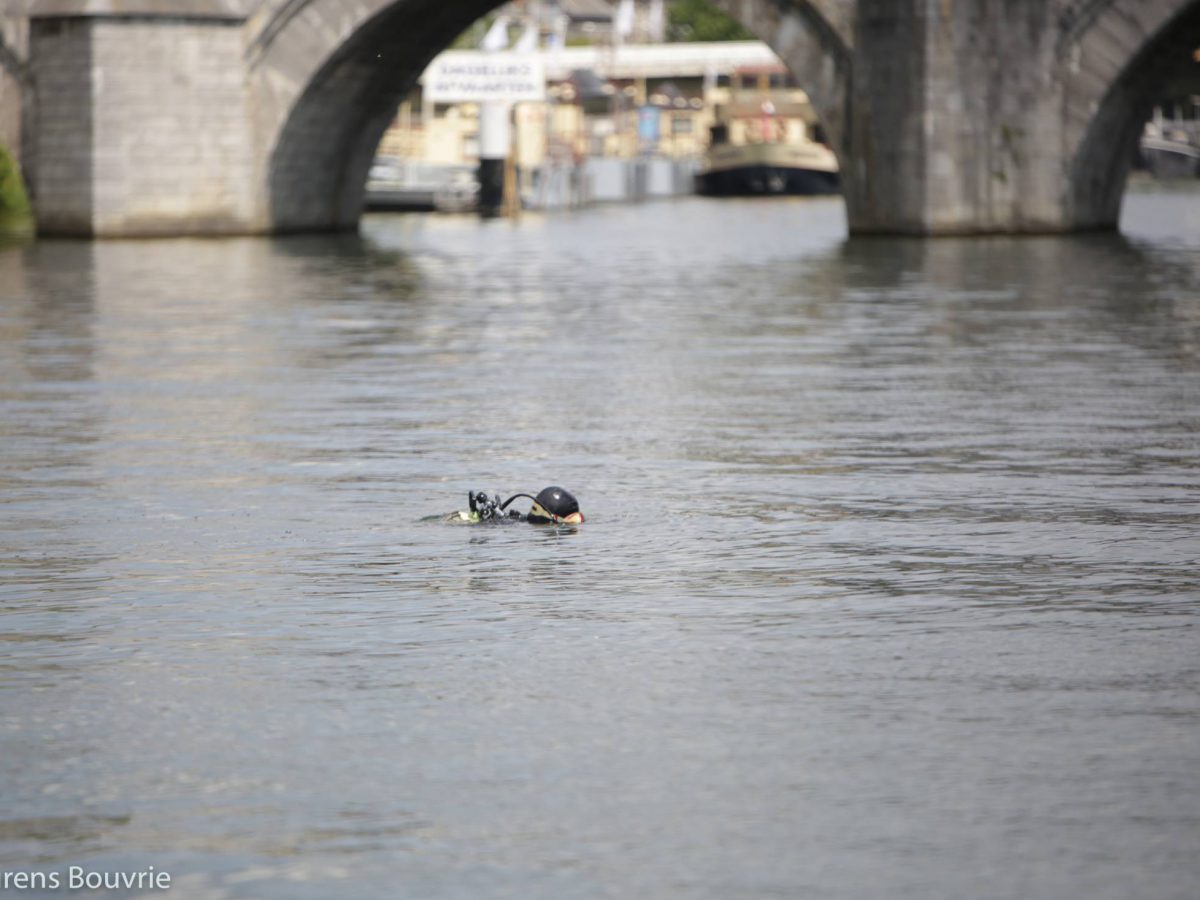
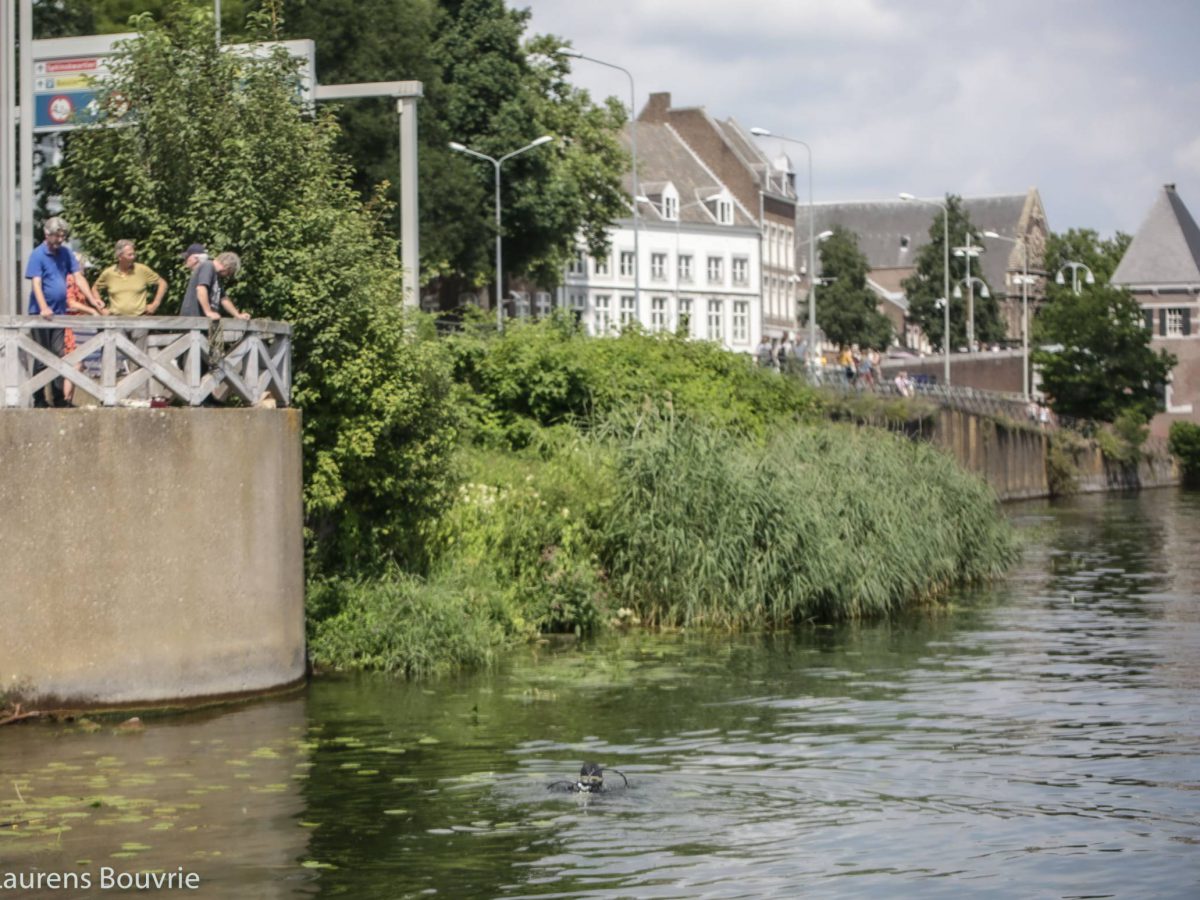
Divers of Mergor in Mosam inspected the remains of the Roman bridge in Maastricht on Saturday 18 July for signs of deterioration. Under the supervision of city archaeologist Gilbert Soeters, research was also carried out into a newly discovered frame of heavy wooden beams. This frame lies in a different alignment than the other remains.
The remains consist of wooden beams (some up to 7 metres long) or posts and of worked natural stones, which are spread over an area of about 3,000 square metres. The bridge remains are located approximately 100 metres south of the Sint Servaas Bridge. The strip containing the remains runs from the riverbank on the city side to about two-thirds of the Meuse in the direction of Wyck. Archaeologists assume at least three to four (and possibly even more) phases of Roman bridge construction in the Meuse. This insight is based on dating of wood remains using tree rings. On Saturday, a sample was also taken from a beam that was in danger of being lost due to erosion. Findings from earlier research indicate that between the first and fourth centuries, the Romans must have built several bridges in Maastricht, each time due to the decay of the existing bridge. In the announcement of the diving operation, the Roman bridge is referred to as the cradle of the city: “Without a bridge, Maastricht would never have been founded in Roman times.”
Measuring system
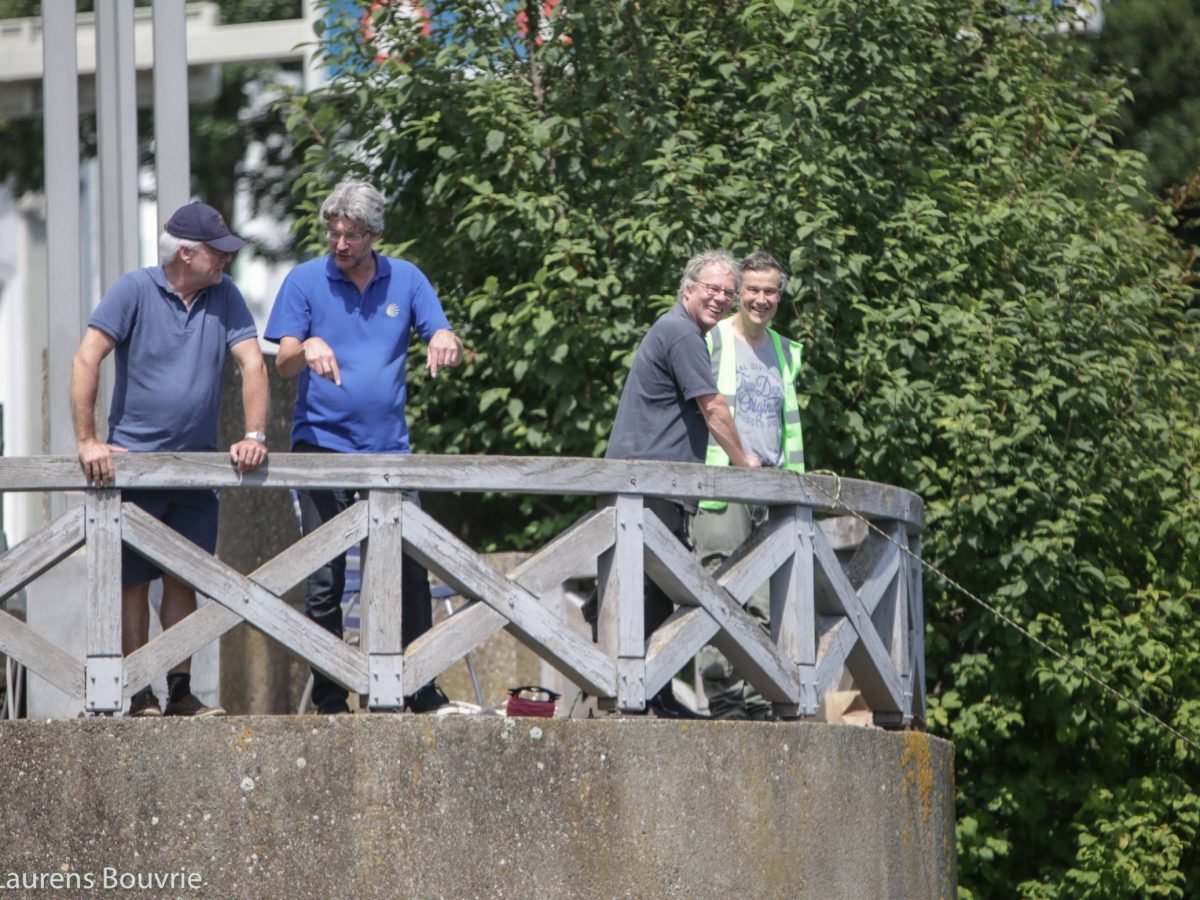
Under favourable conditions, the two divers from Mergor in Mosam were able to carry out their work on Saturday. Visibility on the bottom of the Meuse was still about one metre and there was almost no current. In addition to the inspection of erosion of the remains, a new measuring system has been installed. For this, the new mooring posts that were placed earlier this year for cruise ships were used.
National Heritage Site
Since September 2017, the remains of the Roman bridge on the bottom of the Meuse have been designated as an archaeological National Heritage Site. To monitor the condition of the monument, at least once a year a diving operation is organised. During this operation it is checked whether erosion is occurring and whether the situation is changing. The findings of the dive are recorded in a report and form the basis for possible new policy measures by the Municipality of Maastricht for the consolidation of the bridge remains, in consultation with Rijkswaterstaat and the Cultural Heritage Agency of the Netherlands.