New home for Heerlen’s ‘Night Watch’ is a delicate mega project
Author: Harry Lindelauf
Photography: Het Romeins Museum
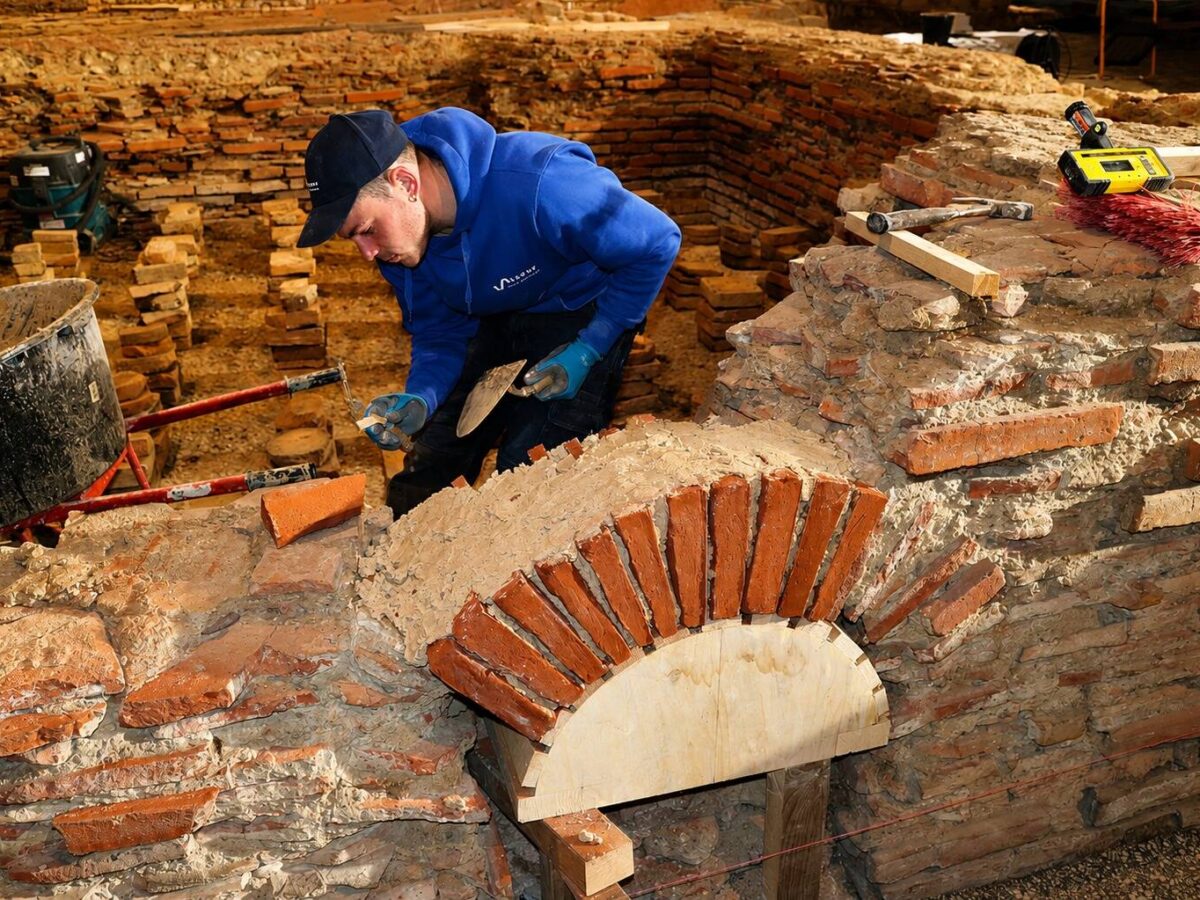
The Roman bathhouse in Heerlen is fragile and valuable heritage. In this delicate environment, construction workers must finish by the summer of 2028 after four years of demolition, renovation, and construction in order to give the archaeological treasure a well-protected future.
Anyone who loves extraordinary challenges should have applied to join the teams replacing the Thermenmuseum in Heerlen with the Roman Museum. Because how do you protect fragile and monumental remains that are around 1,800 years old from falling stones, machine vibrations, or changes in humidity and temperature?
A team of experts from the museum, the municipality, the contractor, and the Netherlands Cultural Heritage Agency jointly devised a plan to keep the bathhouse safe during the construction work.
To safe storage
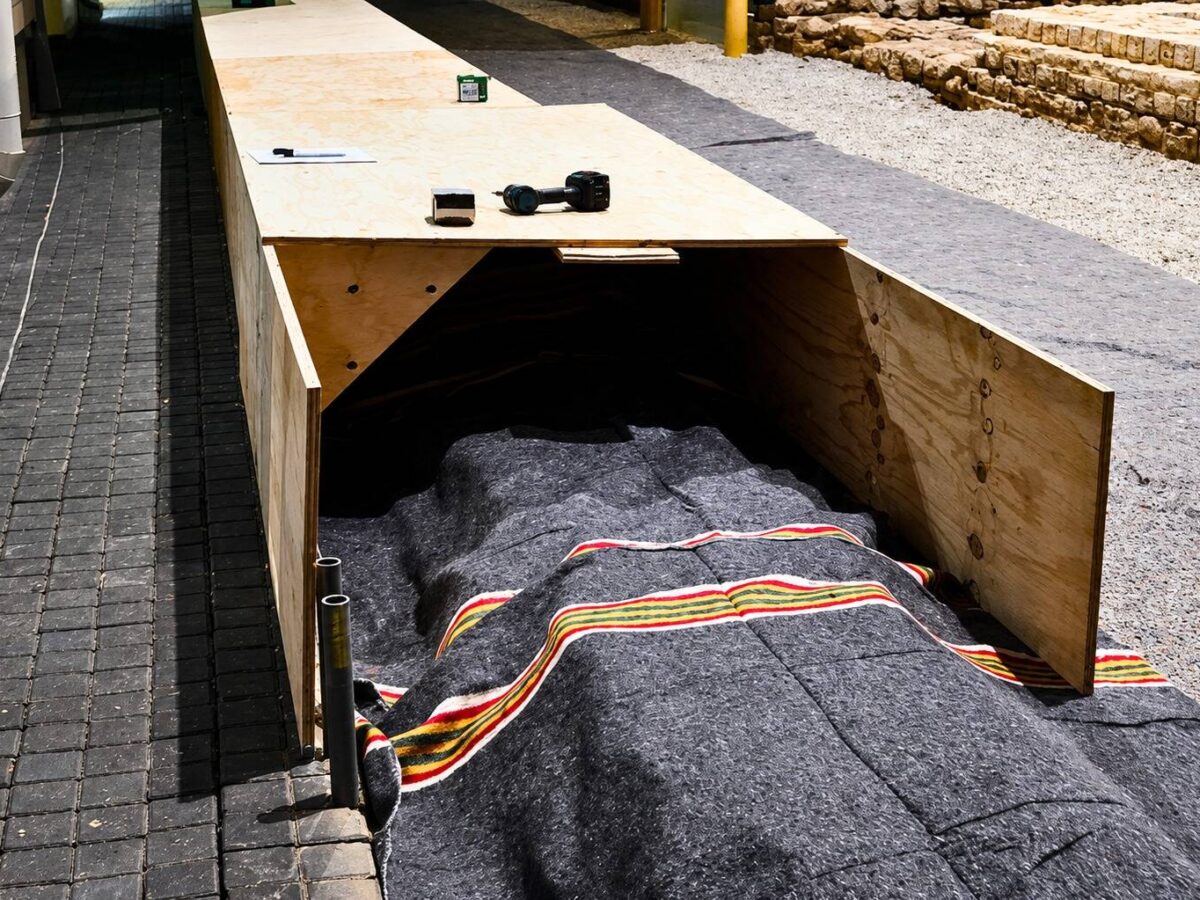
Once the protection plans had been approved, a test was carried out — safety first. Blankets were first placed over the remains, followed by a wooden casing covered with foil. It turned out that this packaging created a better and more stable humidity level and temperature. Exactly what the monument needs, and something the old building failed to provide.
For the large central section, blankets were also used, but because of its size, a large scaffold structure is being built over the bathhouse remains. The scaffolding both protects the site and serves as a working platform for the roof construction work. The rest of the collection, consisting of around 40,000 objects, has also been carefully packed and moved to a secure storage facility.
From IKEA yellow to ‘night blue’
Only after the protection of the bathhouse was completed could work begin on demolishing the concrete tower that housed the Rijckheyt archive until 2023. To safely remove the tower in this sensitive environment, an XXL demolition shear was used. The entrance, offices, and museum halls have also now been demolished.
Although a new museum building is being constructed, not everything from the old Thermenmuseum will disappear. The basements at the front and rear will remain. These spaces will house, among other things, the new technical installations, workspaces, and the depot for collection management.
The steel frame supporting the roof above the bathhouse will also remain: it is remarkable because it spans the entire space of the bathhouse remains without intrusive columns. This structure from 1977 will therefore stay, but the IKEA yellow colour will be repainted in a more discreet “night blue.”
Ceramic façade cladding
Another element that will remain is the four columns of the archive tower. In the new building, designed by Kraaijvanger Architects and TomDavid Architects, they will support “the mansio,” containing exhibition halls and educational spaces. The architects incorporated numerous references to the Roman past into the new design. One example is the special façade cladding of the mansio. It consists of ceramic panels that change colour depending on the angle of the sunlight. The shape of the panels is also a tribute to the potters of Roman Heerlen, among whom one Lucius has become especially well known thanks to the jug he made for Amaca. It will undoubtedly be on display in the new museum from the summer of 2028 onwards.