Research at Vlengendaal provides new insights – and a new puzzle
Author: James Dodd, Berber van der Meulen-van der Veen
Photography: Radboud University Nijmegen, University of Amsterdam
Research in the Roman valley of Bocholtz in 2025 and 2026 has provided new information, but has also raised new questions.
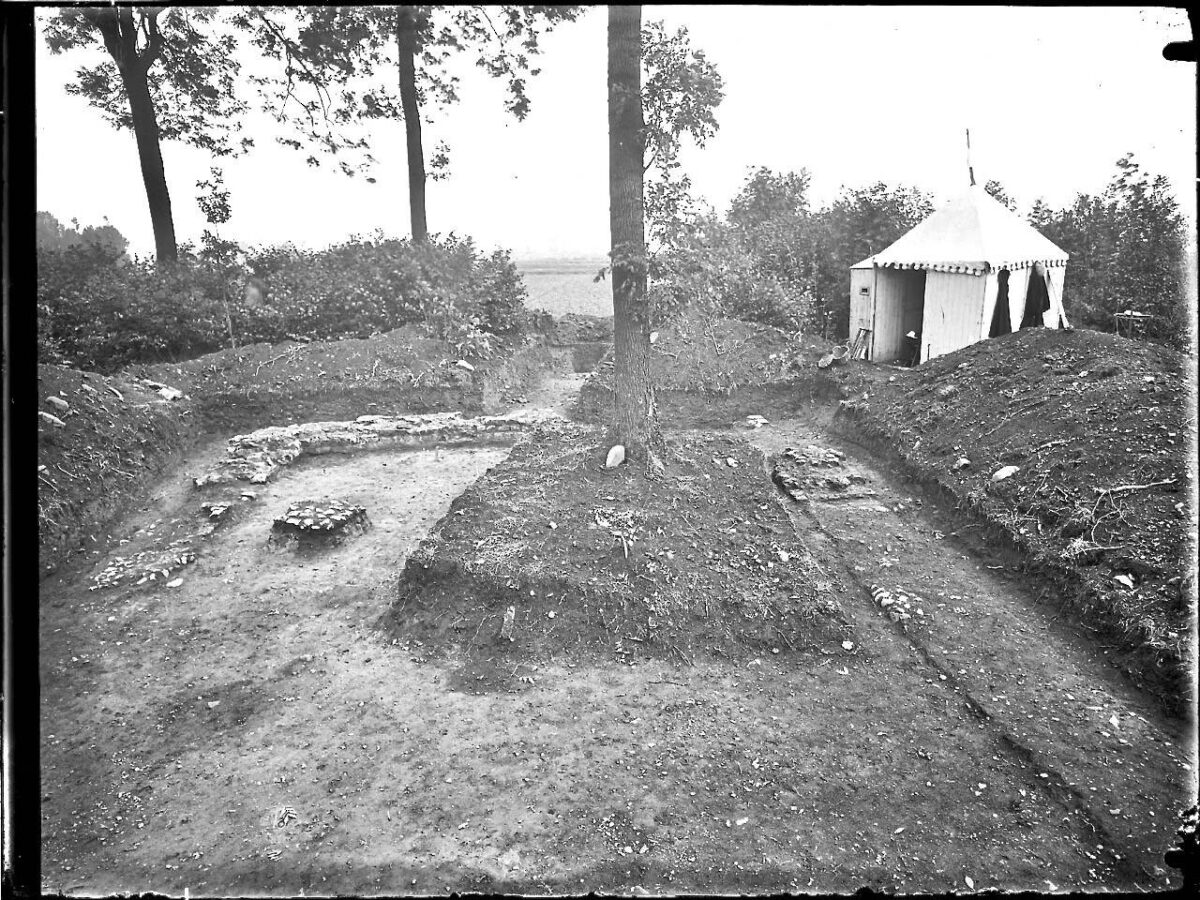
The Roman valley of Bocholtz is a hotspot where archaeologists discovered the remains of a villa rustica, a Roman farmstead, as early as 1911 and 1913. The villa was named ‘Vlengendaal’ after the nearby hamlet. Three more villas were later discovered: Dellender, Orsbacherweg and Schiltjensweg. Dellender lies on the border with Germany and was partially excavated on both sides of the border in 1992. The villas at Orsbacherweg and Schiltjensweg are known only from fragments of roof tiles and limestone brought to the surface by ploughing.
New programme
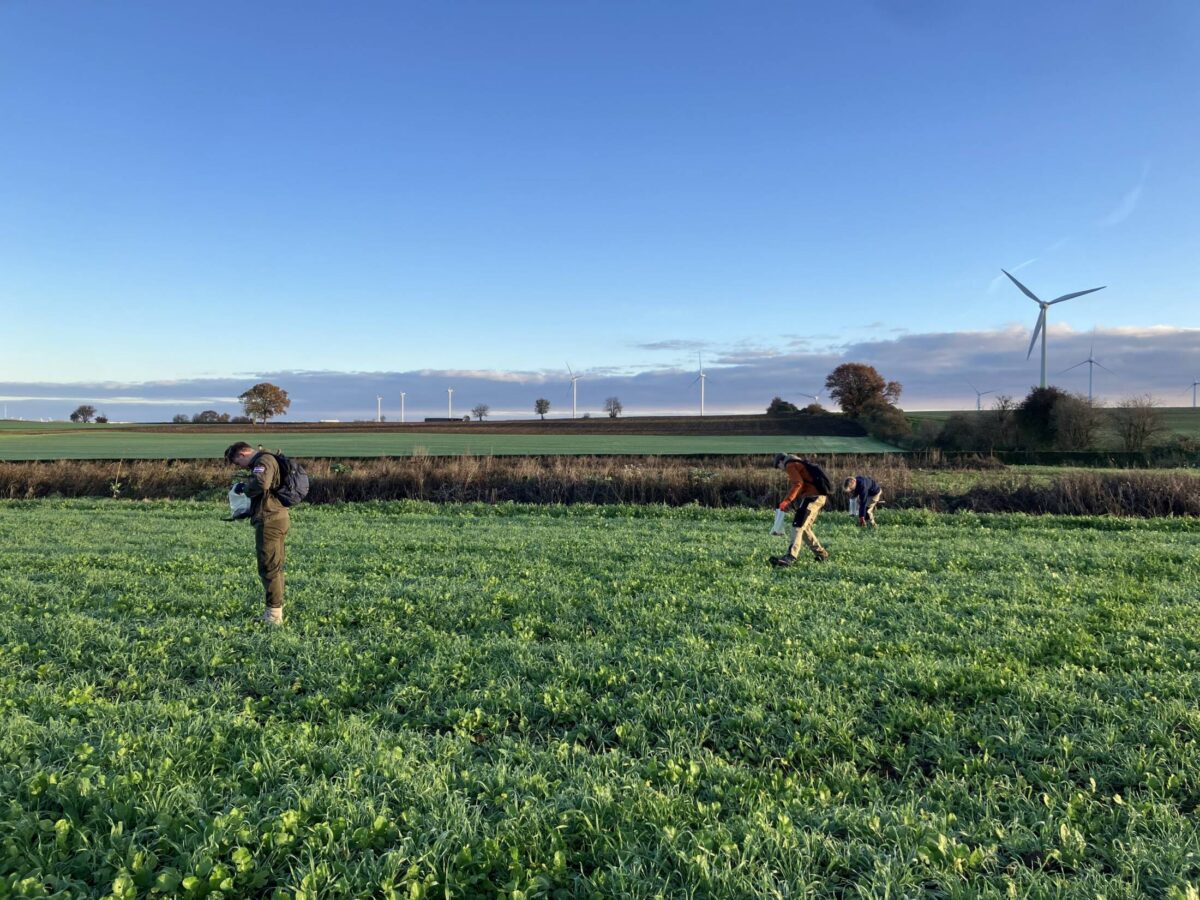
In November 2025 and May 2026, Radboud University Nijmegen and the University of Amsterdam began a new programme of field research into the Roman villa landscapes of South Limburg. Fieldwalking and geophysical research were combined. For the latter method, a resistance meter was used that can ‘see’ the remains of buildings in the ground using electromagnetic waves.
Photo: Fieldwalking in action: students walk in rows and collect Roman material.
Unique remains
The fieldwalking was initially carried out at the Vlengendaal villa. The site was searched for Roman material on the surface in order to create a map of the finds across the landscape. Thanks to the excavations of 1911 and 1913, we know that there were three buildings: a main building and two outbuildings. The villa is also famous for the remains of a mosaic floor discovered there at the time, a unique find in the Netherlands. However, the new research is primarily intended to provide greater insight into the history of Vlengendaal: what exactly happened that caused the main building to be abandoned? The researchers also want to establish whether the known plan of the villa is complete or whether there may still be unknown buildings waiting to be discovered.
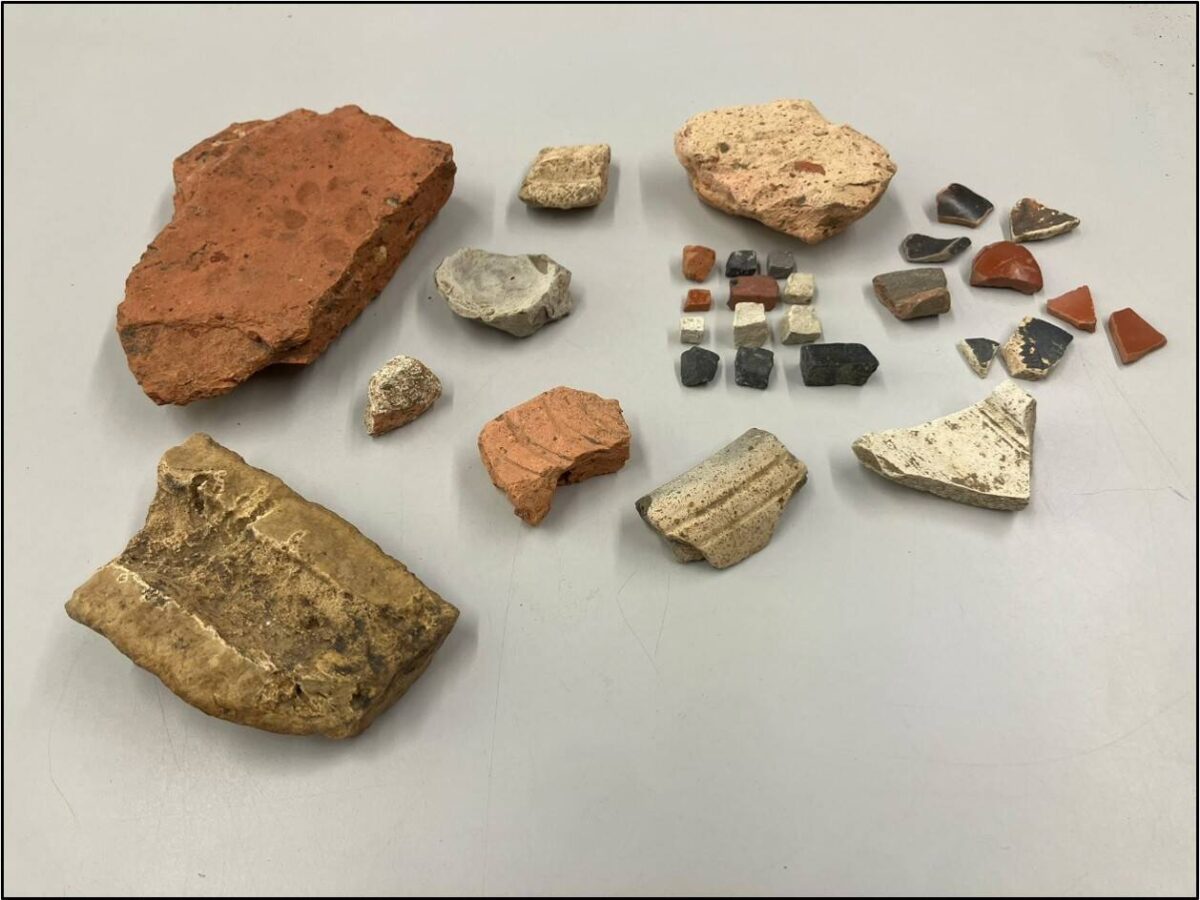
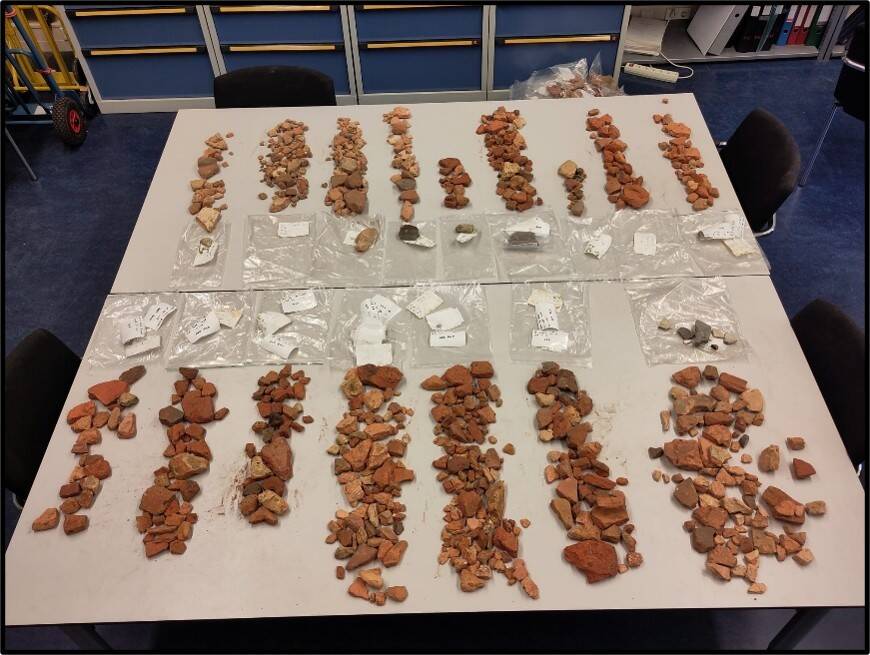
Photo: The ‘harvest’ from the fieldwalking: a selection from the 200 kilograms of Roman building material and pottery.
Pottery from the region
The fieldwalking in November 2025 did more than give the students their first introduction to archaeology in South Limburg. A total of around 200 kilograms of building material was found in the fields, including natural stone and roof tiles, pottery from the region and even fragments of amphorae from Spain. All this material has been sorted and is now being studied further. It is already clear, however, that the finds date from the period between the first and late third centuries. In addition to building material, 14 mosaic pieces that once formed part of the floor were also discovered. The stones are now being studied to determine where they came from.
Photo: Special finds from the fieldwalking: pottery, a roof tile bearing the imprint of a dog’s paw, tesserae from the mosaic and other building material.
A new question
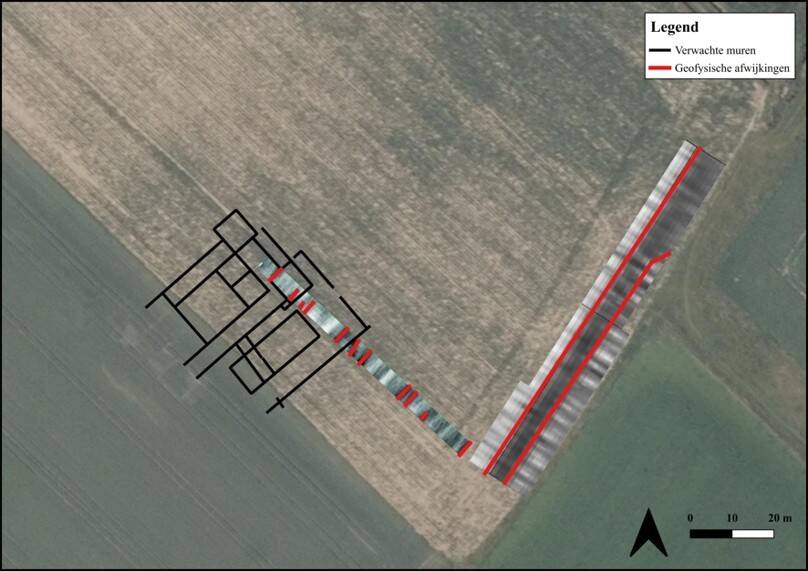
Following the fieldwalking, the Vlengendaal villa was investigated again in May 2026, this time using a resistance meter. Taking the farmers’ activities into account, a strip of land next to the remains of the main building was investigated. This revealed indications of previously undiscovered structures in front of the main building, still within the villa grounds.
What these structures represent is now the new question. Insights from Roman villas in Germany and from the villa at Voerendaal, where Jupiter columns and garden walls were discovered in front of the main building, may help. The answer will have to come from further research into these other Roman villas in South Limburg.
Photo: Results of the resistance survey: new buildings or walls?