Via Belgica discovered in Maastricht
Author: Harry Lindelauf
Photography: Harry Lindelauf
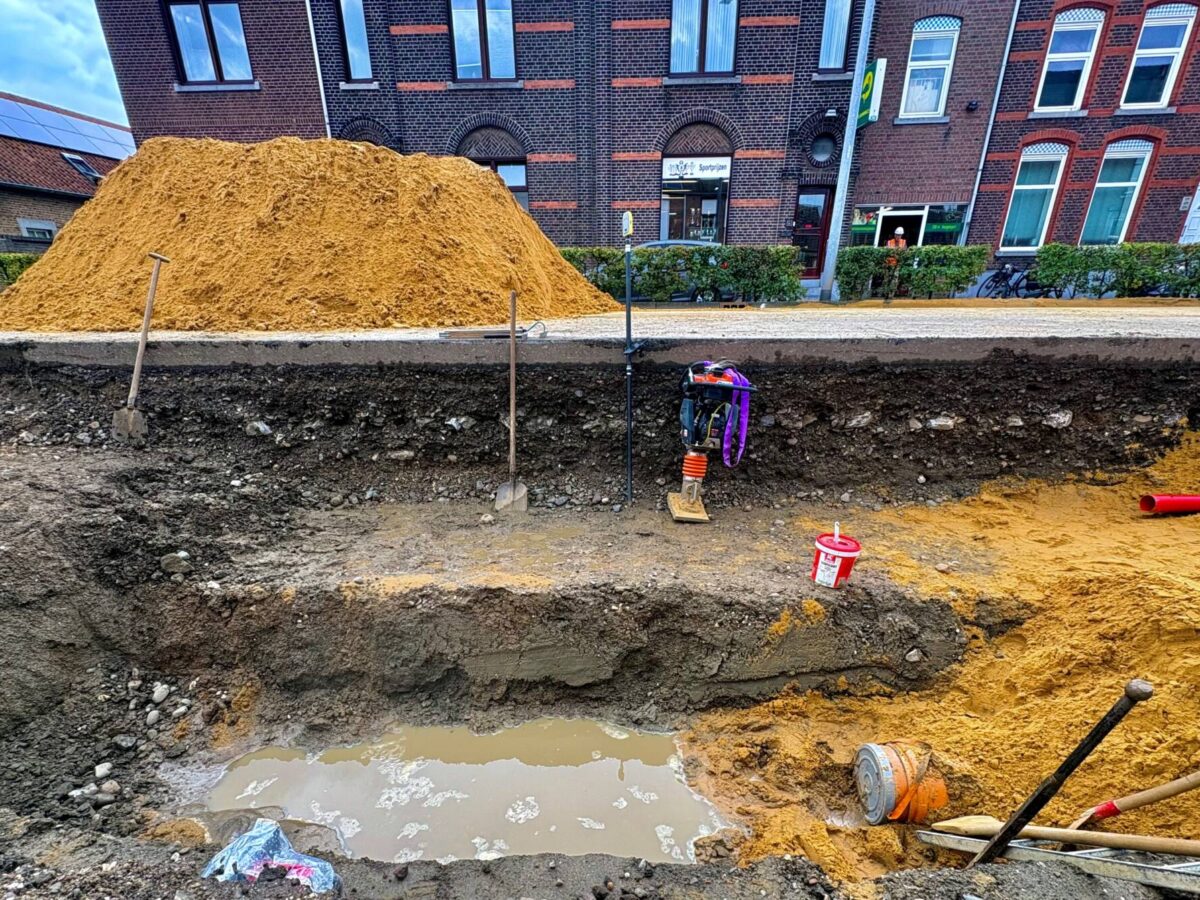
It is not the first, but it is the most recent discovery in Maastricht: the Via Belgica has been found beneath the Meerssenerweg. The ancient road surface, with adjacent drainage ditches, lies at a depth of approximately two metres, parallel to the modern road, which follows almost exactly the same route here.
And it was not only the Via Belgica that came to light thanks to the excavation work for a new sewer system: a thick layer of river silt from a flooding of the Meuse covers the Via Belgica, while above it lie roads dating from the 17th, 18th and 19th centuries. On top of them lies the modern asphalt of the present-day road.
The Via Belgica has previously been identified at several locations in Maastricht. In the vicinity of the new find, for example, the road has been traced over a distance of one kilometre near the P+R site Maastricht Noord and at Mariënwaard-Kruisdonk.
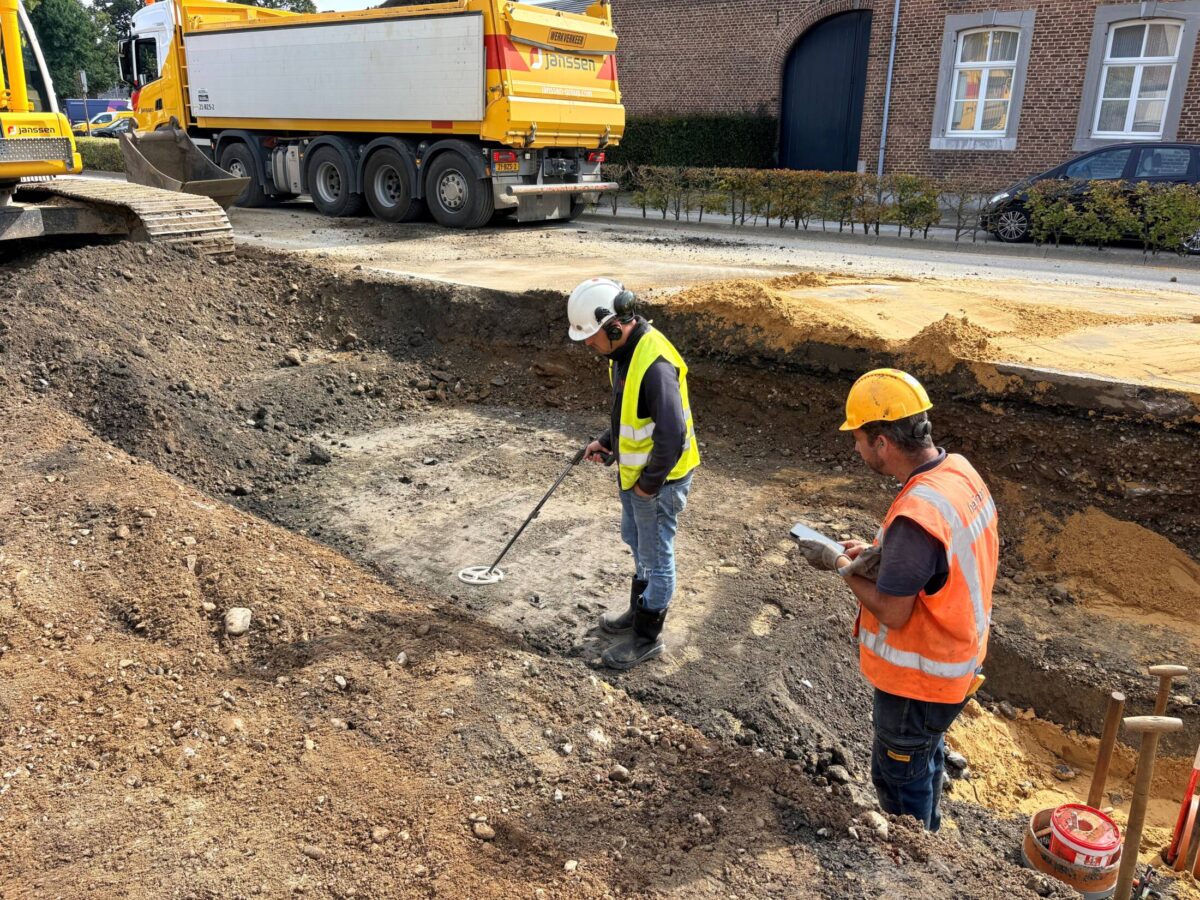
Photo: In the trench dug for the construction of a new sewer, a metal detector is being used to search for archaeological metal objects. So far, one Roman find has been made: a coin from the third century. Horseshoes have been found in large numbers, the oldest dating from the 12th century.
Archaeologists had previously worked out how the Via Belgica ran from the eastern side of the bridge over the Meuse: along the route of the present-day Rechtstraat, then diagonally across the railway yard towards the bend in the Meerssenerweg where the Flix buses now stop. The estimates for this location have now proved to be correct.
Construction of the Via Belgica began around 10 BC and took years to complete. The project was led by Marcus Vipsanius Agrippa, general, consul of Gaul and builder of the Pantheon in Rome. He put thousands of auxiliary troops from the Roman army to work: the construction of the Via Belgica was important for the rapid deployment of military forces to establish Roman rule.