Roman Bocholtz Exhibition – Bocholtz Ash Chest
Hoeve Overhuizen - Bocholtz
175 – early 3rd century AD
Original, Provincial Archaeological Finds Repository Limburg
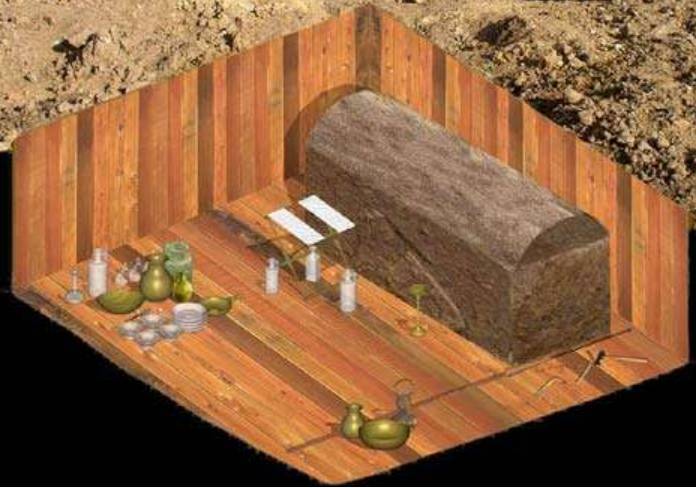
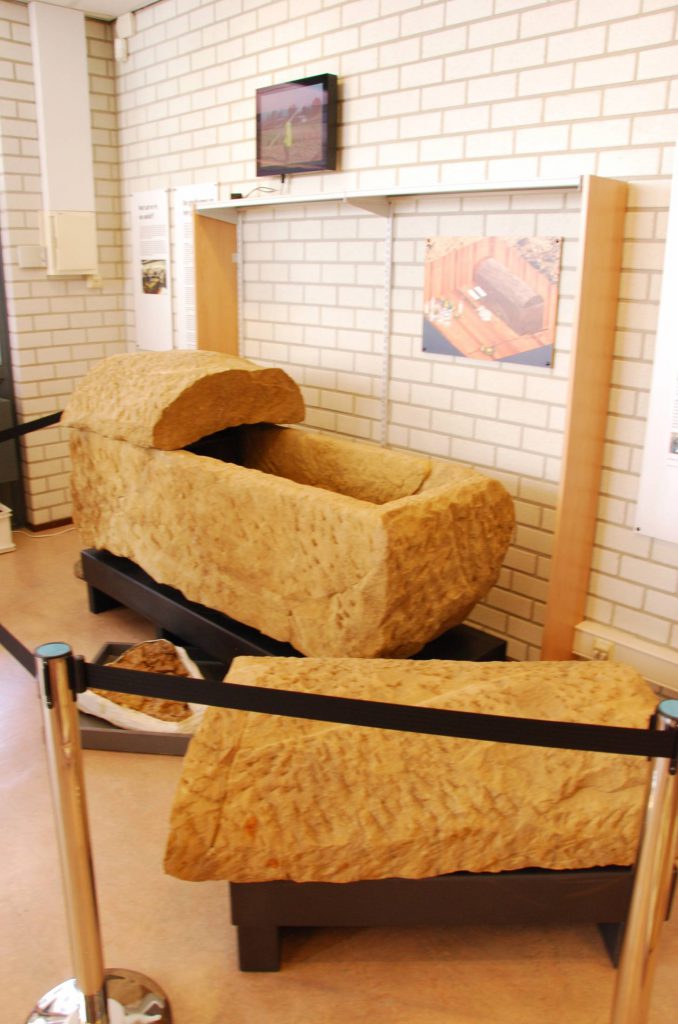
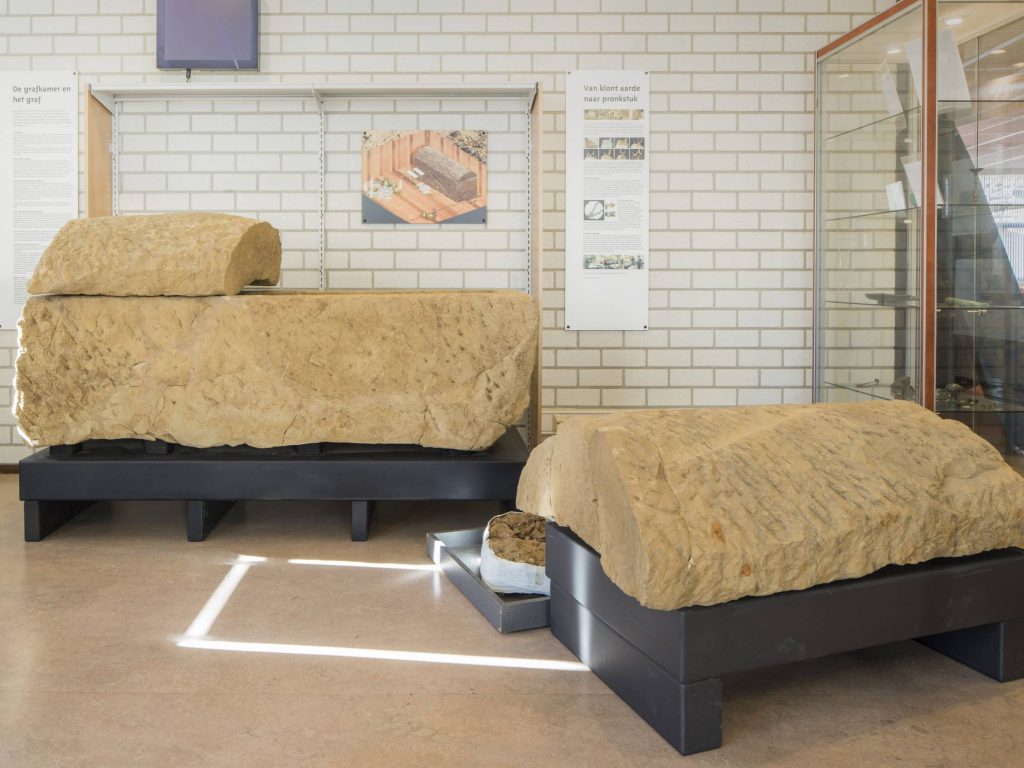
The cremated remains of the Lord of Bocholtz were buried in this extremely heavy stone chest with a lid. The Nivelstein sandstone from which the chest was made probably came from a quarry near present-day Merkstein, just across the German border. The chest is roughly hewn and is a simple example. Possibly because the Lord of Bocholtz died unexpectedly. The ash chest was interred together with dozens of grave goods in what is known as a tumulus grave: a timber-lined chamber (2.4 by 2.3 metres) beneath a small burial mound. The lid broke during the Roman period, causing the chest to gradually fill with soil over the centuries.
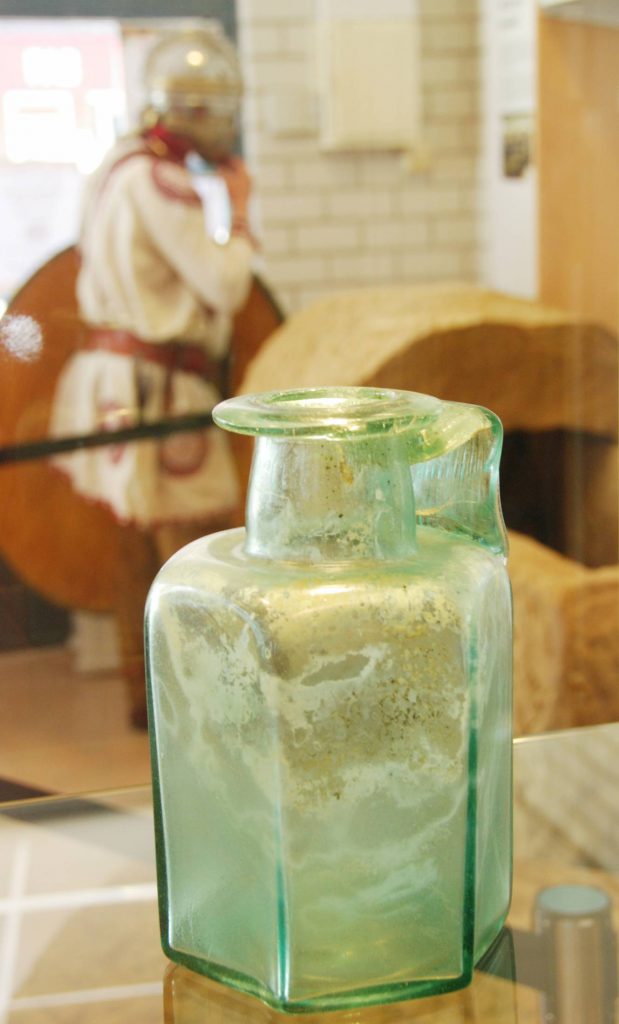
In the centre of the ash chest, archaeologists discovered the cremated remains of the man who would later become known as the Lord of Bocholtz. The remains lay loose inside the chest, suggesting that they had originally been placed in something made from a perishable material, such as wood or textile. A small tear bottle (used for cosmetics) and several small bronze fittings were also found inside the chest. The other grave goods were discovered outside it.
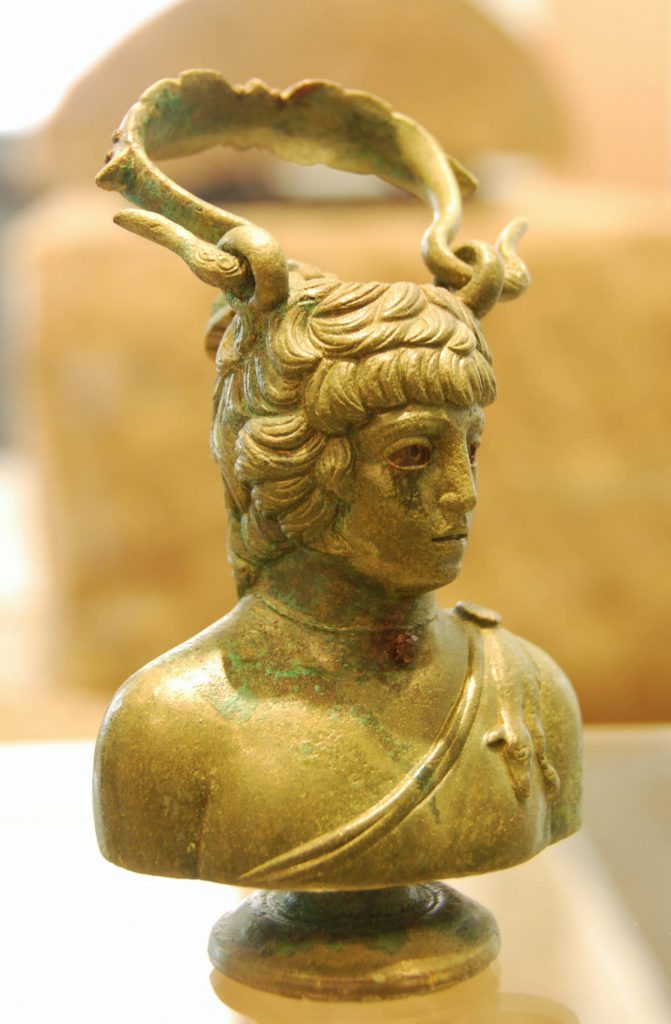
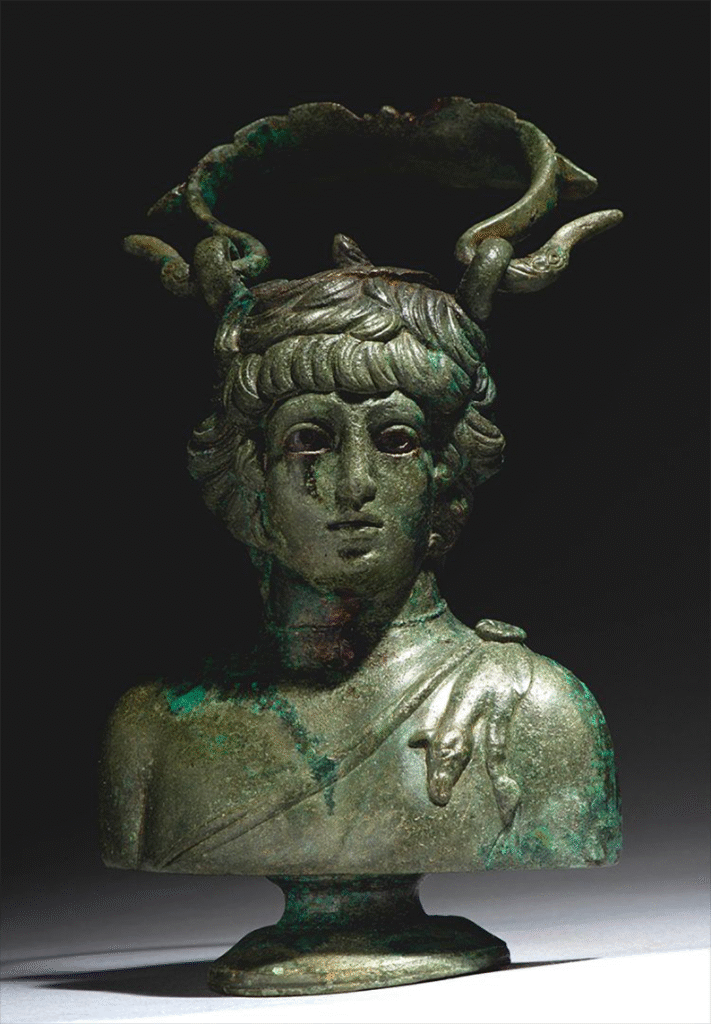
A total of 52 grave goods were discovered in and around the ash chest, all of which contribute to the picture we can now form of the Lord of Bocholtz. Apart from a folding chair and an oil lamp on a stand, the grave goods relate to personal grooming, hunting, dining rituals, writing, and clothing and accessories. The most remarkable grave good was the balsamarium, which was completely intact, making it unique.
Excavation history
After almost two thousand years, the Bocholtz ash chest saw the light of day again. In October 2003, a farmer named Hupperetz from Bocholtz reported an archaeological find. While working his field, his plough struck an exceptionally large stone. It turned out to be part of the lid of a Roman ash chest. The scratches made by the plough are still clearly visible today.
News of the remarkable discovery spread quickly, first by word of mouth and then through the media. On the fourth night after the discovery, modern-day ‘grave robbers’ equipped with metal detectors were driven away by the police. Following this incident, four interested local people took the initiative to establish a ‘sarcophagus watch’, protecting the site from the moment the archaeologists left. The subsequent excavation work and investigations led to a major archaeological discovery.