Roman Bocholtz Exhibition – Balsamarium
Hoeve Overhuizen - Bocholtz
Mid-2nd century AD
Replica, original in the collection of the National Museum of Antiquities in Leiden
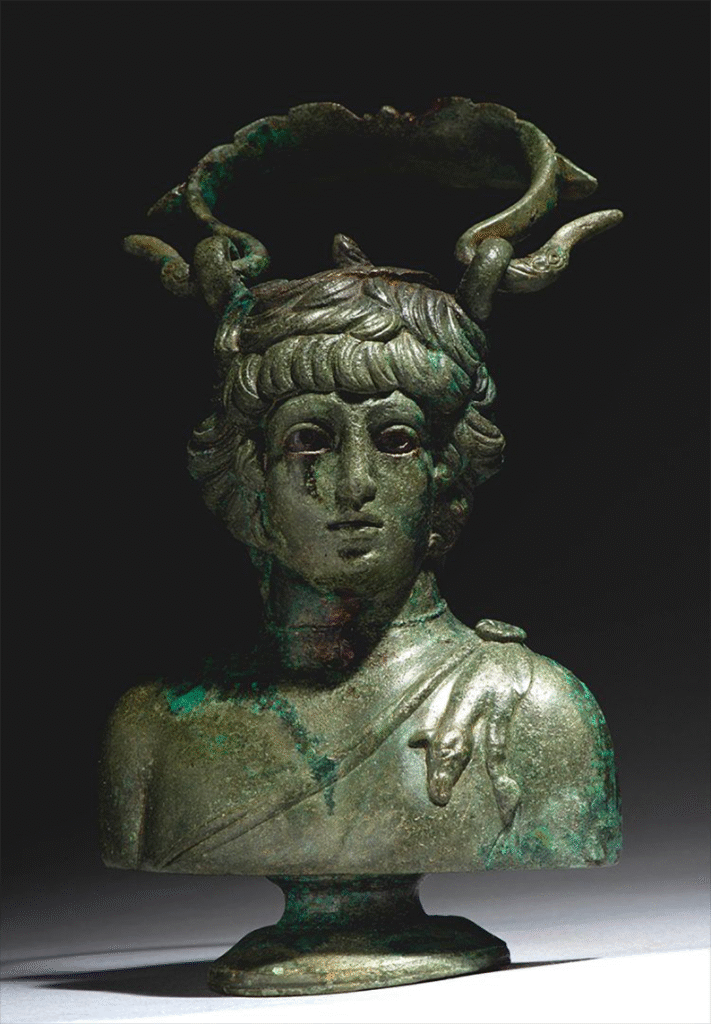
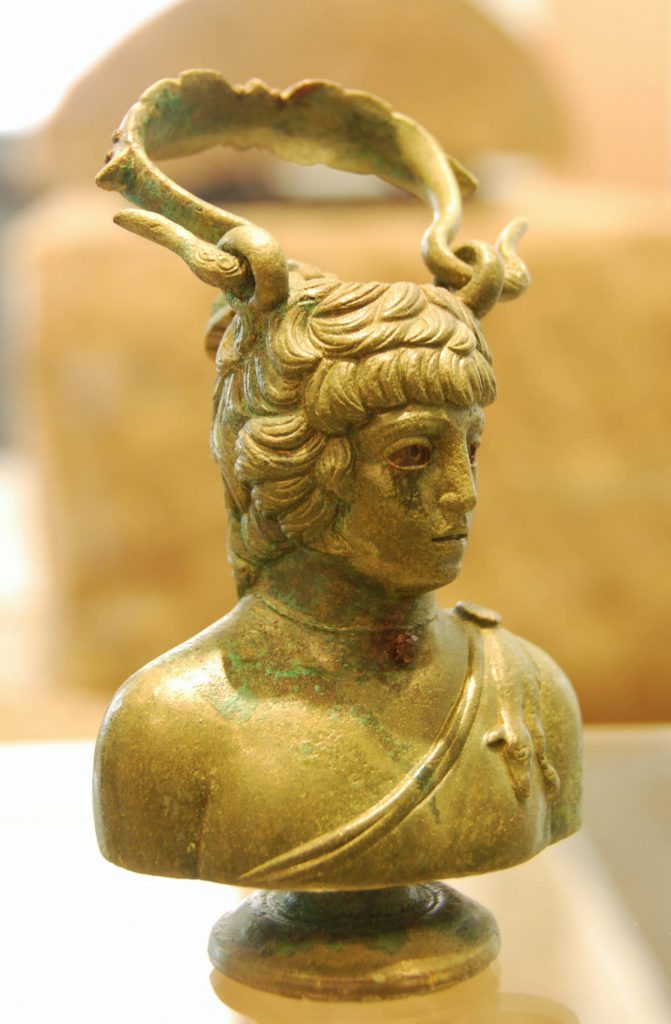
This bronze ointment or oil flask in the shape of a bust depicts Antinous, the male lover of Emperor Hadrian. Antinous was a young Greek man who caught the emperor’s attention because of his exceptional beauty. They became lovers, until Antinous drowned in the Nile at a young age. The emperor deified him and had a city built on the banks of the Nile, naming it after him. Images of his beloved Antinous were spread throughout the Roman Empire. Of all individuals from the Roman period, Antinous is one of the most frequently depicted figures found by archaeologists.
On this balsamarium, Antinous is depicted wearing a garment draped across his chest and fastened with a rosette. An animal skin is draped over his shoulder. Small holes can be seen where Antinous’ eyes (pupils) would have been, possibly indicating that the eyes were made of another material and were once attached here. The handle is decorated with leaves and two swan heads. Richly decorated ointment containers of this kind are rare, and when they are discovered, they are often found in high-status graves. The presence of this balsamarium among the grave goods of the Lord of Bocholtz therefore points to his important position in society. The handle of the only other known example of this type of balsamarium is damaged. This balsamarium, by contrast, is exceptionally well preserved.