A Garden Where the Romans Are Still Growing
Author: Anja Neskens
Photography: Anja Neskens
“The Romans actually tell their own story.””
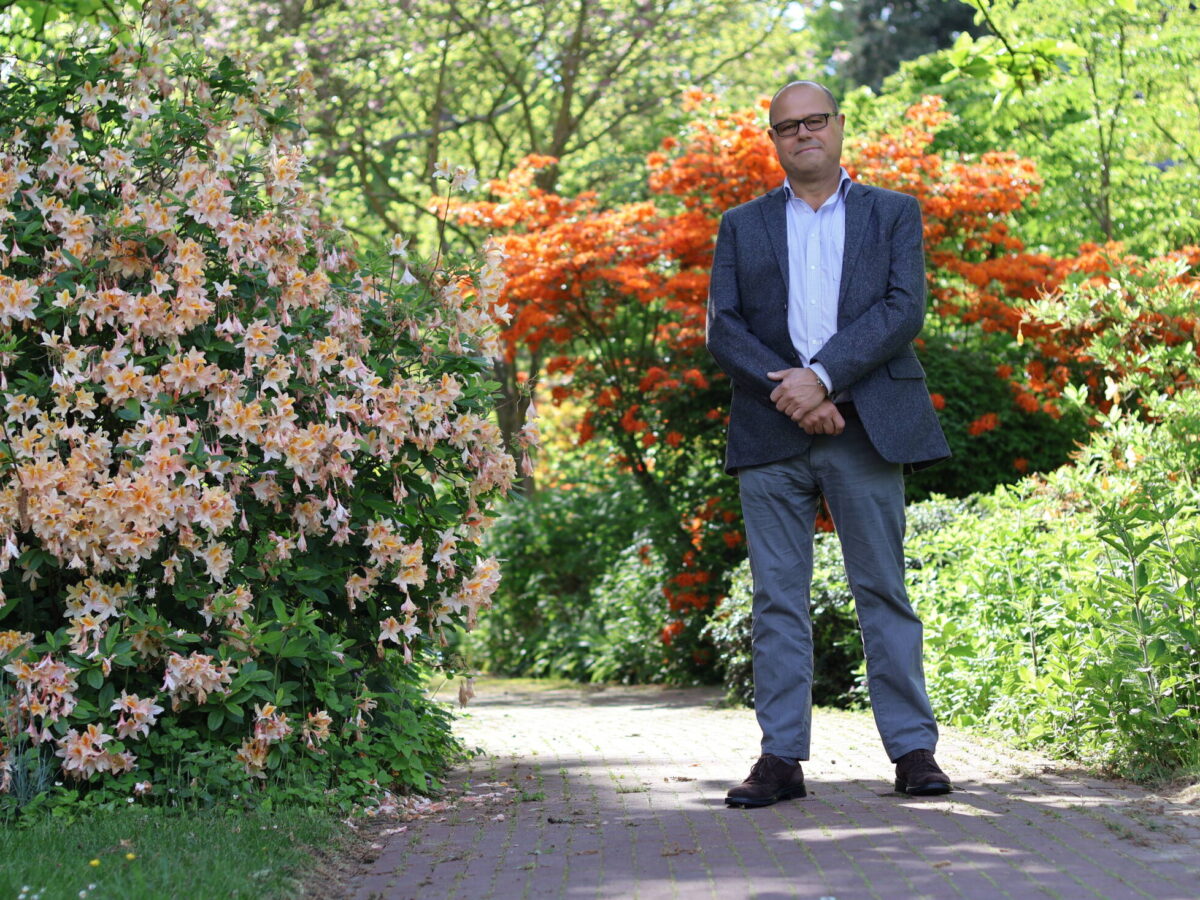
When Hanneke Schreiber walks through the Botanical Garden Kerkrade, she does not only see flowers, trees and herbs. She sees stories. Stories that were written down almost two thousand years ago and that today come back to life among the greenery.
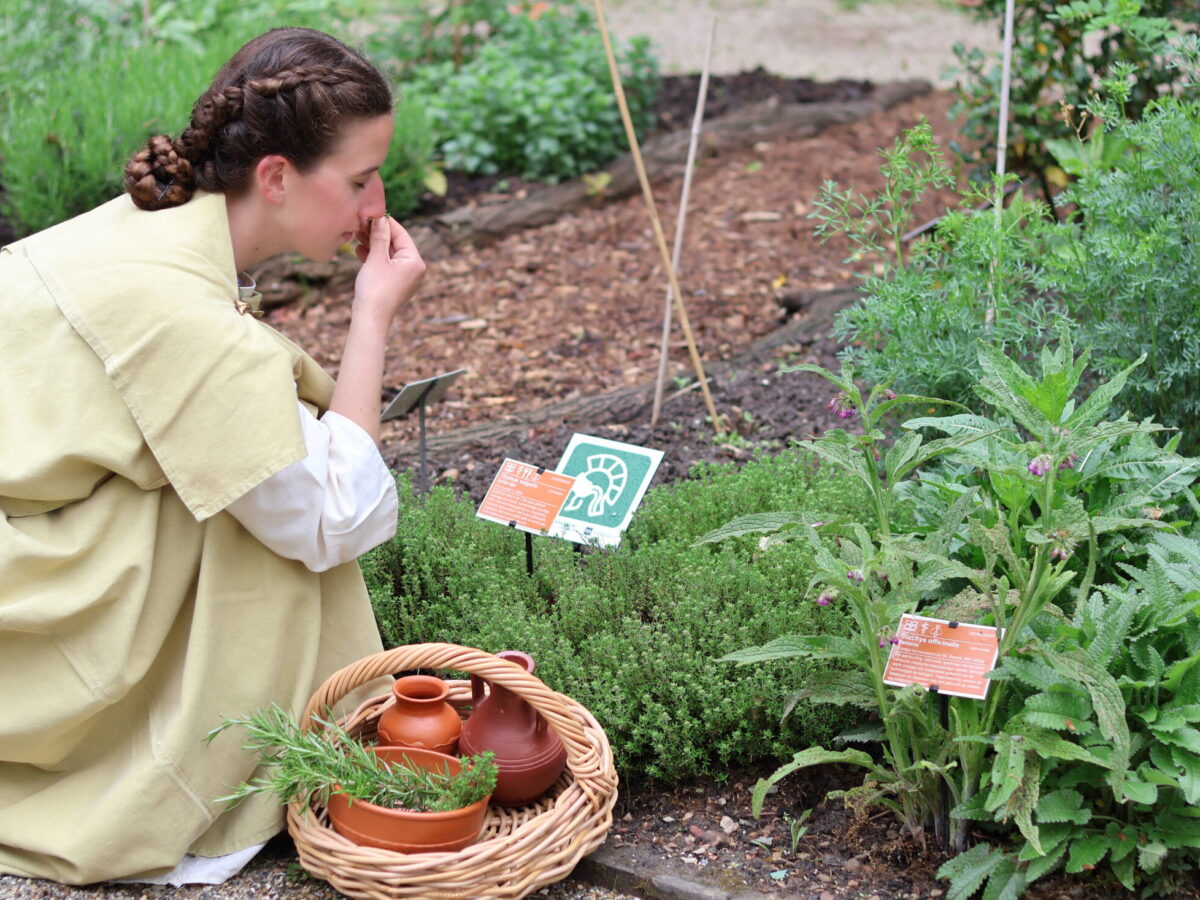
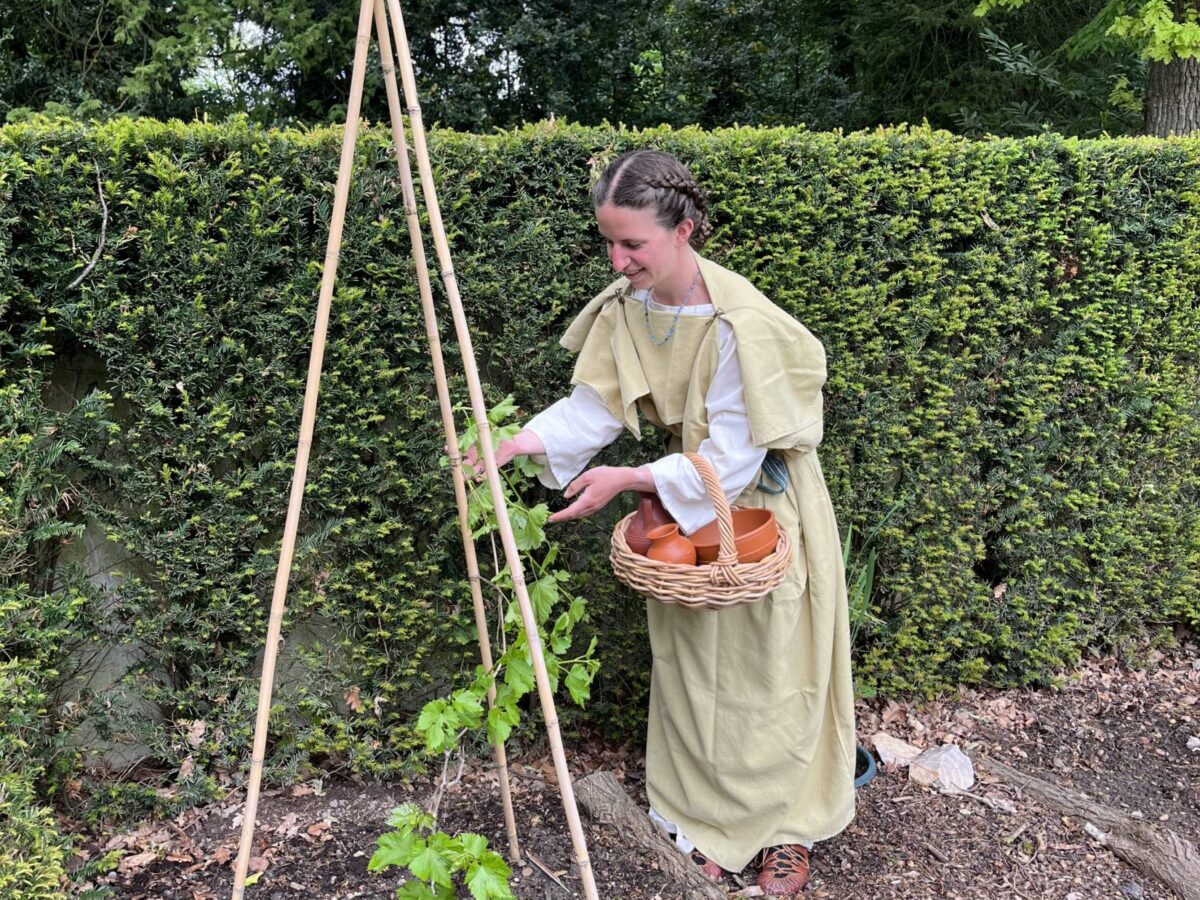
For Via Belgica, the collection manager developed a special walk featuring thirteen Roman plants. It is not a traditional guided tour, but a journey of discovery during which visitors become acquainted with the plants the Romans used as food, medicine, building material and as a source of inspiration for their myths.
“I did not want to tell what we think the Romans did. I wanted to let the Romans speak for themselves.” – Hanneke Schreiber
A Living Museum
Although Hanneke is officially retired, she still remains connected to the Botanical Garden one day a week as collection manager.
She did not start this work yesterday. Previously, she was, among other things, head gardener of the Hortus Botanicus in Amsterdam. Her passion for plants developed into a lifelong fascination.
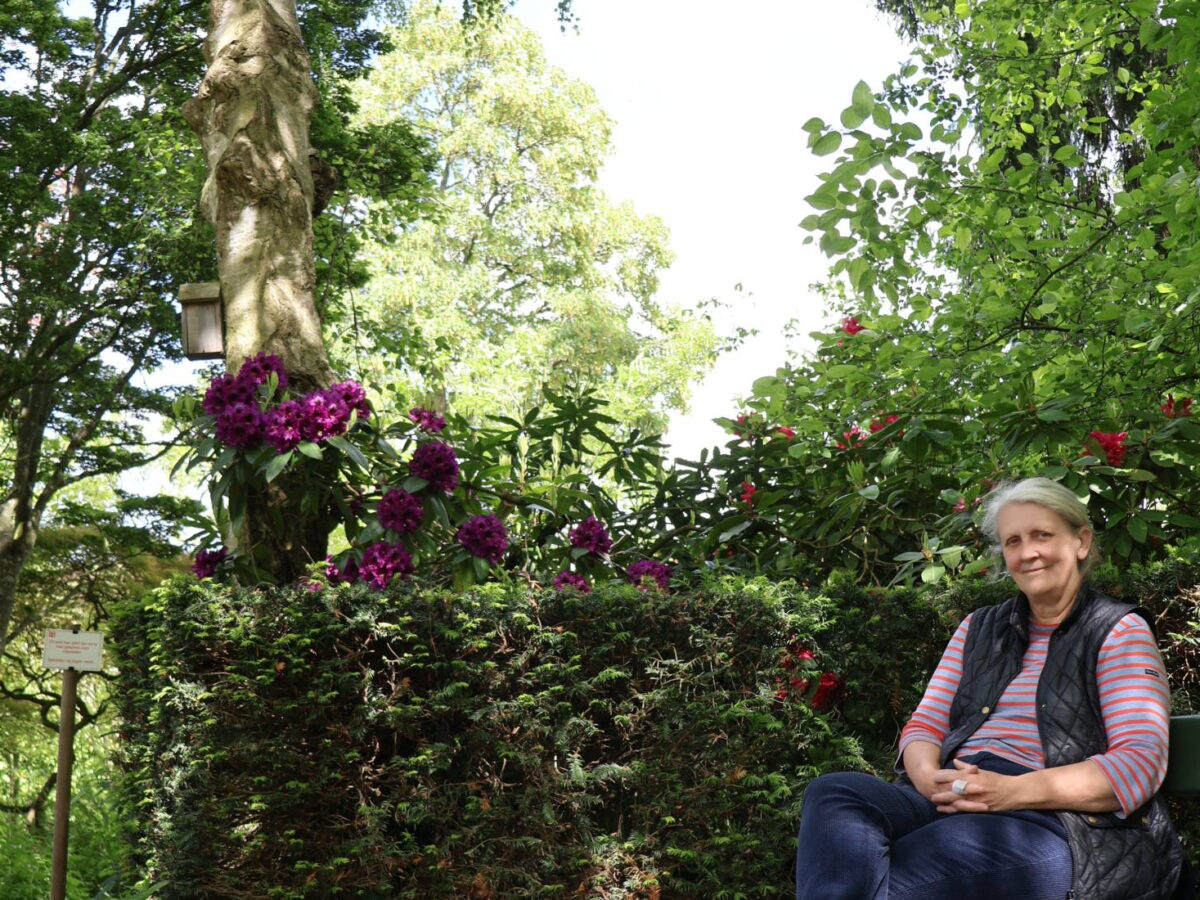
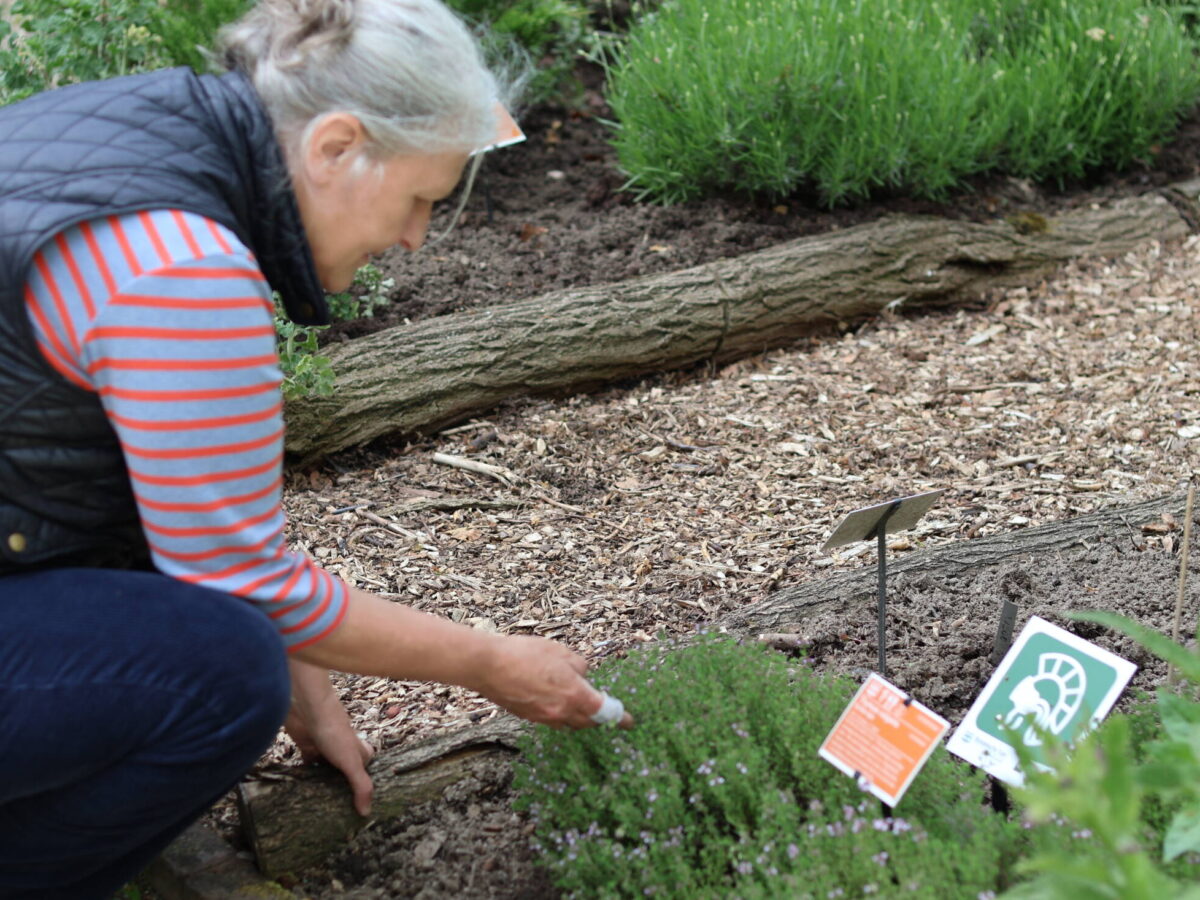
“A botanical garden is actually a living museum,” she explains. “Every specimen has its own history. Every plant belongs to the collection and must be carefully documented and managed.”
That is exactly what makes this garden so special. Here, heritage literally continues to grow every single day.
Where History Begins to Bloom
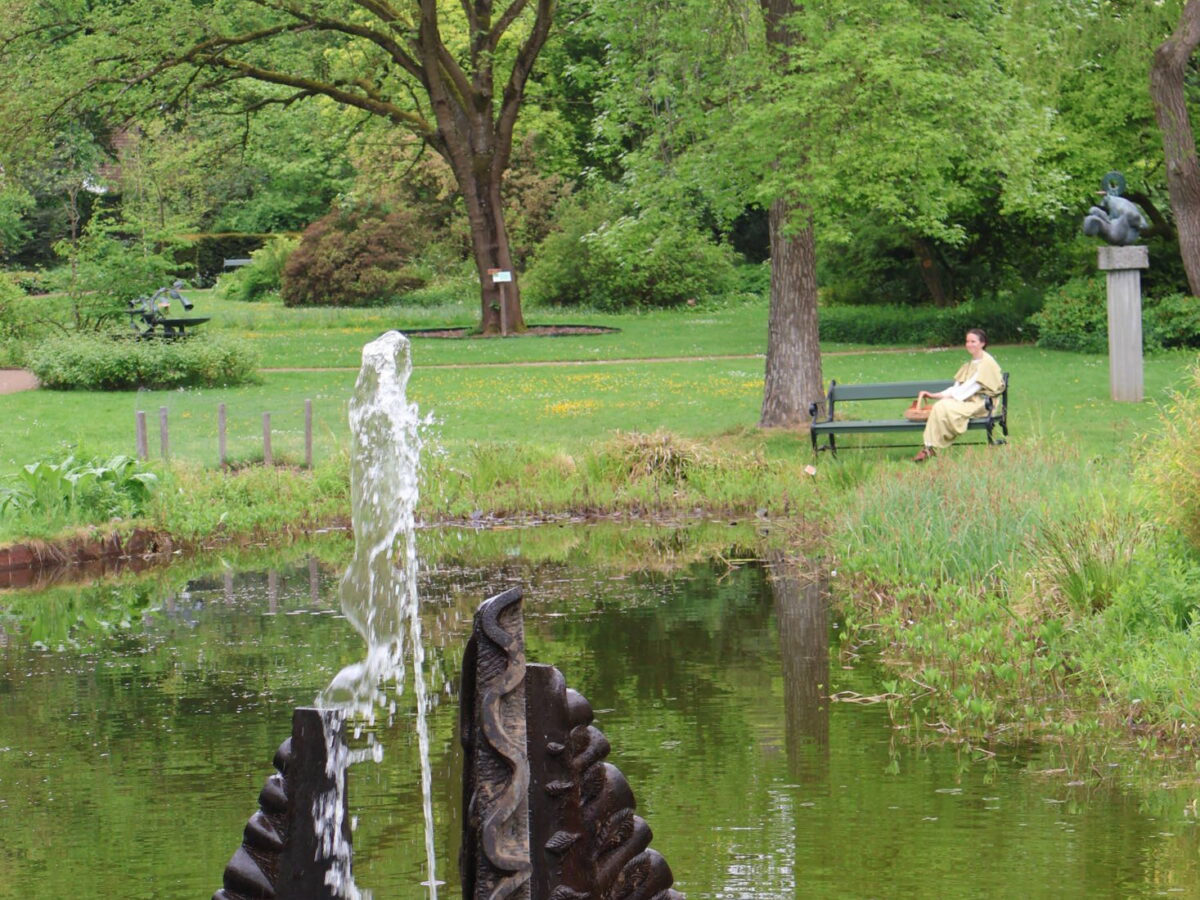
The Botanical Garden itself has a remarkable history.
During the era of the State Mines, the idea arose to create a place where nature, relaxation and knowledge came together for miners and their families. Thanks to financial support from the State Mines Fund, that dream became reality.
The Belgian landscape architect John Bergmans designed, together with gardener Jos van Loo, a garden in which sightlines, remarkable plant collections and green heritage played a central role. Because of the Second World War, the official opening was postponed for many years. It was only in 1945 that the general public could fully enjoy the garden.
Today, that same garden once again forms a place where visitors set out on a journey of discovery.
In Search of the Real Romans
When Roger van de Poel asked Hanneke to develop a Roman plant trail, she began a search that lasted several months. Which plants did the Romans actually use? And, even more importantly, which stories are historically reliable?
“The most difficult part was not finding the plants, but finding reliable sources.”
That is why Hanneke decided to return to the original authors of classical antiquity. Not modern websites. No legends. But the writings of Cato the Elder, Virgil, Ovid, Vitruvius, Dioscorides, Pliny the Elder and Pliny the Younger. Their texts form the common thread running through the walk.
The Romans Speak for Themselves
At every plant, a quotation from the Roman world awaits. At the olive tree, you can read how Cato the Elder carefully describes how an olive tree should be planted.
“Treat olive cuttings with care, so that the bark does not suffer damage.”
Among the conifers, you then imagine yourself in Diana’s hunting grounds, where Ovid writes:
“There is a mountain valley, rich in pointed firs and cypresses, Diana’s sacred hunting ground…”
At the fig tree, Cato even gives practical advice on storage:
“If you wish to keep dried figs well, store them in an earthenware vessel.”
In this way, you do not only walk past plants, but also past voices from antiquity.
Much More Than Herbs
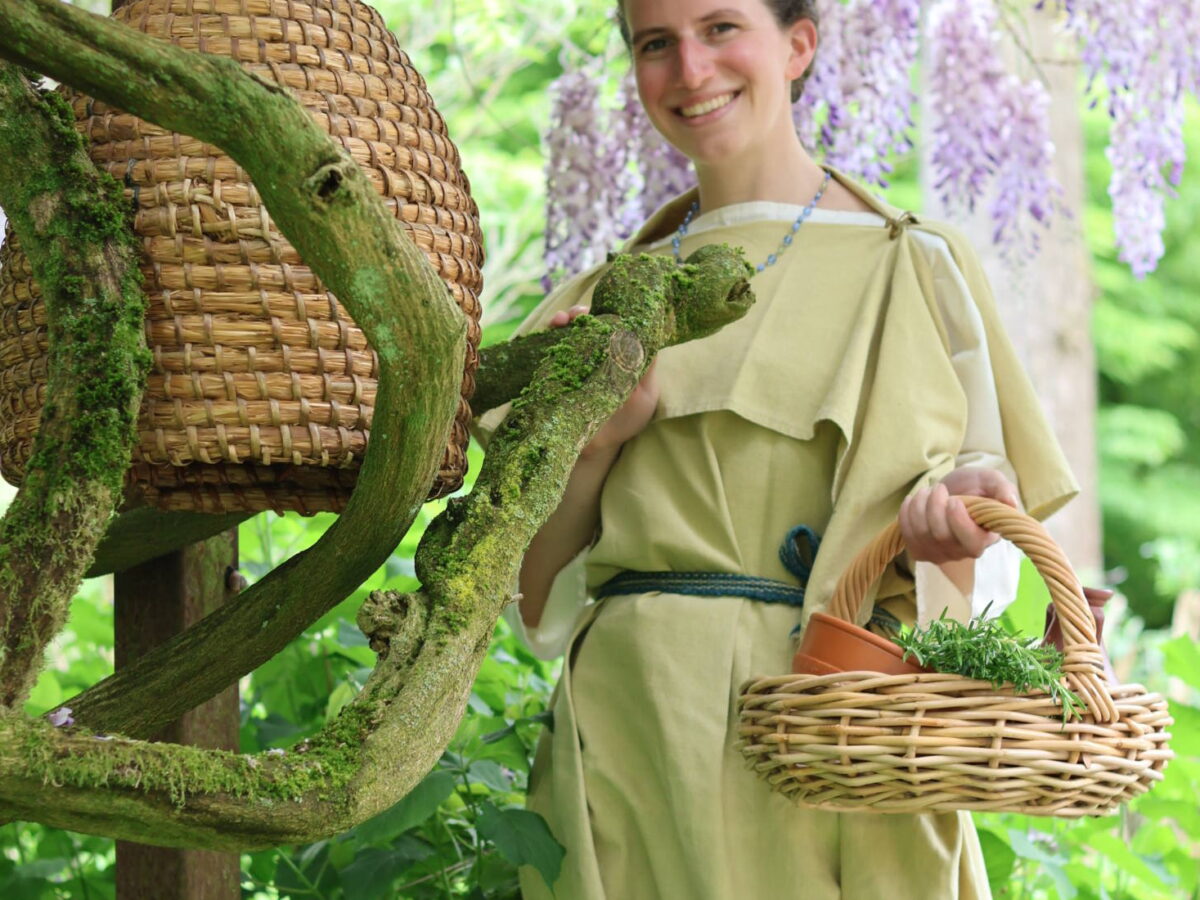
The trail shows that plants meant far more to the Romans than simply food. Sage was used as a medicine. Thyme supported beekeeping. Laurel symbolised victory. Cedar wood and juniper were used in buildings. Grapes evoked the world of Bacchus, while boxwood adorned luxurious Roman ornamental gardens.
Even a simple onion turns out to have its own story. The walk clearly shows how much knowledge the Romans brought with them when they travelled to our region along the Via Belgica. Not only soldiers and merchants travelled this road, but also ideas, agricultural techniques and plants that permanently changed our region.
From Research to Experience
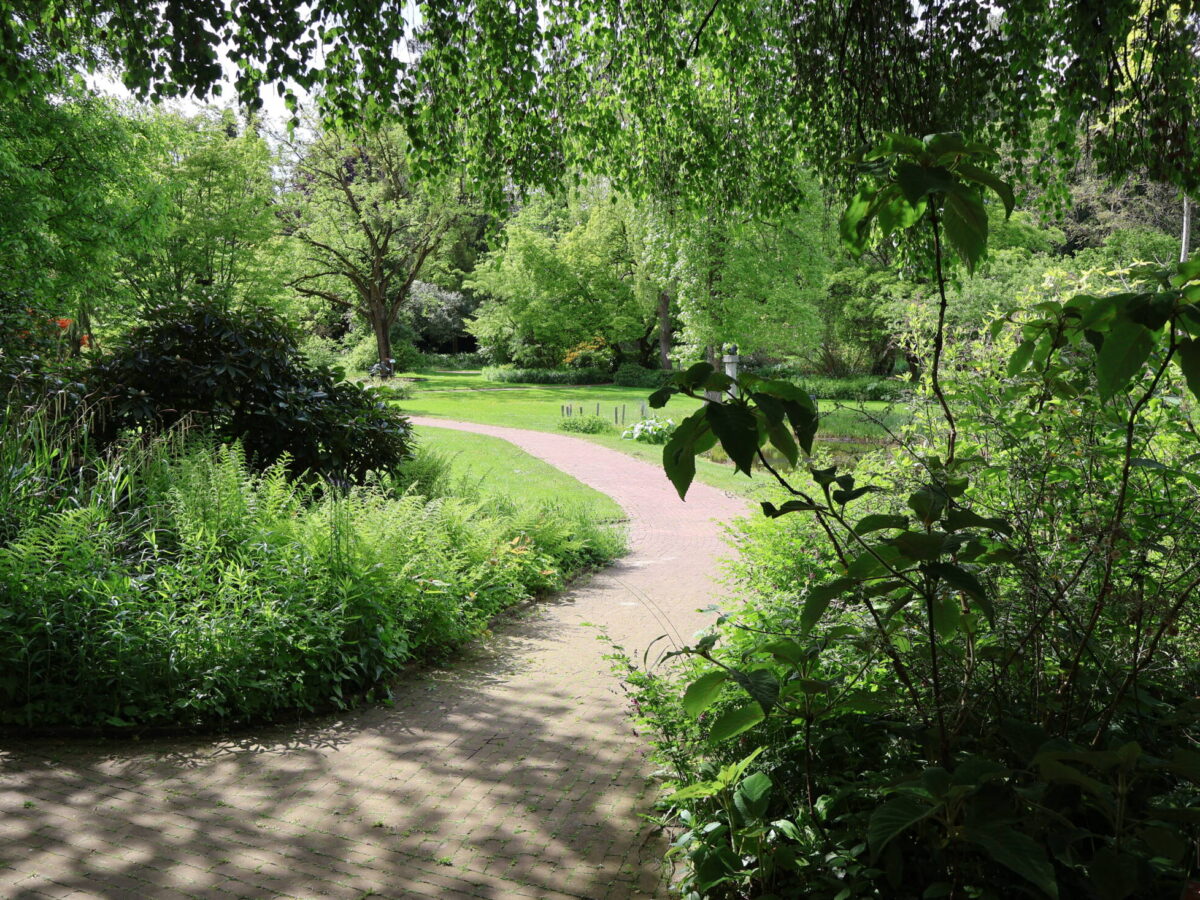
What makes this trail so special is that science and experience go hand in hand. For the thirteen plants, Hanneke developed a compact walking guide in which historical background, botanical knowledge and original Roman quotations come together. The recognisable signs bearing the Roman helmet guide visitors along the route. Every stop invites visitors to pause for a moment. Not only to look at a plant, but to discover its story.
A Garden That Continues to Grow
For Roger van de Poel, who is responsible for the organisational development of the Botanical Garden, the collaboration with Via Belgica was a logical next step.
“Via Belgica was looking for entrepreneurs and partners who help make the Roman past visible. We immediately saw how well the Botanical Garden fits into that.”
For Roger, too, education is at the heart of everything. He originally trained as a cameraman and worked for many years on educational television projects. Passing on knowledge is deeply rooted in his DNA.
“A garden should not only allow people to enjoy themselves, but also teach them something.”
A New Step within VIA VIA
According to Roger, the Roman Plant Trail gives the Botanical Garden a new dimension.
Via Belgica has now become part of the international VIA VIA project, in which Roman stories connect visitors from the Netherlands, Belgium and Germany. The Botanical Garden fits seamlessly into this initiative.
Together with VIA VIA, work is being done on the further development of the garden. Roger helps to prepare the annual plan, thinks about new visitor experiences and explores how the Botanical Garden can continue to develop. The Roman Plant Trail is an invitation to a new audience. Not only for plant lovers, but for everyone who wants to discover how a simple fig tree, fragrant sage or a laurel shrub can suddenly take you back two thousand years in time.
Discover the Romans Among the Greenery
Sometimes you do not have to step inside a museum to experience history.
Sometimes all you have to do is follow a garden path.
And look carefully.
Because among the leaves, the Romans are still whispering their stories.