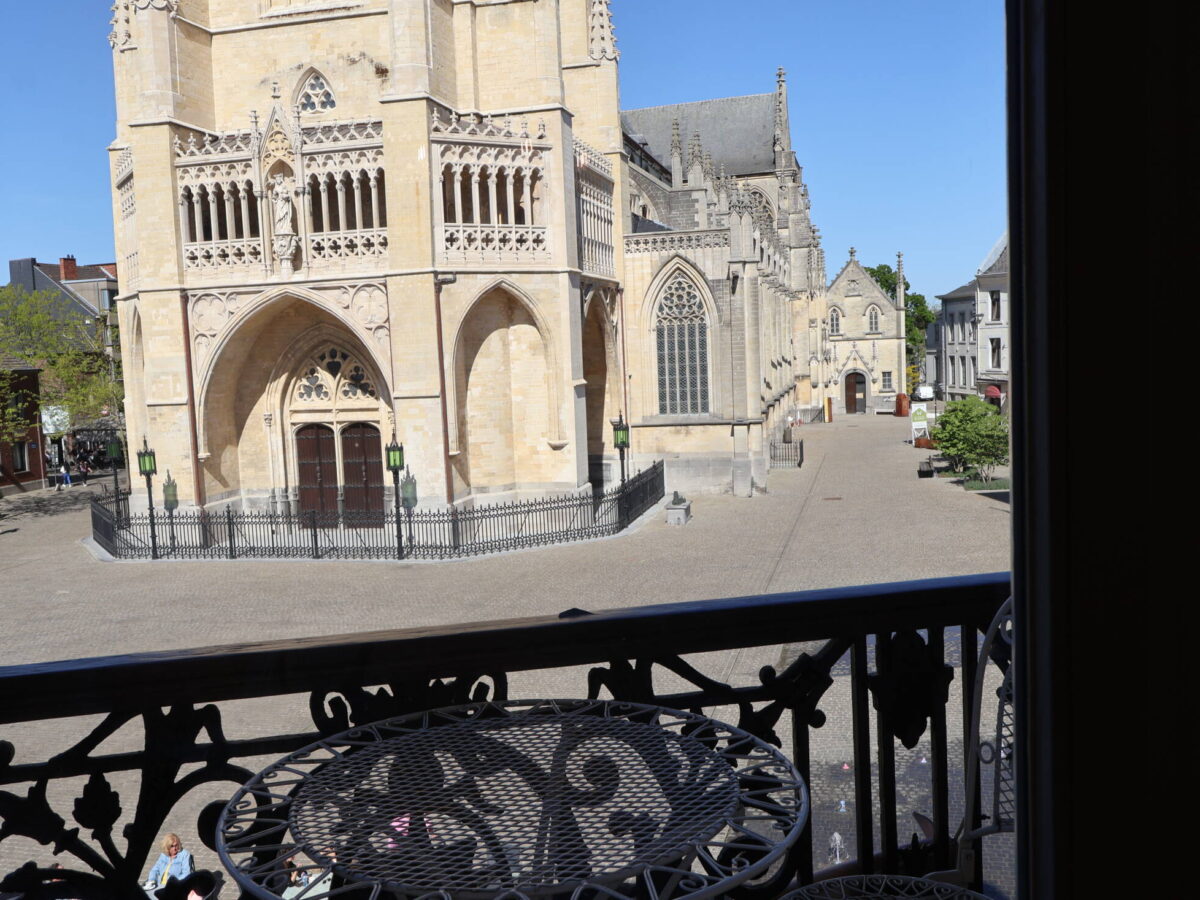
Raadhuisplein in Heerlen: where Roman Coriovallum resurfaces
Author: Anja Neskens
Photography: Municipality of Heerlen
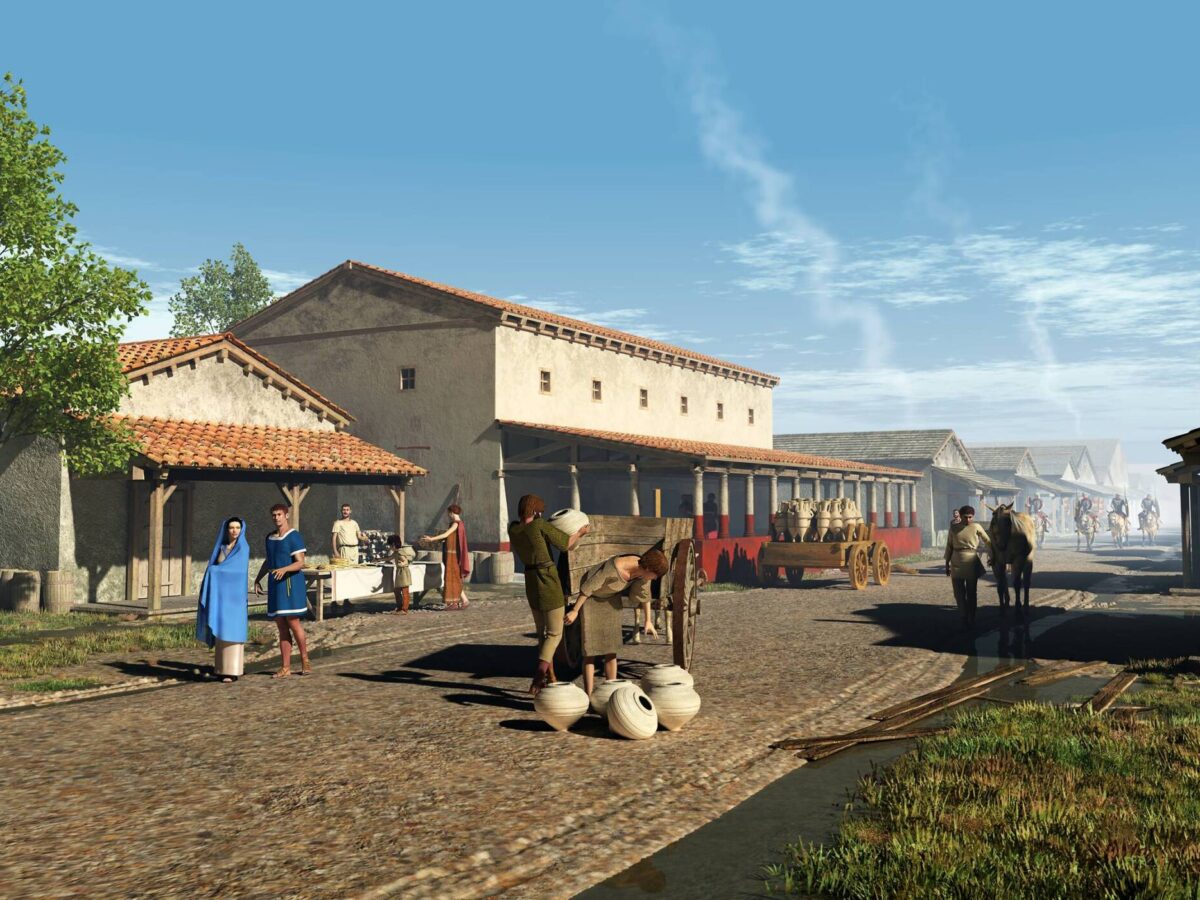
Anyone walking across Raadhuisplein today is walking straight through the heart of Roman Heerlen. Beneath the paving, two important Roman routes intersect: the Via Belgica, which connected Tongeren with Cologne via Maastricht and Heerlen, and the north-south route now known as the Via Traiana. It was precisely here that Coriovallum developed into a lively settlement of residents, travellers, traders and craftspeople.
When the square was redeveloped, archaeologists were given an exceptional opportunity to dig deep into this past. What they found exceeded expectations: graves, furnaces, foundations, a possible temple, a latrine and even a curse tablet. Some of these discoveries were given a visible place in the new design. As a result, you are not only walking across a modern city square, but also through almost two thousand years of Heerlen’s history.
A square with a long archaeological history
Archaeological research has been taking place in Heerlen for around 150 years. As a result, we know more and more about Coriovallum and the people who lived and worked here or stopped here during their journeys.
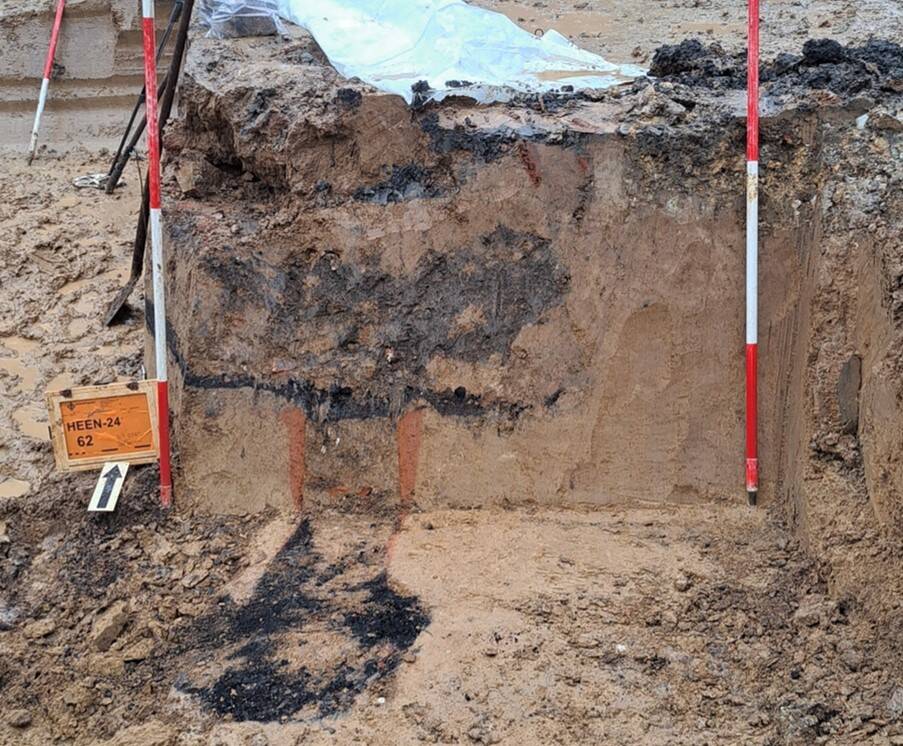
Raadhuisplein has also been investigated several times. Archaeologists carried out excavations there in 2018 and again during the extensive redevelopment of 2024 and 2025. Because a water buffer was constructed beneath the square, a large part of the soil had to be opened up. This made extensive archaeological research unavoidable, but at the same time offered a unique opportunity: nowhere else had archaeologists been able to study such a large area so close to the Roman bathhouse.
The initial results are very promising. Nevertheless, some caution is still required. Specialist research into the finds and structures is ongoing, and the final results are not expected until 2028. What we know today therefore represents a first chapter. New analyses may further expand or revise the story in the coming years.
The beating heart of Coriovallum
Because of its location at the intersection of two roads, Raadhuisplein was probably an important place within Coriovallum. People, goods and stories from different parts of the Roman Empire came together here. Travellers headed towards Tongeren, Maastricht, Aachen, Cologne and the military bases along the Rhine. Traders brought wine, oil, pottery and other products with them. Local craftspeople sold their wares or worked for residents and passers-by.
Raadhuisplein is therefore sometimes referred to as the ‘Forum Romanum of Heerlen’. This captures the imagination, but archaeologically it has not yet been proven that an official forum like those found in major Roman cities was located here. The location, unusual buildings and religious finds do, however, indicate that this was much more than an ordinary residential district. The square appears to have formed part of an important public, artisanal and possibly religious centre.
During the Pax Romana, the relatively peaceful and prosperous period of the second century AD, Coriovallum reached its heyday. The nearby bathhouse attracted visitors, craftspeople established themselves along the roads, and public buildings increasingly gave the settlement greater prominence.
Faustus Valerius Flaccus: one of the first inhabitants
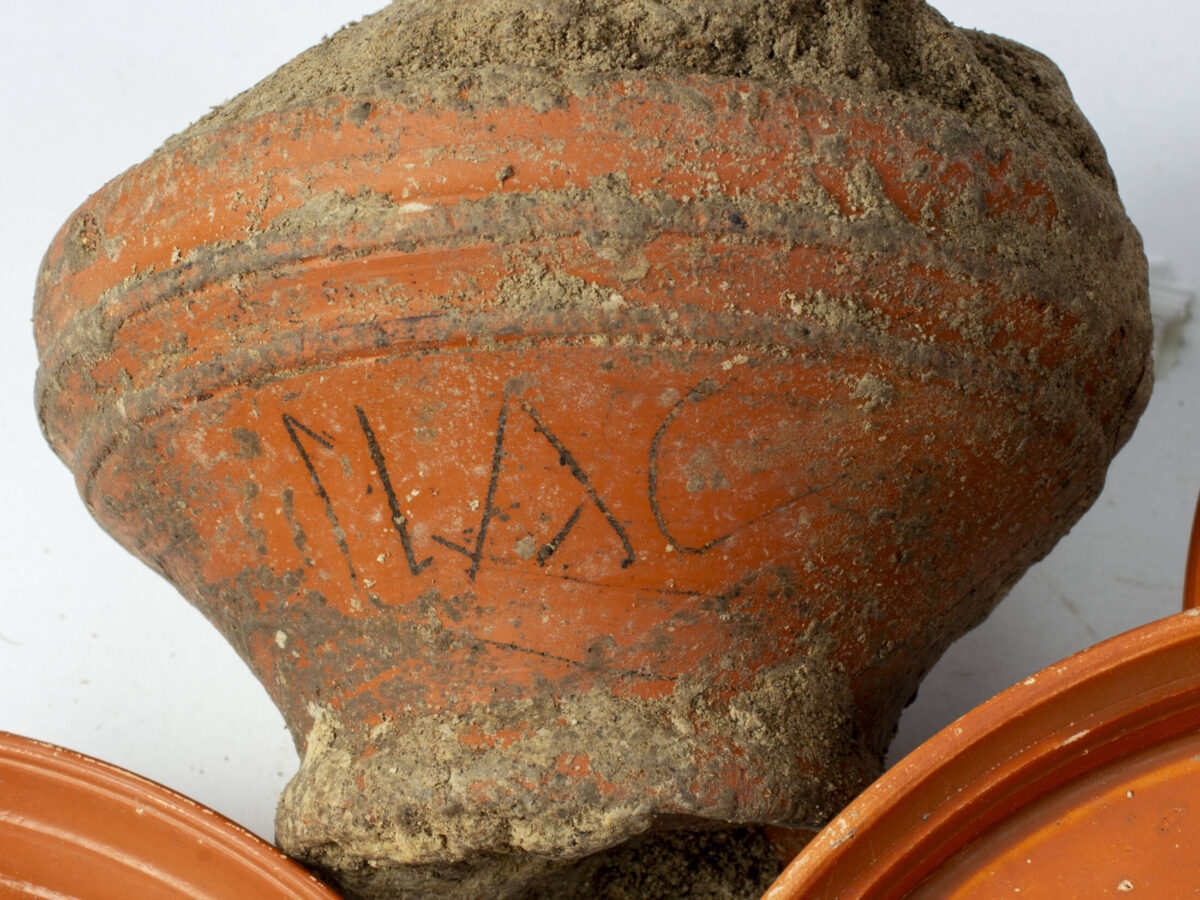
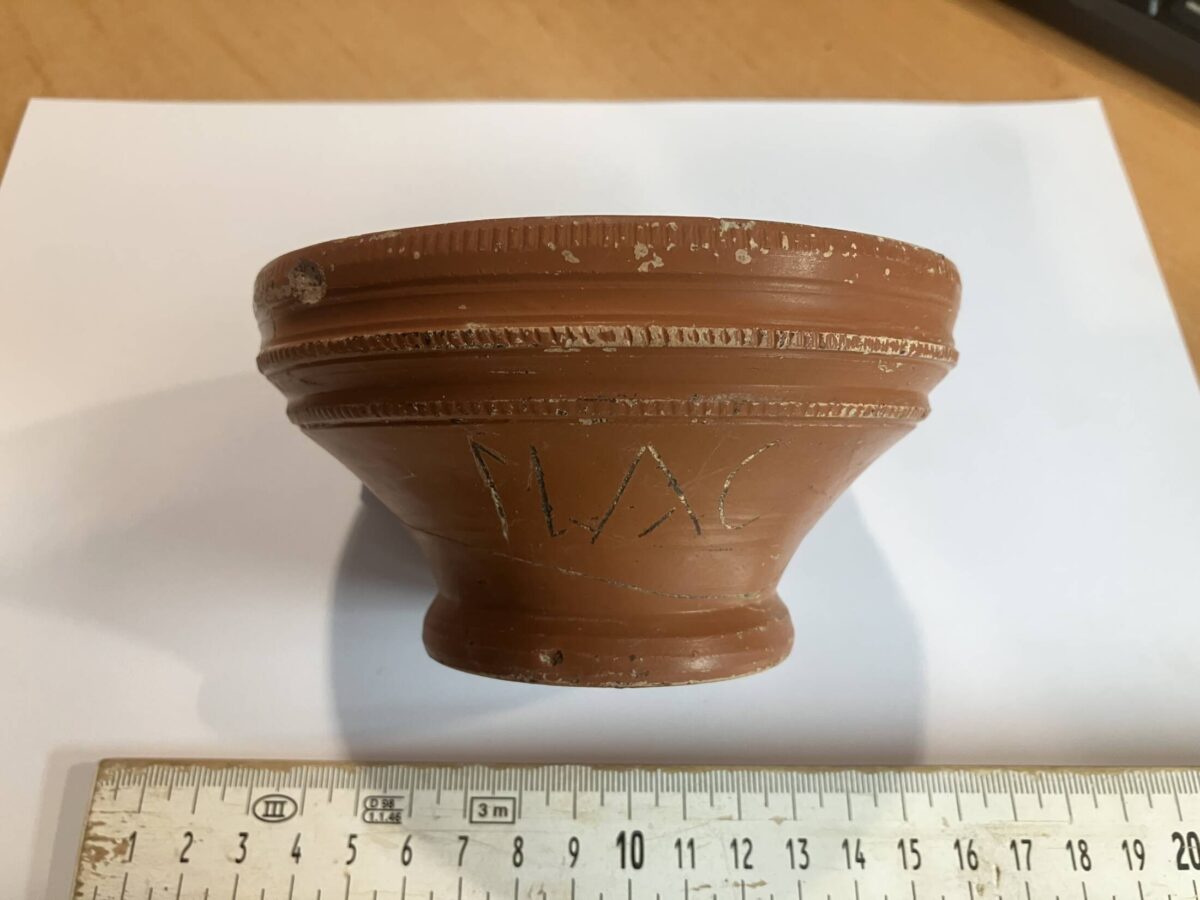
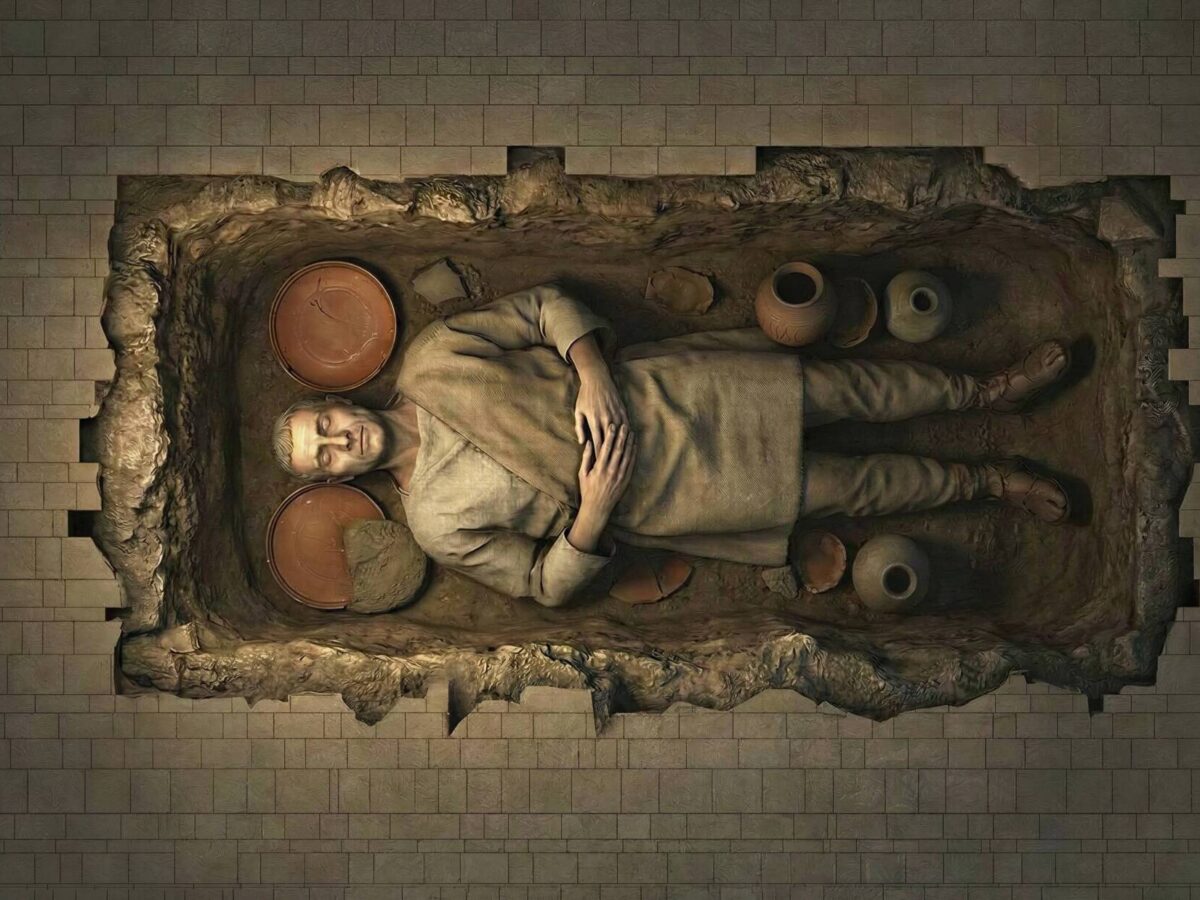
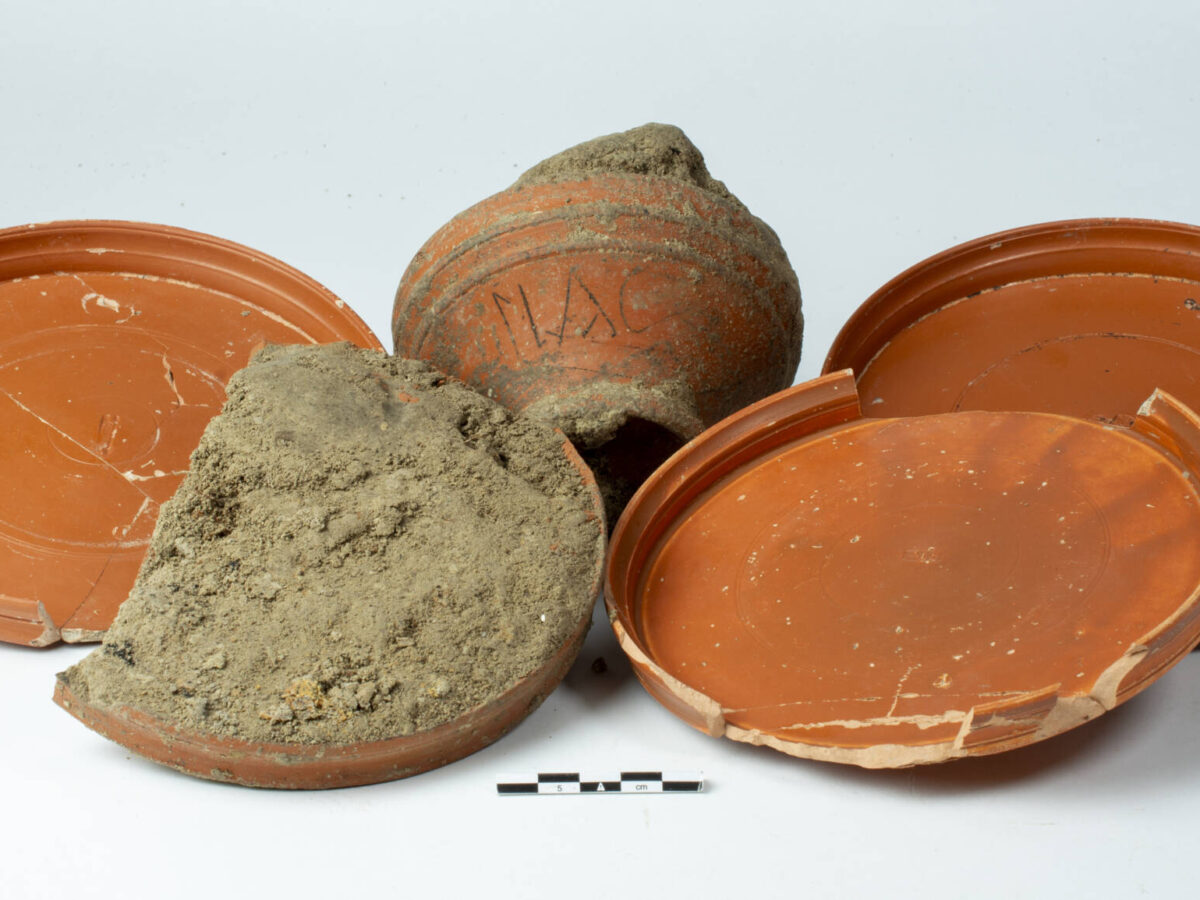
One of the oldest discoveries is the grave of Faustus Valerius Flaccus. His name is scratched into a small terra sigillata bowl: the glossy red luxury pottery that was popular throughout the Roman Empire.
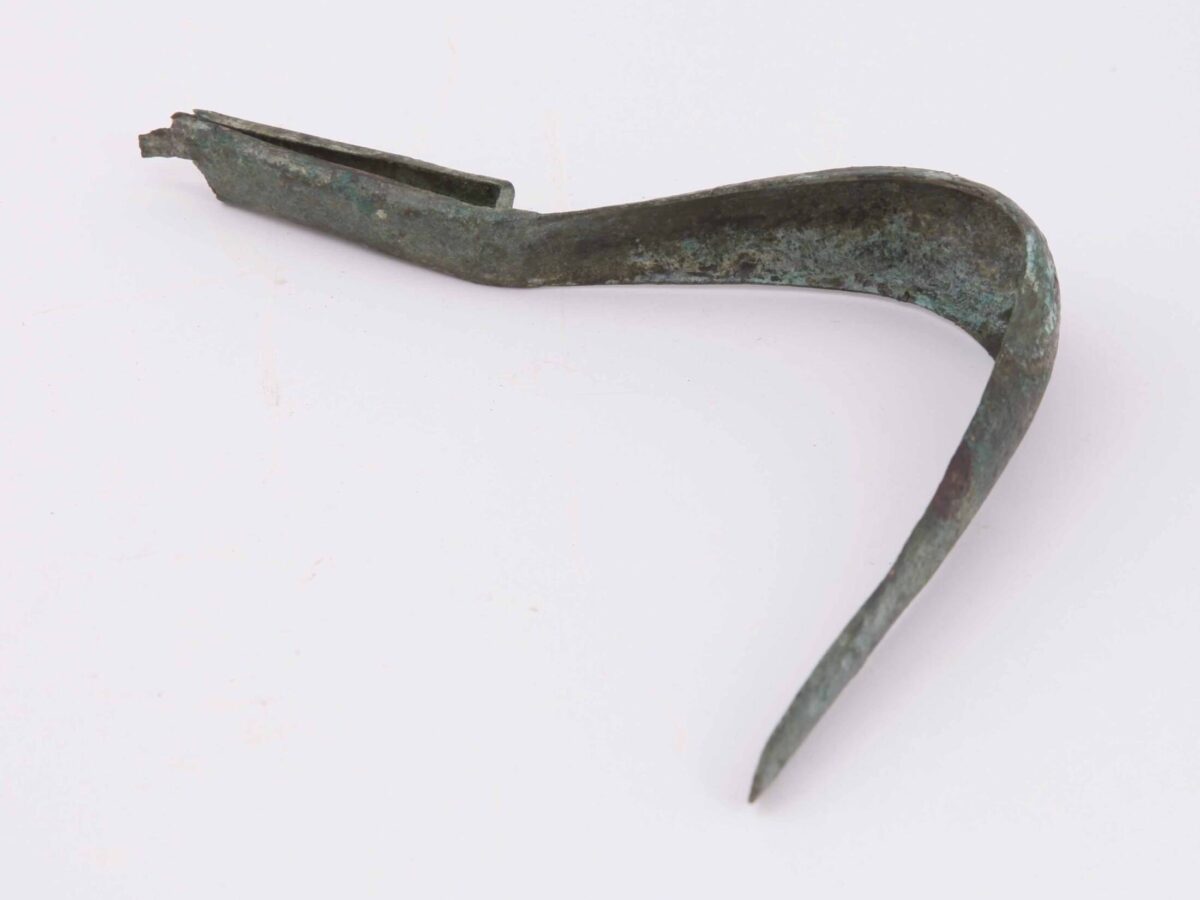
In accordance with Roman custom, Flaccus was cremated. His remains were buried together with various grave goods. These included a drinking cup, plates and personal care items. A strigil, a curved skin scraper, is a reminder of Roman bathing culture. Romans used such an instrument to scrape oil, sweat and dirt from their skin.
The pottery was made in Arezzo in southern Italy. This indicates an early date, probably around the beginning of the Common Era. The two roads that intersected near Heerlen were also constructed during this period.
We do not yet know exactly who Faustus Valerius Flaccus was. He may have been connected to the Roman army and stayed here while Roman authority was expanding further north. What is certain is that he was among the early inhabitants of or travellers through the place where Coriovallum would later develop. His grave takes us back to a time when Heerlen was not yet a flourishing vicus, but a strategic stopping place in development.
Bronze casters at work
Beneath the remains of a later building, archaeologists discovered furnaces in which bronze was processed. They probably date from the first century and are therefore older than the building that was later constructed above them.
The furnaces show that Coriovallum was already a place of craftsmanship and production at an early stage. Bronze casters made or repaired everyday objects, jewellery and possibly religious objects here. The fires must have burned intensely. Metal was melted, hammered and finished, while nearby travellers made their way along the Roman roads.
As the settlement grew, the use of this location also changed. The workshop disappeared and made way for a building with a very different function.
Was there a Roman temple here?
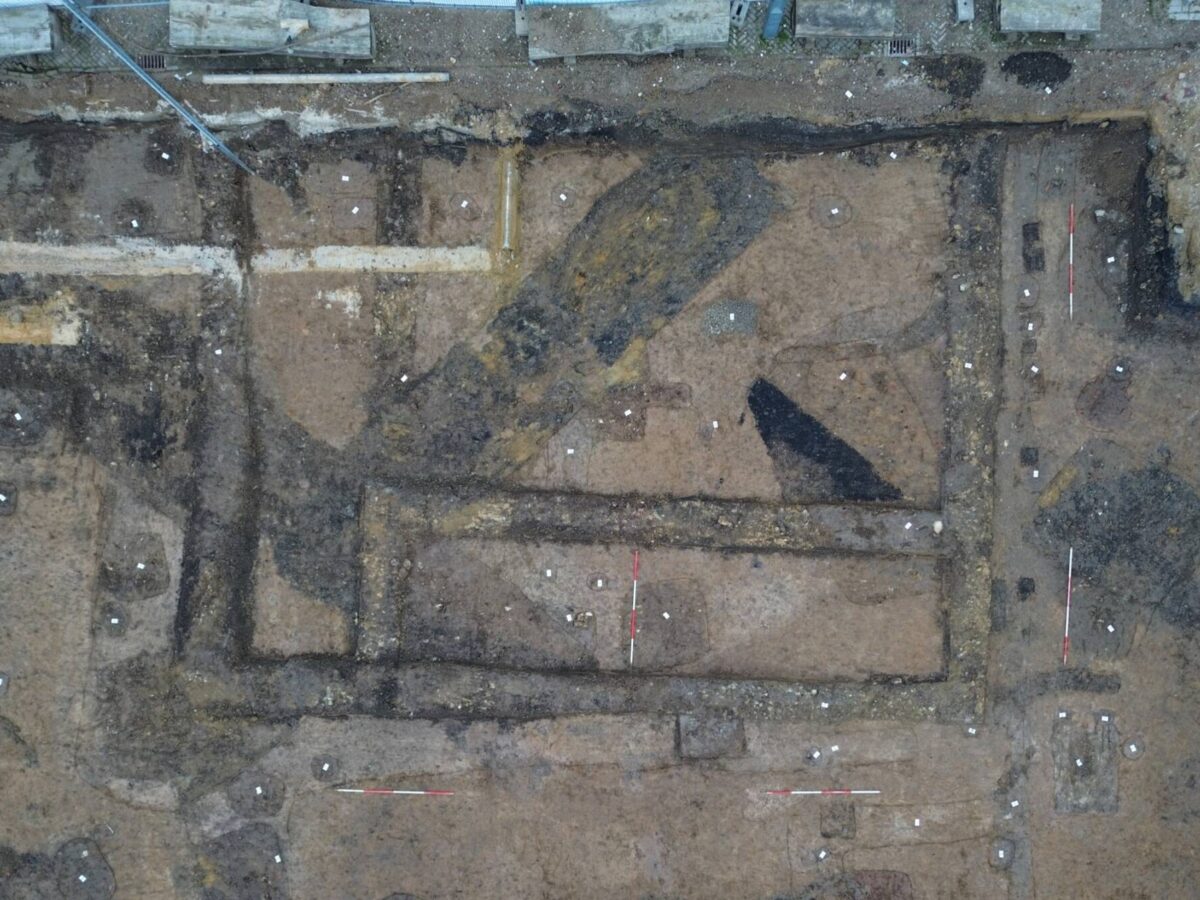
As early as the 1930s, traces were found on Raadhuisplein of a building that differed from the usual houses found in a vicus. Archaeologists already suspected at the time that it might have been a temple. The investigations of 2024 and 2025 revealed new sections of the foundations and strengthened this interpretation.
In the paving of the redesigned square, you can recognise the straight lines of the stone building. Square markings indicate places where wooden posts once stood. The complex may have consisted of a stone core with a wooden extension, an enclosed courtyard or a structure made of timber and clay.
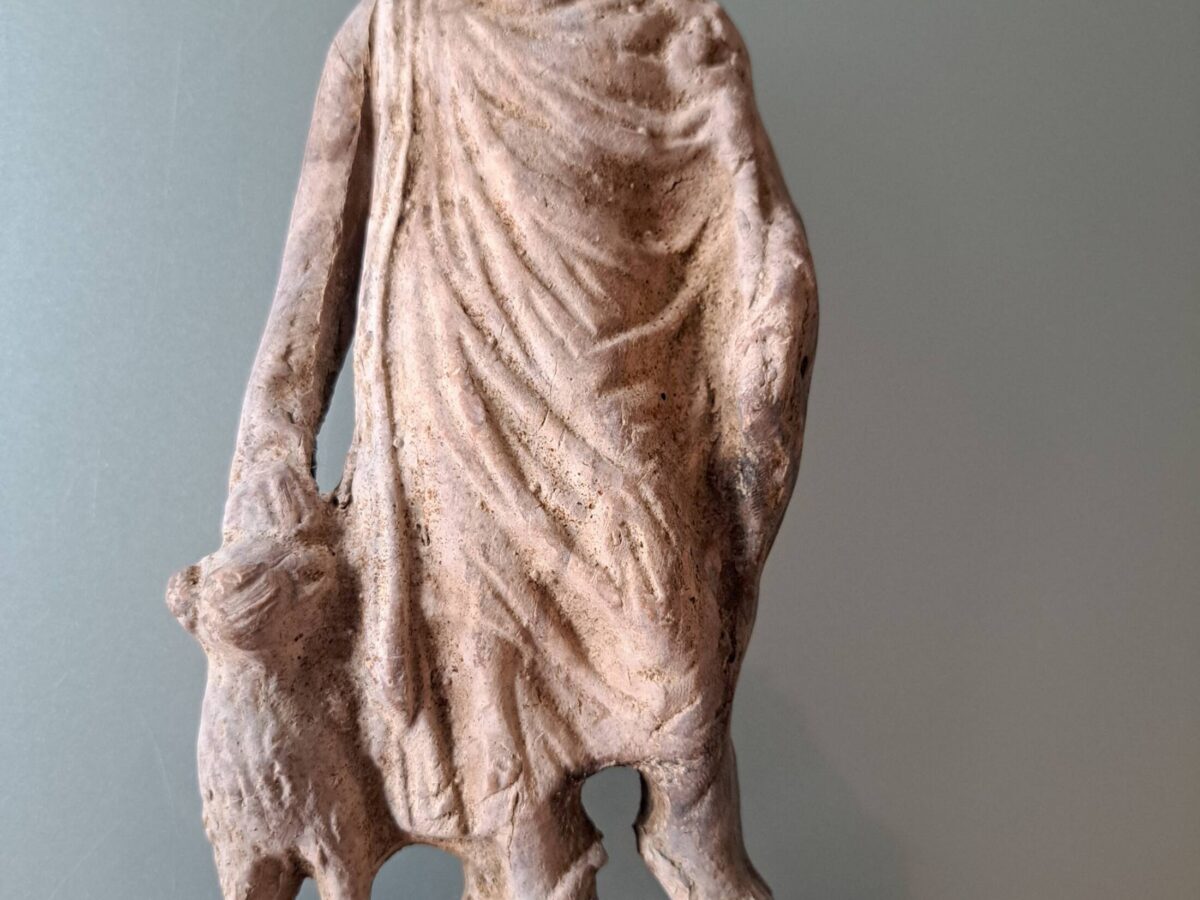
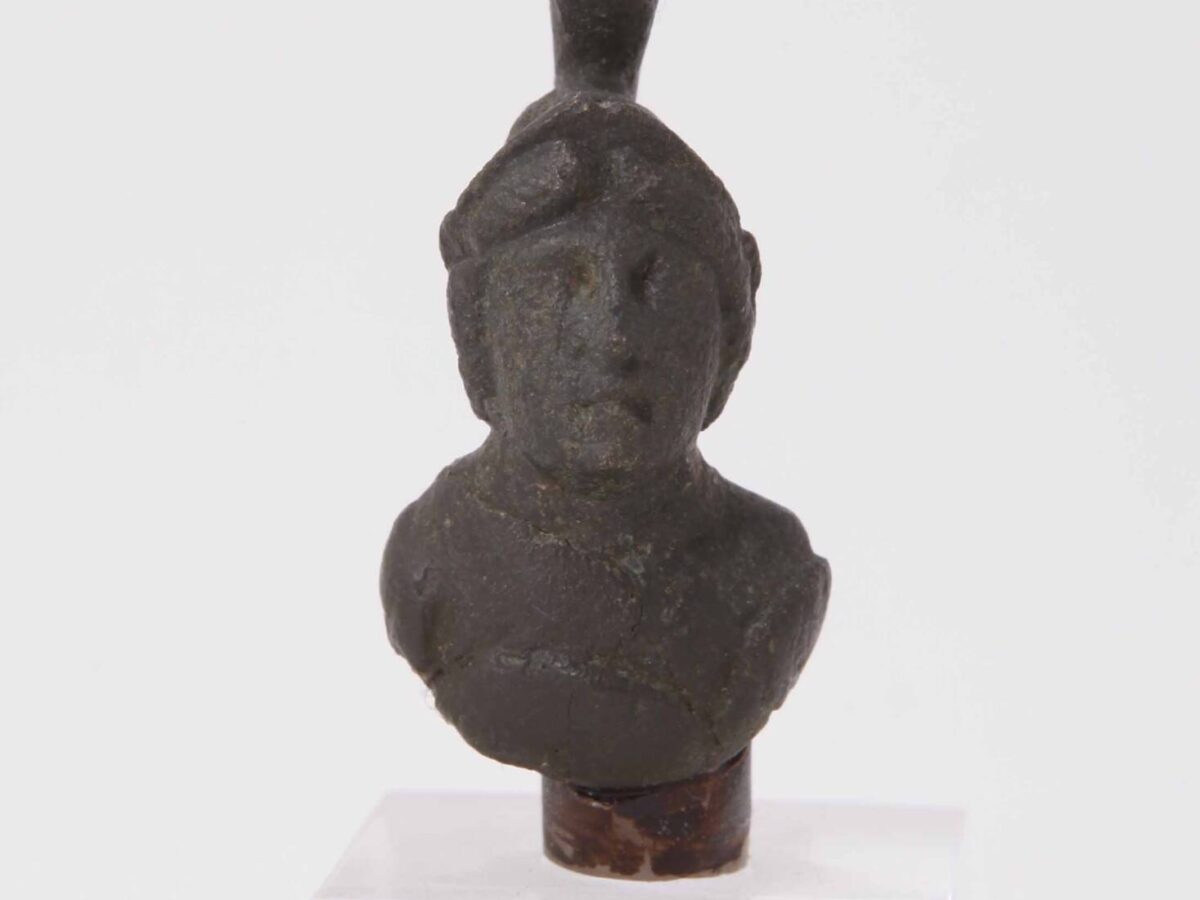
The finds in the surrounding area are also remarkable. A figurine of a deity and a curse tablet are consistent with a place where people asked the gods for help. Nevertheless, ‘temple’ remains an interpretation for the time being. Only further research may clarify what the building looked like and exactly how it was used.
A message for the gods
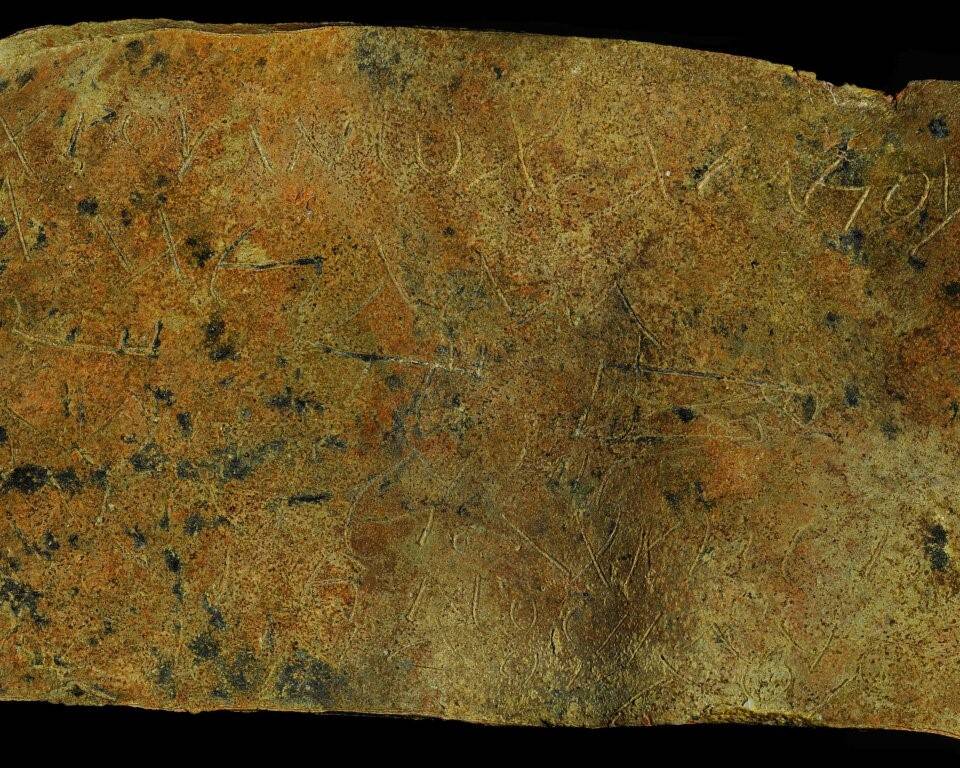
One of the most intriguing finds is a curse tablet. Such thin tablets of lead or another soft metal carried a personal message to a deity. People asked for help with a conflict, theft, a love affair or some other misfortune. Sometimes an opponent was named and entrusted to the power of the gods.
The tablet was found in a large pit containing phosphate-rich layers, which is currently interpreted as a latrine. This is less strange than it might seem. Dark, deep or damp places were regularly used in the Roman world to entrust curses to underworld deities. By leaving the tablet in such a place, the message disappeared from the human world and symbolically entered the realm of the gods.
What exactly is written on the Heerlen tablet and for whom the curse was intended remains to be established through further research. In any case, it provides a rare glimpse into the worries, anger and desires of an individual who walked here almost two thousand years ago.
Lucius and Amaka: a Roman love story
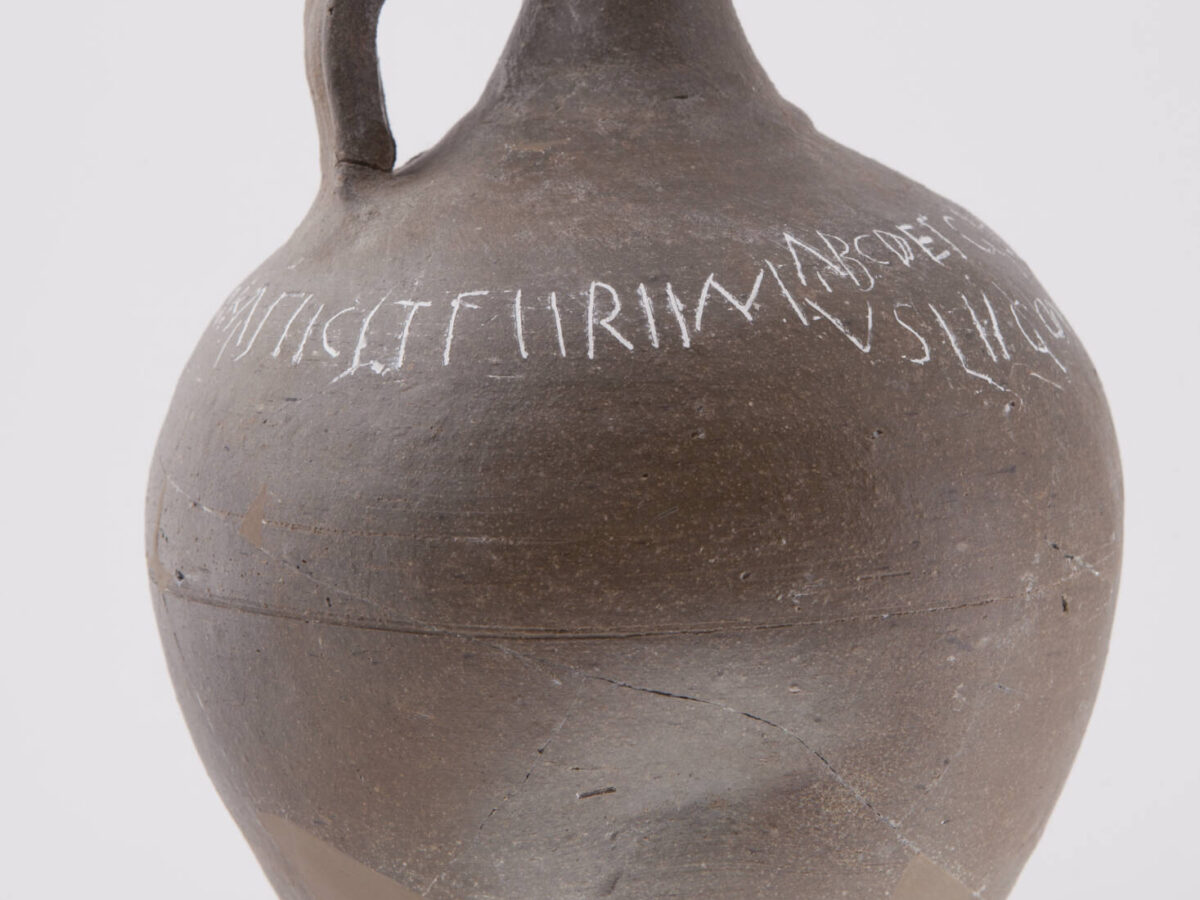
Not all the stories on the square are about graves, temples and curses. Some are surprisingly familiar. The design also includes a reference to Lucius and Amaka, the couple in love from Roman Heerlen.
Lucius was a potter. The clay around Heerlen was particularly suitable for making pottery. One jug was special: Lucius made it for Amaka. Their names, scratched into its surface, transformed an everyday object into a personal message that survived the centuries.
Lucius presumably wanted to give the jug to Amaka. Unfortunately, the jug was damaged during the firing process. Archaeologists found this remarkable jug, meaning that Amaka was never able to enjoy his beautiful gift.
In Heerlen, the story of Lucius and Amaka is already being described as the oldest love story in the Netherlands.
In Heerlen bestempelen ze het verhaal van Lucius en Amaka alvast als het oudste liefdesverhaal van Nederland.
The Roman world in the art of Wil van der Laan
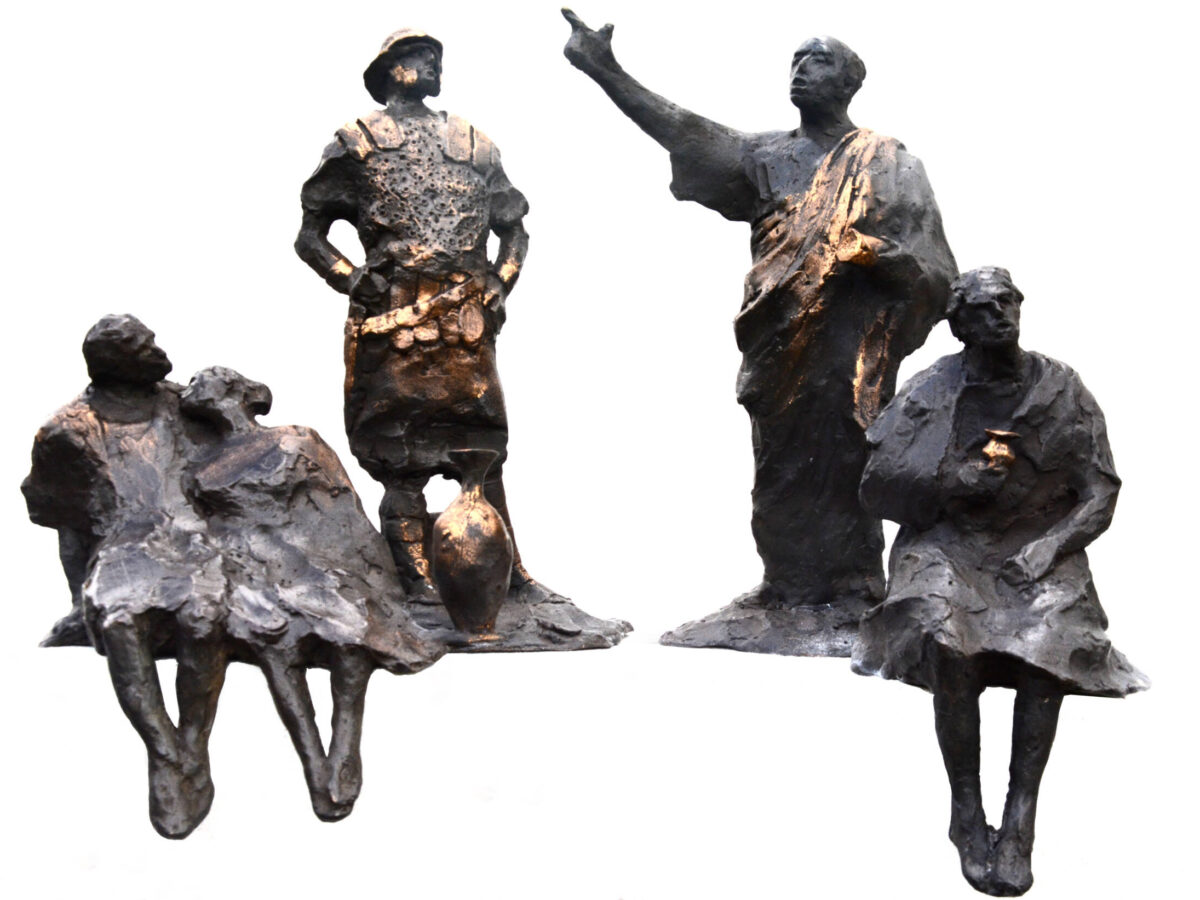
On the redesigned square, the past is reflected not only in lines and patterns. The sculptures by artist Wil van der Laan also give Roman history a human face. They do not depict distant emperors or military commanders, but ordinary people who brought colour to Coriovallum.
The figures recall the inhabitants of Coriovallum – Lucius and Amaka – as well as a doctor, a soldier (Flaccus) and a politician (Marcus Sattonius). At the same time, they sit in the water and refer to the water that has shaped Heerlen throughout the centuries. The Caumerbeek and Geleenbeek were important for people, animals and crafts, as well as for the large bathhouse. Today, this reference also connects with the underground water buffer beneath the square: Roman history and contemporary water management meet in the same place.
Nine finds among the fountains
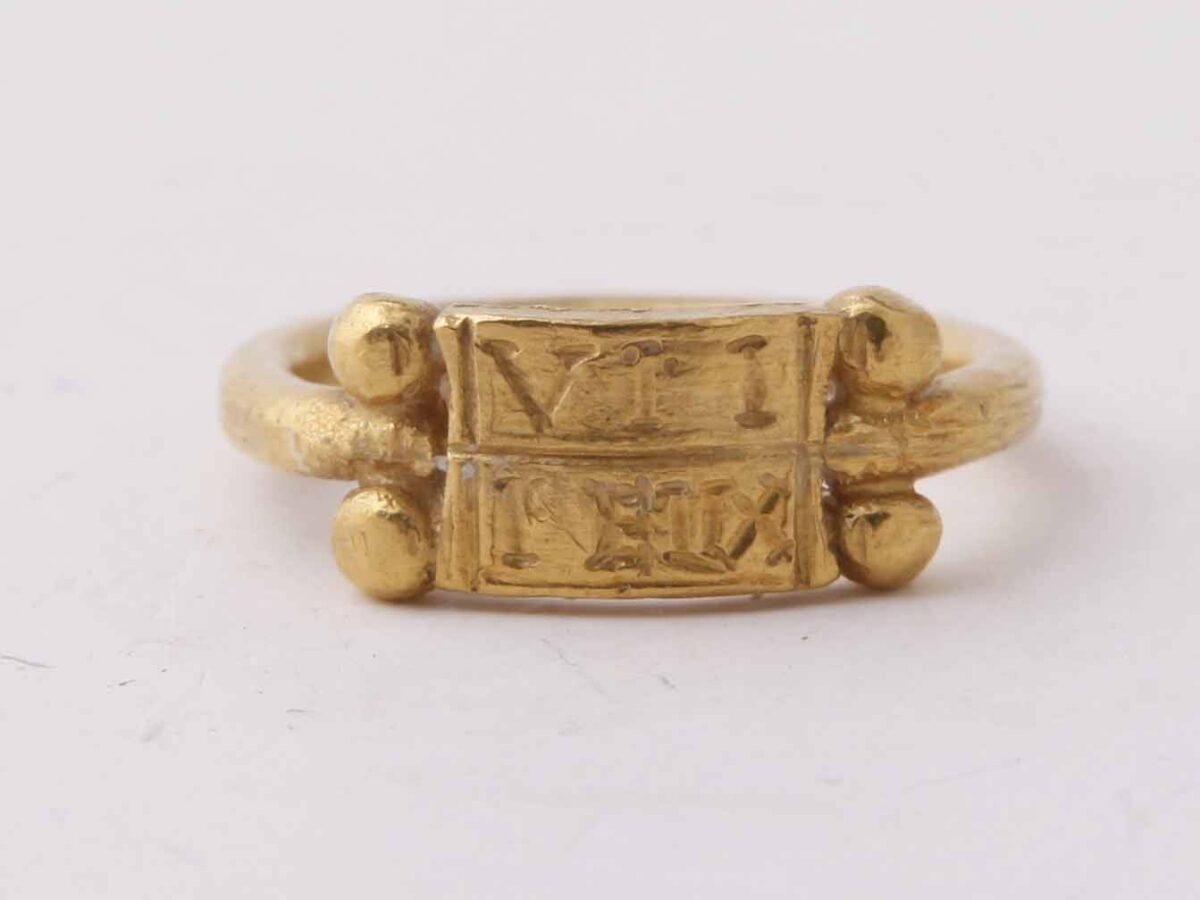
The paving and the area around the fountain also contain references to the Roman past. The black-and-white pattern is inspired by the mosaic from the nearby Roman bathhouse. Nine images depict archaeological objects found on the square or elsewhere in Roman Heerlen.
One of these objects is a ring bearing the words Uti felix: ‘May you be happy.’ It is a small wish from a distant past, yet at the same time a message that still feels familiar today.
The square therefore does not tell its history through a single large monument. You discover it piece by piece: in lines beneath your feet, in sculptures among the water and in objects that refer to the people of Coriovallum.
Walk across two thousand years of history
Raadhuisplein is not an open-air museum where time has stood still. It is a lively place where people meet, shop, work and spend time together – just as they did here in Roman times.
During your visit, take the time to look at the paving. Search for the outlines of the possible temple complex, discover the nine Roman objects and pause at the story of Faustus Valerius Flaccus. Then continue to the Roman bathhouse and meet Lucius, the potter of Heerlen, and his beloved Amaka.
Beneath your feet lies Coriovallum. At Raadhuisplein, this hidden city comes back to life.